Print Story
X




Unlike the past, recent violence in Khyber Pakhtunkhwa is more selective and tactical
| O |
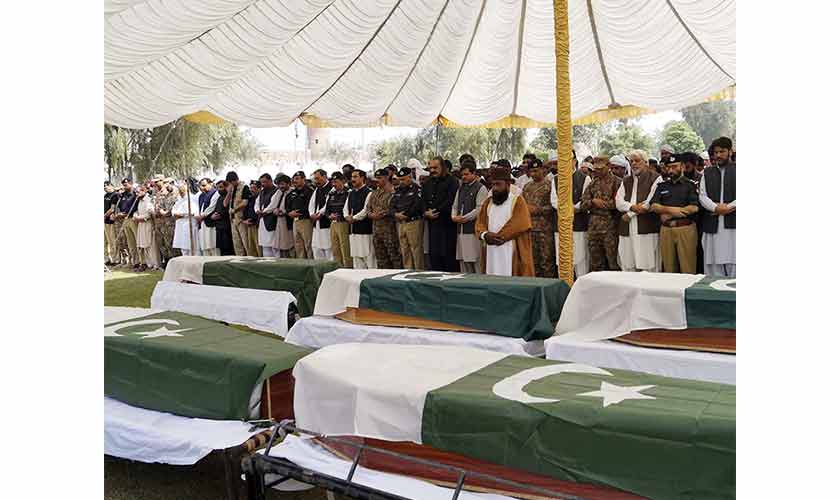
ver the past year, Khyber Pakhtunkhwa has once again found itself at the epicentre of Pakistan’s battle against terrorism. The province, which had begun to recover from years of conflict, is now witnessing a renewed surge in militant attacks. These incidents have claimed the lives of dozens of security personnel, police and civilians, rekindling painful memories of the dark years when explosions and targeted killings were routine.
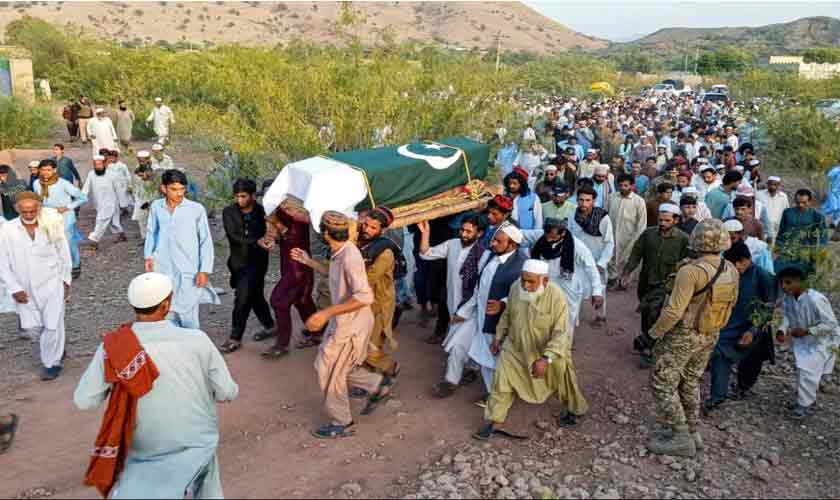
Most of the recent attacks have been reported from the seven merged tribal districts, stretching from Bajaur in the north to South Waziristan in the south, as well as from Khyber Pakhtunkhwa’s southern belt, including Bannu, Lakki Marwat, Dera Ismail Khan and Tank. In these regions, militant ambushes and roadside attacks have become more frequent. Locals now describe nighttime travel as perilous. Entire stretches of road are deemed unsafe after sunset.
The situation has become particularly tense in Bajaur district, where in recent weeks, fighters affiliated with the Tehreek-i-Taliban Pakistan reportedly crossed over from Afghanistan, triggering a fresh wave of violence. Security forces responded with a series of operations, dislodging militants from several pockets. The operations forced hundreds of families to flee. Many of them had only recently returned home after the fighting had subsided.
This escalation has reignited fears that the province may be sliding back into the anarchy of 2009-2010, when the province and the former Tribal Areas endured relentless suicide bombings, targeted killings and large-scale militant offensives.
Yet, unlike the past, recent violence is more selective and tactical. Militants now appear to be targeting primarily security forces, law enforcement and government representatives, avoiding mass-casualty attacks on civilians that previously drew widespread public outrage.
The security situation took a dramatic turn last week following reports of cross-border clashes between Pakistani forces and the Afghan Taliban. According to official sources, on the October 11-12 (Saturday-Sunday) night, heavy fighting erupted along the frontier as Taliban fighters attacked several Pakistani armed forces’ check posts. Both sides claimed to have inflicted heavy losses on the other.
In a statement issued by the Inter-Services Public Relations, Pakistan’s military spokesperson said that over 200 Taliban combatants were killed, and several of their checkpoints were captured during the clashes. The same statement said that 23 Pakistanis, including members of the security forces, had also lost their lives.
The rising violence and cross-border attacks had earlier prompted the ISPR director general, Lt Gen Ahmed Sharif Chaudhry, to hold a press conference in Peshawar, where he reviewed the overall security landscape of the province and outlined the military’s counterterrorism response.
According to figures shared at the briefing, in 2024, security forces carried out 14,535 intelligence-based operations across the province. These operations resulted in the killing of 769 terrorists, including 58 of Afghan origin.
The ISPR DG also revealed the heavy toll on Pakistan’s defenders and civilians. During these operations, 577 people were killed, among them 272 Army and Frontier Corps personnel, 140 police and 165 civilians.
The question now confronting policymakers is not only how to defeat terrorism on the ground, but how to prevent its roots from taking hold again in a province that has already sacrificed so much.
From January to September 15, security forces conducted 10,115 IBOs, eliminating 917 terrorists, including 126 Afghan nationals. These operations cost the lives of 516 Pakistanis.
In his briefing, the military spokesperson identified five major factors driving terrorism in Khyber Pakhtunkhwa. “The incomplete implementation of the revised National Action Plan—the politicisation of counterterrorism efforts has diverted national attention from unity of purpose.”
“India’s use of Afghanistan as a base of operations to destabilise Pakistan and safe haven for the assailants; and advanced weaponry available to militants in Afghanistan.” The ISPR DG also said that political patronage of the terror-crime nexus continued to undermine enforcement efforts.
Security analysts say that the situation in Khyber Pakhtunkhwa cannot be viewed purely through a military lens.
Haq Nawaz Khan, an expert on Pak-Afghan affairs, says that while terrorism is a national problem, “Khyber Pakhtunkhwa has been the worst hit.” He says that a lack of political ownership and prolonged political instability have created fertile grounds for militant groups to reorganise and expand.
“Poor law and order situation is one of the basic reasons,” Haq Nawaz says, “and that has been worsened by political anarchy.”
The province’s ruling political party, the Pakistan Tehreek-i-Insaf, is under mounting pressure, facing challenges on multiple fronts. Its approach to militancy also diverges from Islamabad’s. While the federal government has taken a “no-more talks” stance toward banned militant groups, PTI leaders have consistently advocated for negotiation. The PTI policy has drawn criticism from many security experts, who argue that militants have used concessions resulting from past dialogues to regroup rather than reconcile.
This internal rift has complicated Pakistan’s counterterrorism strategy at a time when the Taliban’s return to power in Afghanistan has already reshaped the regional security dynamic. The change in Kabul’s power structure has emboldened various militant factions, including the TTP, who now find ideological and logistical sympathy across the border.
Haq Nawaz Khan points out that the militants began regrouping shortly after the Taliban’s takeover of Kabul in August 2021. “An attempt was made to resolve the issue peacefully through talks during 2021-2022,” he recalls. “But there was no backup plan, no rehabilitation programme and no political consensus. The rise in terrorist incidents since the failure of those talks by the end of 2022 can be traced back to that vacuum.”
For the people of Khyber Pakhtunkhwa, already weary from decades of violence, these developments carry heavy emotional and economic costs. Markets close early, movement at night remains restricted, and many families continue to live with uncertainty about the future.
The question now confronting policymakers is not only how to defeat terrorism on the ground, but how to prevent its roots from taking hold again in a province that has already sacrificed so much.
Nawaz Khan says that while military operations are necessary, they cannot succeed in isolation. “I believe the operations are important,” he says, “but the most significant factor is political support. Without political backing, I don’t see any success.”
The writer is a multimedia producer. He tweets @daudpasaney.