Print Story
X




Tensions between the Centre and the provincial government are seen as markers determining the future of peace and security in Khyber Pakhtunkhwa
| A |
s Khyber Pakhtunkhwa faces a resurgence of terrorism, political uncertainty has deepened the crisis in the province. The recent change of the province’s chief minister, Pakistan Tehreek-i-Insaf founder Imran Khan’s opposition to military operations and the military’s warnings about deteriorating security have created a tense environment in Khyber Pakhtunkhwa.
Over the past few months, parts of the province, particularly its tribal districts, have witnessed a rise in targeted attacks on security forces, political leaders and civil society activists. The killings of local elders, security personnel and the re-emergence of militant groups have revived memories of the violence between 2008 and 2015. Unlike back then, the political leadership today sounds hesitant and fragmented.
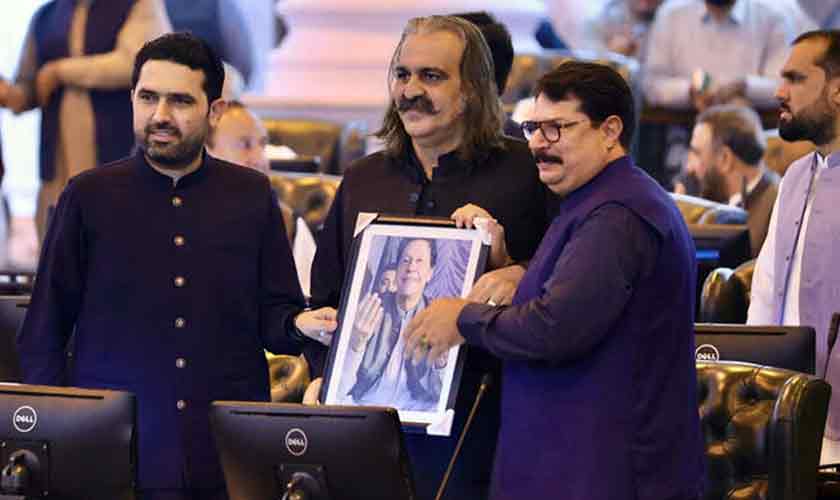
The nomination of Sohail Afridi, a PTI loyalist from the conflict-ridden tribal belt, as the new chief minister, signals Imran Khan’s continued defiance of the establishment, especially amid growing calls from the security apparatus to launch targeted operations against terrorist hideouts in the province’s volatile districts.
Despite ISPR director general’s warning about the deteriorating security situation and call for decisive action, Imran Khan and his party have been consistently voicing opposition to new military operations, arguing that such measures could further alienate the local population.
Afridi’s nomination as the province’s new chief minister was also welcomed in some circles as a sign of greater inclusion. For the first time, it was said, a person representing the conflict-affected area had been chosen to lead the province, raising hopes for responsive governance, development and attention to security concerns. Afridi’s selection could strengthen the bond between the people of the tribal districts and the PTI.
Challenges
Afridi has inherited not only a fragile economy and a disillusioned bureaucracy but also a worsening security landscape. The choice was strongly opposed by some federal government leaders, who saw him as an anti-establishment figure.
Imran Khan’s opposition to military operations in the province has become a defining feature of his political messaging.
While condemning terrorism, he continues to stress dialogue over use of force and has accused the establishment of using military operations for political engineering.
This stance resonates with parts of the electorate, especially in the former FATA regions, where many feel betrayed by unfulfilled promises of integration, compensation and development. Some critics argue that such posturing undermines the potential for national consensus.
Amid this landscape, leaders of the anti-merger movement and former FATA Grand Jirga figures have voiced their perspectives, highlighting local apprehensions about renewed operations.
Bismillah Khan Afridi, a prominent tribal leader, has emphasised that repeated military campaigns displace communities without addressing underlying grievances. Malik Khan Marjan and Azam Khan Mehsud have echoed similar concerns, warning that heavy-handed operations could further alienate locals and fuel militancy.
Malik Waris Khan Afridi, a former PPP minister from the merged districts, has stressed the need for political consultation and development initiatives before any action. Mir Afzal Mohmand has urged authorities to consider tribal sensitivities to avoid repeating past mistakes.
In a recent press conference in Peshawar, the ISPR director general warned that terrorism was resurging and called on political forces to support a unified national approach. While he named no one, the remarks seemed directed at leaders distancing themselves from military-led security policies. Most observers interpreted the presser as an effort to build public pressure on political parties, especially in Khyber Pakhtunkhwa, to endorse decisive action against terrorist networks. Others saw it as a sign of the widening trust gap between the establishment and the PTI.
Political hesitation in Khyber Pakhtunkhwa stems from populist concerns and public fatigue with war. After decades of conflict, many feel that they have paid a heavy price in the form of displacement, destruction of their homes and psychological trauma while seeing little improvement in governance or security. Local politicians, particularly from the tribal districts, are wary of endorsing another campaign that could again displace thousands.
“People are tired of being collateral in a war they did not start,” says Brig Said Nazir Mohmand (retired). “When people see a government and the opposition locked in perpetual conflict, it erodes the legitimacy of state action even if it is in their interest,” he says.
The resurgence of militancy has coincided with a deepening political divide. PTI’s confrontational style and the federal government’s attempts to reassert control leave little room for bipartisan consensus. While the federal government favours more counterterror operations, PTI leaders in Khyber Pakhtunkhwa accuse Islamabad of neglecting the province’s financial needs.
Security analysts warn that the political fragmentation benefits militants. “Counterterrorism is not just about guns and operations,” says journalist Sudhir Ahmad Afridi.
Journalist Iqbal Khattak says that the security appartus will now have to face both the Tehreek-i-Taliban Pakistan and Sohail Afridi. He notes that Afridi has already said that he will not allow military operations in the tribal areas.
Analysts say that Afridi faces the challenge of balancing the expectations of his constituents, who often bear the brunt of these operations, with the overarching security policies dictated by the federal government and military authorities. They believe that Afridi’s stance will likely focus on advocating for greater civilian oversight, community-sensitive approaches and rehabilitation programmes.
In Khyber Pakhtunkhwa, especially in the merged tribal districts, militants exploit weak governance and under-resourced policing. Target killings and extortion have returned while reforms promised after merger—judicial integration, policing and economic uplifting—remain incomplete. Tribal elders who had supported peace initiatives have been targeted and journalists face mounting threats for reporting militant activity.
“The fear is back,” says Mehrab Afridi, a journalist from Khyber district.
Experts say that sustainable solutions must combine political consensus with socioeconomic investment. Uncertainty, joblessness, poor education facilities and delayed justice remain the biggest drivers of radicalisation and terrorism that attract youth towards unlawful and anti-state activities.
Khyber Pakhtunkhwa stands at a crossroads. Between ghosts of past wars and new threats, the province’s leadership must decide whether to pursue politics as usual or confront the growing danger with clarity and resolve. The choice is not merely about operations but whether the state can reclaim moral authority in a region that has long felt forsaken. Until that happens, terrorists will continue to exploit the cracks in Pakistan’s politics and every act of hesitation will be another victory for those who thrive on division.
The writer is a freelance journalist and social worker.