Print Story
X




A truly democratic system is hard to develop without a commitment to pluralism
| T |
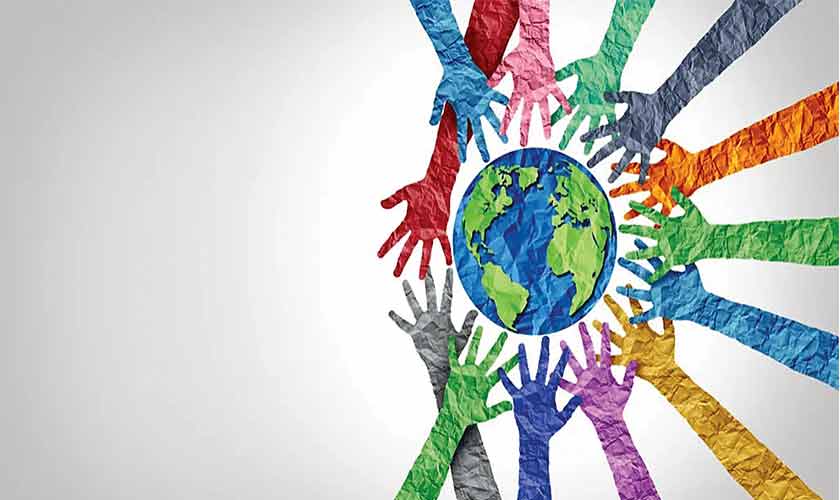
he importance of an unwavering commitment to pluralism is growing by the day as the world faces more and more problems on account of authoritarianism, democratic backsliding and polarisation. Pluralism is much more than a tolerance of diversity; it is the crucial organising principle that renders democratic governance possible and sustainable.
Pluralism is democracy’s main defence against authoritarian capture. Pluralistic institutions proactively oppose authoritarianism.
Pluralism should be seen as acceptance, recognition and above all, institutionalisation of diversity in a society under the rule of common civic structures and not at the whims of those in power, or the power of certain groups. It is based on the principle that the diversity of legitimate perspectives, identities and lifestyles can exist within the framework of unbiased laws and institutions that safeguard, not suppress, this diversity.
Political pluralism allows various political parties and ideologies to compete fairly to gain power. Cultural pluralism lets various cultural traditions and practices to be equally respected and celebrated. Economic pluralism ensures that various types of economic organisations exist and perform. Religious pluralism is the freedom of belief over all forms of religion. Finally, epistemic pluralism mean that there is a recognition of the fact that knowledge is produced by multiple sources.
Pluralism does not occur by chance. It takes institutions and systems to build and sustain it. These include the separation of powers, federalism, autonomous regulatory agencies, autonomous civil society and a free media ecosystem. The rule of law is a necessary basis of pluralism in constitutional supremacy, equal protection, minority rights, due process, as well as secure property rights. It is important to note the difference between diversity, the mere reality of difference, and pluralism, the intentional political and institutional commitment to achieve healthy management of that diversity, through active protection, intentional institutional design, an enabling political culture, legal equality and participatory processes.
Rule of law and pluralism have a symbiotic relationship in that they cannot last long without each other. Pluralism is made possible as the rule of law brings legal certainty, enforcement of contracts, protection of property rights and fairness in procedures, so that different groups can relate with confidence. A pluralistic order is based on constitutional provisions, including a bill of rights and judicial review; and autonomous institutions, including an independent judiciary and a professional civil service. Pluralism enhances the rule of law by establishing stakeholders interested in the integrity of the system. This creates cross-cutting controls and allows coalitions to oppose breach of law and foster a media diversity that holds power to account. The presence of competing power centres such as the opposition parties, various economic interests, civil society watch dog and academic institutions ensures that no one group can take control of the legal system. Moreover, pluralistic societies build the cultural expectation to promote legal equality, fairness, transparency and accountability.
Authoritarian regimes, in sharp contrast, centralize power in individuals or small groups that make decisions based on individual will, loyalty or whims, not the law.
Authoritarian regimes, in sharp contrast, centralise power in individuals or small groups that make decisions based on individual will, loyalty or whims and not some law. The result of this personalisation of power is the rule by whim, whereby the leader favours his or her whims over competence, rules are arbitrary and succession crisis imminent. The laws are applied selectively, depending on political factors. Friends are favoured and rivals punished. Economic opportunities are handed out as patronage. These traits undermine social institutions to turn the courts into political instruments; the legislatures into rubber stamps; the civil service into a warehouse of political appointees; and the media into a compliant tool.
Nationalism plays a crucial role and can assume radically different shapes with far reaching consequences on pluralism. Pluralism is a natural ally of civic nationalism, which is founded on civic values, institutions and participation as the foundation of national identity, not ethnic or religious traits. It prioritises voluntary association, which makes citizenship a matter of choice, embraces immigration and draws its identity to a common future. Institutional patriotism inspires pride in democratic accomplishments and institutions and glorifies the constitution and honours civic victories.
This model is strengthened by inclusive practices, including naturalisation ceremonies and civic education, e.g. the historical ideals of the United States with its e pluribus unum motto, the official multiculturalism in Canada and the cantonal system of Switzerland. Ethnic or religious nationalism, on the contrary, is characterised by national identity based on specific cultural, ethnic or religious attributes which in itself excludes those who do not meet those profiles. It is based on the mythology of blood and soil, advocates cultural superiority and hierarchical citizenship. This model annihilates pluralism by means of institutional capture, cultural domination, economic sidelining and historical revisionism as can be observed in the current movements such as Hindu nationalism in India, white nationalism in some Western countries and religious nationalism in the Middle East.
Democracy is impossible without pluralism since the existence of the democratic governance assumes the need to overcome the disagreement in the peaceful and legitimate way. The essence of legitimate representation is useless when others are overlooked or oppressed by the majority. There is a need, therefore, for an electoral system that ensures that the voice of every minority is heard, curbs gerrymandering and limits the power of the rich. Mixed member proportional system of New Zealand, Belgium’s con-sociational democracy and post-apartheid institutions of South Africa indicate the application of this principle. Democratic decision making is enriched by diversity as various groups bring different knowledge, point out failures and come up with more innovative and valid solutions. Deliberative innovations such as citizens’ assemblies and participatory budgeting strengthen this process. Importantly, pluralistic institutions, offer legitimate processes of solving the inevitable conflicts non-violently, by political competition, judicial processes and mediation through the civil society. The achievements of the peace process in Northern Ireland, the democratic transformation in Tunisia and electoral stability of Ghana are success stories that highlight the greater adaptive power of pluralistic democracies.
Pluralistic democracy provides the best model of handling the diversity that defines contemporary societies. The other - an effort by authoritarianism to ensure uniformity - is inevitably followed up by violence, stagnation and collapse.
Pluralistic institutions have become active resisters of contemporary authoritarian threats. The decision that we are about to make is more than academic. It determines whether our societies can continue to manage inevitable diversity peacefully and productively or we will descend into the cycle of conflict and oppression that has marked too much of human history. The defence of pluralistic democracy is not a partisan position. It is a civilisational imperative - one that requires our immediate attention and sustained commitment.
The writer is the central information secretary of the Awami National Party. He can be reached at anpspox@gmail.com