Print Story
X




Floods are not failures of nature but products of design
| P |
akistan’s recurring floods are too often portrayed as unavoidable acts of nature. Yet the devastation unfolding this year underscores a different reality, that these are not purely natural disasters but the product of extractive development and ecological neglect. The River Indus and its tributaries have long been stripped of their natural floodplains, hemmed in by real estate developments and deprived of the forests and wetlands that once absorbed excess water. This has resulted in large-scale destruction.
Three years after the catastrophic 2022 floods, little has changed in how we govern our rivers. Deforestation continues unchecked, urban expansion presses deeper into flood-prone zones and infrastructure is designed with short-term economic gains in mind rather than ecological resilience. The result is predictable: millions displaced, farmland destroyed and yet another reminder that the roots of Pakistan’s flood crises lie not in the rivers themselves, but in how we manage them.
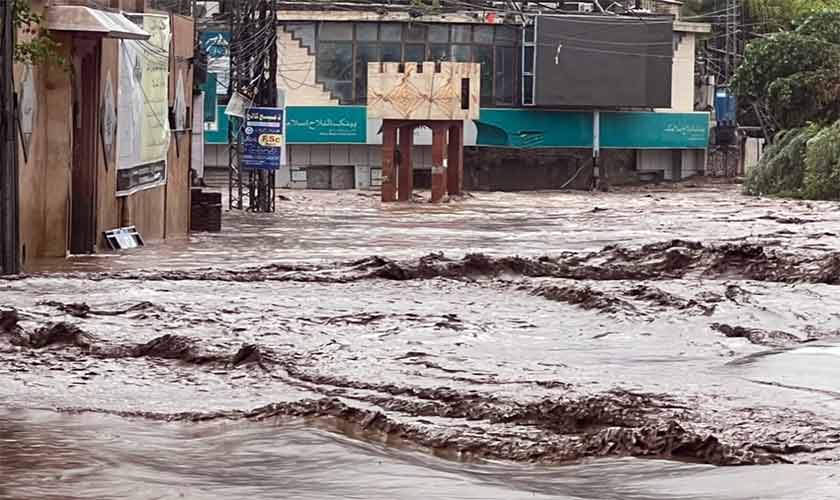
The scale of destruction this year underscores the point. In Khyber Pakhtunkhwa, weeks of torrential rains triggered landslides and flash floods that swept through valleys in Swat, Dir and Buner. By mid-August, the provincial death toll had climbed into hundreds, with bridges and roads destroyed and entire settlements cut off from rescue centres. As the surge moved downstream, the Punjab entered crisis. More than 3,900 villages were inundated in Multan and Muzaffargarh districts, forcing close to two million people to flee their homes. Vast tracts of cotton, rice and sugarcane crops were washed away; livestock losses ran in hundreds of thousands. By early September, the flood crest reached Sindh, peaking around September 9 and prompting mass evacuations from low-lying areas along the Indus. Nationally, over 900 lives have been lost and more than four million people affected. These are not just the consequences of heavy rain but of a system that has left communities exposed and defenceless.
Encroachments have also eaten into the areas where rivers are meant to spill safely. In the Punjab, the push for real estate has been especially damaging: housing colonies have expanded onto the floodplains of the Ravi and other rivers, shrinking the space available for seasonal overflow. Upstream in Khyber Pakhtunkhwa, hotels and tourism-related construction lines riverbanks, narrowing channels and putting lives at risk when waters rise. These projects generate profit in the short term, but at enormous ecological cost. Embankments and levees, often erected as protective measures, create a false sense of security; once breached, they channel floodwaters directly into built-up zones. This cycle is not accidental but the direct result of short-term profit trumping long-term planning.
Along the Indus and its tributaries, riverine forests once formed natural buffers that absorbed seasonal overflow and slowed the force of floods. These survive only in fragments now. According to WWF-Pakistan, the country loses around 11,000 hectares of forest every year, much of it cleared for agriculture, housing and commercial schemes. This steady erosion of wooded cover is not simply an environmental loss; it also represents the dismantling of ecological defences that once stabilised soil and reduced the speed of floodwaters. With forests replaced by farmland and concrete, each monsoon finds less resistance in its path and the destruction grows more severe.
The state’s approach to floods continues to revolve around disaster management rather than disaster prevention. Every monsoon season brings a cycle of emergency declarations, relief camps and compensation packages. But these are responses to destruction already unleashed, not measures that reduce vulnerability in the first place. What is missing is ecological governance and a recognition that rivers need space to expand, forests to stabilise them and wetlands to absorb their flows.
Experts have long pointed out that Pakistan’s regulatory architecture is ill-equipped for such a task. Environmental impact assessments are often perfunctory, produced to fulfil donor or legal requirements rather than to shape development decisions. Large projects, whether highways, industrial zones or urban housing schemes, regularly proceed with little regard for their cumulative impact on river systems. Even where legal provisions exist, enforcement is weak: embankments are constructed and altered without coordination and illegal construction along riverbanks continues unchecked. The result is that short-term economic incentives dominate. Housing colonies on floodplains promise quick returns for developers, hotels on riverbanks attract immediate revenue and mega-infrastructure projects generate political capital. Each of these decisions chips away at the ecological defences that could mitigate floods. Not only is this administrative neglect, it is the logical outcome of a governance model that sees rivers as obstacles to development rather than living systems to be sustained.
Until policy shifts from reactive relief to proactive ecological stewardship, the pattern will repeat: rivers constrained, floods magnified and disasters manufactured. The question is not whether heavy rains will come, but whether Pakistan’s governance framework will continue to ensure they end in tragedy.
To understand why Pakistan’s floods repeatedly spiral into national disasters, we need to move beyond rainfall charts and relief tallies. The underlying problem is extract-ivism. Extractivism not just in the narrow sense of cutting trees or encroaching on floodplains, but as a governing logic that treats rivers as channels of extraction and control.
This logic has deep roots. The Indus Basin was re-organised under colonial rule as an irrigation machine. Barrages and canals redirected rivers to maximise agricultural output, transforming the basin into one of the world’s largest irrigated regions. The language of governance has barely shifted since. Rivers continue to be seen as resources to be tamed and harnessed, not as living systems with ecological rhythms. Each embankment, grey infrastructure, or mega-dam promises mastery over water, but in practice, these interventions constrain the river until its natural surges return with greater force. Floods then become the inevitable outcome of policies designed to keep rivers under control.
The state’s development agenda has carried this way of thinking forward. Infrastructure is pursued for political visibility and immediate returns, with little regard for ecological consequences. Barrages and highways are inaugurated as symbols of progress. Their effect on wetlands, groundwater recharge and flood resilience is frequently ignored. When environmental assessments are conducted, they are treated as technical checkboxes rather than frameworks for decision-making. Extractivism operates not only as physical exploitation but also as the erasure of ecological complexity from the planning process.
The pattern is visible in many contemporary projects. The controversy surrounding the Ravi Urban Development Authority is well-documented by now. It envisions entire housing colonies on the floodplain, marketed as modern real estate ventures, but in reality, eliminating the very buffer zones that make cities safer. In Swat, hotels stand precariously on riverbanks, narrowing natural channels in the pursuit of tourism revenue. Large dams are proposed as solutions to water scarcity and energy needs but they also deepen the state’s reliance on a model of river control.
Ecological spaces that resist commodification, forests, wetlands and riverine habitats are getting erased. Their value in absorbing floods or sustaining biodiversity does not enter cost-benefit equations. This erasure strips rivers of resilience because their ecological functions are invisible to the metrics of development.
Floods, then, are not mere acts of nature but also products of design. They are manufactured crises that expose the bankruptcy of extractivist governance. Until rivers are recognised as more than conduits for profit, every monsoon will reproduce the same cycle: surging waters, breached levees and a nation left counting its losses.
Sheheryar Khan is a development and communications professional based in Lahore