Print Story
X




Those battling the rising tide of mental illnesses are steadily being overwhelmed

| “T |
he physician in me can never heal anything unless he feels the pain of the patient in himself.”
----- Carl Jung
My first psychotherapy patient in the United States taught me a lot about suffering. We met for almost two years and I despaired of ever helping her. When she moved to another city, I felt like an abject failure. She seemed to be the same. Although frequent thoughts of suicide were gone, she still got depressed from time to time. She was still anxious although she had not needed to be hospitalised for crippling anxiety attacks in the time we had been working together. I know now that it was my own unrealistic expectation that had been torturing me. In our last meeting, she explained to me how our work together had saved her from suicide, after her teenage son had died suddenly.
A few years ago, our small psychiatric community in Pakistan was shaken by the murder-suicide of a psychiatrist and his physician daughter in Multan. I was as upset as everyone else but not surprised. There are very few of us battling a sea of despair and need. Pakistan has less than 1,000 psychiatrists for its 260 million people. Most of us are concentrated, like the rest of the world, in and around large cities. This works out to a psychiatrist for roughly 250,000 people (the WHO recommends 1:15,000). Even this sorry number is badly skewed in remote rural areas where the ratio drops to 1:1,000,000 or more.
Qualified psychologists to provide psychotherapy and various kinds of testing similarly are hard to find outside large cities. Those who are available are booked up for weeks in advance leaving no space for emergencies. Psychiatric social workers and nurses are almost unheard of outside a handful of large government hospitals in Lahore, Karachi and Islamabad.
Is it any wonder then that our people are suffering and dying every day because of common and commonly treatable psychiatric conditions?
Then there is a silent and far deadlier problem. Those of us battling the rising tide of mental illnesses in Pakistan—and our colleagues around the world—are being steadily overwhelmed by the onslaught and, sometimes, are being driven to despair, even suicide.
This is not just a Pakistani problem. When I was a medical director at a large psychiatric organisation in the US, one of our psychiatrists committed suicide by shooting himself in the head. We had all seen the signs: he seemed distraught, irritable, angry. One day he showed up at work with his head shaved, dark circles under his eyes as if he had not slept in days and wearing clothes that were soiled and wrinkled. We all whispered and worried about him. Our CEO and I conferred more than once about how we should approach him, to help. Before we could do anything, he was gone. Another healer lost to mental illness.
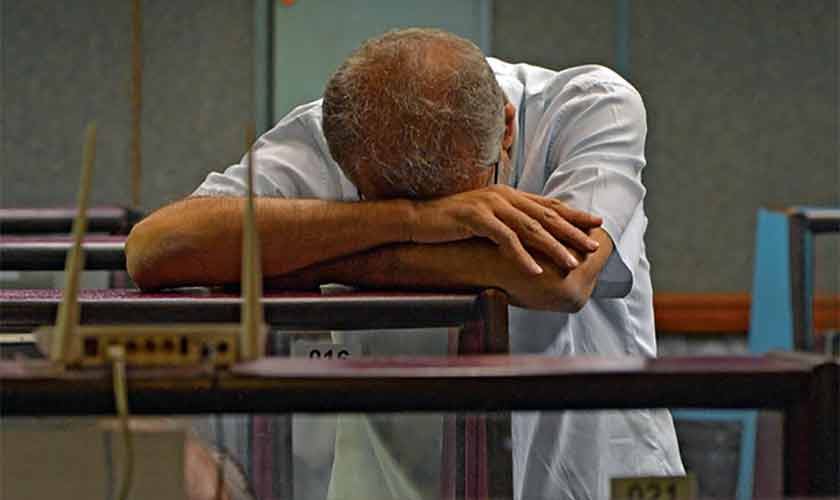
Pakistan has less than 1,000 psychiatrists for its 260 million people. Most of us are concentrated, like the rest of the world, in and around larger cities.
Pakistan, with its already miniscule mental health resources, cannot afford to lose our healers. This is why in both our large public hospitals in Lahore we pay special attention to the mental health of our workforce. Over the last two decades, we have seen a steady shift in perceptions about mental illness in Pakistan. When I started working in Pakistan more than 15 years ago after returning from the US, psychiatric illnesses were still joked about and belittled. It was especially infuriating to witness our own medical colleagues’ attitudes, which varied from dismissive to insulting. Very slowly, almost imperceptibly, this changed as we worked to help people understand why mental health and physical health go hand in hand.
My own colleagues in our university started approaching me for help with their children, their spouses or their parents—at first, secretly, afraid that word would get around and they too would be made ‘fun’ of. As we tried to help them, we always made a point of discussing mental health at par with physical health demonstrating that talking about and discussing mental health and mental illness was just as important as doing something about it. Mental health is no longer a taboo subject on our university campus or on any campus in Pakistan.
Now the tide of people seeking mental healthcare is rising steadily and there are far too few of us to help. Some of my colleagues have dealt with this by just working harder and trying to help more people. Some of them see 50, 60, even 100 patients in one afternoon. But this simply magnifies the problem of poor care: not giving people enough time perhaps means inaccurate assessments and diagnoses and, often, an over emphasis on medication which can have its own problems. In addition, working at this pace, 6 or 7 days a week inevitably leads to burnout and, sometimes, frank depression and mental health problems in the healers.
There are no easy solutions but continuing to talk about mental health is a start. This week, on World Mental Health Day, we had a wellness walk on our campus with all of our senior faculty from all disciplines and our students. My colleagues in the psychiatry department and I make a special effort to be readily available to help our hospital colleagues and their families in whatever way they need. It might be a consultation for themselves, a spouse or a child or maybe just a chat over a cup of tea in between classes. It helps to demystify and destigmatise mental health. We all talk and write about mental health whenever and wherever we can. Looking around, it is obvious that people are paying attention.
For good or bad, mental illness is being talked about and discussed more and more: in newspapers, media, in schools and colleges and homes. All of us are also continuing to train more people to deliver efficient, high quality mental health services to those most in need, including working on innovative models such as training non-doctors like lady health visitors, nurses and even lay people to deliver simple mental health interventions which can be cheap and effective.
While we face the same capacity problems in healthcare in Pakistan as the rest of the developing world, we are making steady progress. Whenever I feel frustrated and overwhelmed that we are not doing enough, I take a deep breath and remind myself and my students of a verse from the Quran: “Whoever saves one life, it is as if he has saved all of humanity.”
The writer, a psychiatrist, is a member of the King Edward Medical University faculty. He is the author of Faiz Ahmed Faiz: A Biography, Sang-e Meel Publications, 2022. His X handle: @Ali_Madeeh.