

Print Story
X




From occasional trade of barbs over governance the PPP-PML differences appear to have shifted to a more substantial issues of shared resource management
| T |
he war of words between some Pakistan Muslim League-Nawaz leaders and the Pakistan Peoples Party leadership is no longer confined to the two coalition allies. Showing a low tolerance threshold for each other, both have indulged into harsh exchanges after the PPP insisted on using the Benazir Income Support Programme as the main conduit for providing early relief to the flood victims in the Punjab. Chief Minister Maryam Nawaz was quick to dismiss the suggestion. In the ensuing tit-for-tat criticism of each other, the two sides have revived debate over several issues including the canals project that was earlier postponed pending consensus.
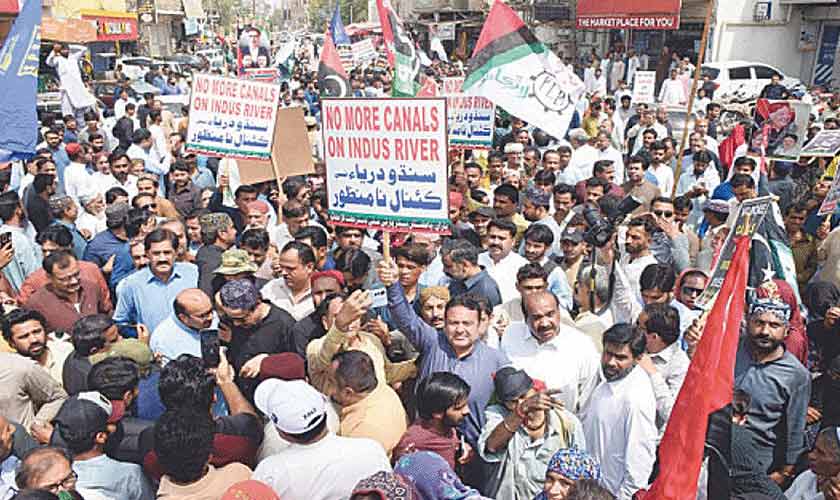
Most political parties in Sindh construed the Punjab CM’s statements as a fresh assault on the decision of the Council of Common Interests in April this year that had in effect indefinitely put off a consideration of the canals project. The so called strategic canals plan had led to a spate of protests by political parties, farmers’ associations, lawyers’ forums and civil society. At its peak, it had included a protracted blockade of inter-provincial highways. A hurriedly convened overdue meeting of the CCI had then endorsed the policy of the federal government. It said that “the federal government will not move further until mutual understanding is evolved among the provinces.” The statement had also said:“The Executive Committee of the National Economic Council’s provisional approval dated February 7, 2024, for the construction of new canals and the Indus River System Authority’s water availability certificate issued in its meeting dated January 17, 2024, be returned.” The Planning Division and the IRSA were directed to ensure consultation with all stakeholders, in the “interest of national cohesion and to address any and all concerns until mutual understanding is reached.”
Article 155 of the constitution mandates the CCI to mediate disputes concerning water between the federation and the provinces, or between provinces. The CCI is a constitutional forum, so that its decisions are binding on all stakeholders.
The recent statements by some Punjab government leaders have triggered a debate in Sindh. Representatives of the Sindh and the Punjab governments had reached a draft agreement in 1945. However, the Punjab government did not ratify it. Under the Indus Water Treaty, eight link canals were built to divert a substantial amount of water for irrigation. Two of these directly transferred water away from the Indus river.
Acrimony over sharing of river waters between the Punjab and Sindh had persisted till the Water Accord of 1991 was signed. Many in Sindh had reservations on the accord and pointed to the questionable political legitimacy of the Jam Sadiq Ali government.
Acrimony over water sharing continued between the two provinces till the Water Accord of 1991 was signed. Many in Sindh had reservations on the accord. Some of them pointed to the questionable political legitimacy of the Jam Sadiq Ali government. It has since been alleged that the accord has not been implemented in letter and spirit. The IRSA now prepares water shortage forecasts in early Kharif and uses a contested three-tier formula for water distribution. After the IRSA issued a water availability certificate for the Cholistan scheme, despite objections from Sindh, its credibility has been questioned by Sindh government as well as other stakeholders.
Recently, the Sindh High Court stopped the federal member of the IRSA (belonging to the Punjab) from working. Clause C of the executive order issued by the Pervez Musharraf government on July 10, 2000, had reserved the job for an expert from Sindh. The order was protected under Article 270-AA of the constitution which protects chief executive’s orders. However, a federal member was appointed from the Punjab in 2010.
River flows and apportionment of water have been the subject of many a dispute worldwide. The upstream states/ regions are typically accused of usurping the share of the downstream counterparts. In 1948, India used its upstream location to coerce Pakistan into an agreement that deprived it of three eastern rivers. Recently, it has unilaterally ‘suspended’ the IWT. The people of Sindh are worried.
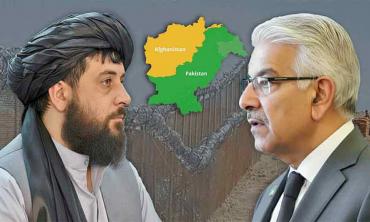
Pakistan also receives approximately 20 million acre feet (MAF) of water from Kabul River. The 700 kms long river rises in the Sanglakh range located in a mountains northwest ofKabul. It passes by Kabul and Jalalabad in Afghanistan before entering Pakistan.
Shared rivers are best acknowledged as a shared resource. Several international treaties establish and protect the lower riparian’s water rights. Given the highly polarised political landscape irresponsible statements are a great disservice to the federation.
The writer is a civil society professional, nmemon2004@yahoo.com