Print Story
X

| I |
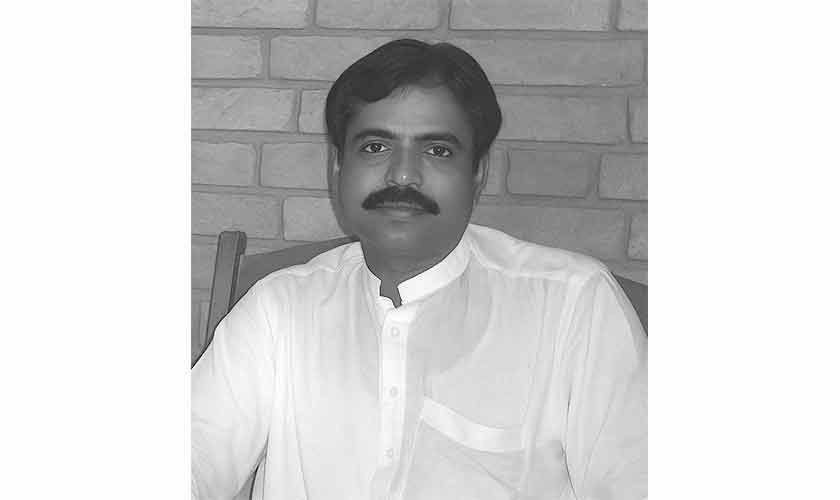
n the scattered archives of Pakistan’s minority politics lies the forgotten story of a man who dedicated his life to one of the country’s smallest and most marginalised communities: the Buddhists of Sindh. Achar Sha Naik, born in 1967 in Mehrabpur in Naushahro Feroze district, devoted decades to public service, yet his name remains absent from national memory.
The son of Karmo of the Naik caste, officially identified as “Non-Muslim, Buddhist,” Naik’s journey was unusual for someone from a modest rural background. He earned post-graduate degrees in economics, international relations and sociology from Shah Abdul Latif University, Khairpur. He also received legal training and combined academic achievement with tireless grassroots activism. By the early 1980s, he had entered the corridors of federal politics. In 1982, Minister of State for Minorities Affairs Peter John Sahotra welcomed his appointment to the Federal Advisory Council for Minorities Affairs, describing his role as vital for addressing the problems of under-represented groups. Naik’s prominence was reaffirmed in 1992, when he was again inducted into the council and tasked with compiling proposals of “national importance.” But his real impact lay outside official forums, where he served as a trusted intermediary between the state and neglected communities.
That trust became clear during the devastating floods of 1992, when parliamentarian Byram D Avari recommended Naik to oversee relief distribution to Buddhists, Parsis, Sikhs, Bahais and Kalash families. Local officials were instructed to cooperate with him. The records reveal another side: communities left out of aid schemes, leaders forced to beg for recognition. “It is painful to explain that the Buddhist community has been absolutely neglected,” he wrote in one plea, warning that petitions had been filed but “nothing has been done till to this time.” His words carried urgency and quiet frustration, exposing the inequities of the relief apparatus.
Beyond emergencies, Naik’s advocacy mapped the vulnerabilities of daily life. He petitioned for residential plots and land certificates, pressed for electricity supply in Buddhist neighborhoods, requested teacher appointments and scholarships and pleaded for the protection of graveyards and community centres. These appeals were not for privilege, but for the most basic guarantees of citizenship.
Placed against the backdrop of Sindh’s ancient Buddhist heritage, these struggles appear especially poignant. Once home to monasteries and stupas visited by pilgrims like Xuanzang, Sindh’s Buddhist presence by the late 20th Century had dwindled to small, impoverished clusters. Their requests for electricity or graveyard walls stand in stark contrast to the grand ruins that testify to Buddhism’s historic place in the region.
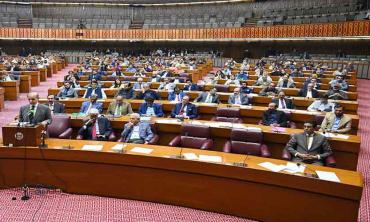
Naik’s career also reflected Pakistan’s troubled history of minority representation. Since independence, the state has oscillated between different systems. Under Gen Zia-ul Haq in 1985, minorities were given “separate electorates,” voting only for co-religionist candidates, cut off from mainstream politics. In 2002, the system shifted to joint electorates with reserved seats, but the seats are allocated by party leaders through lists, not chosen directly by minority voters. For micro-minorities like Buddhists, this meant near-total invisibility. While Christians or Hindus could sometimes place their representatives, Buddhists lacked the numbers and clout to secure a seat. People like Naik could sit on advisory councils or relief committees, but their communities remained unrepresented in the parliament.
Remembering Naik is historical justice. He showed that the Buddhists of Sindh were not passive relics of the past but active citizens seeking education, representation and dignity. His life underscored a truth that still resonates: without accountability, advisory councils and reserved seats are not enough. True representation requires voice. Naik spent his life trying to make that voice heard.
As Federal Minister Raja Tridiv Roy noted in 2009, groups as small as the Buddhists and Kalash could never find fair representation under the system. Naik’s life—spanning council appointments, relief efforts and community organising—embodied that paradox: acknowledged by the state, yet unable to secure systemic change.
In later years, frustrated by domestic neglect, he looked abroad. On the Buddhist Festival of Light in 2000, he wrote to foreign ambassadors seeking help to fight poverty and illiteracy among Sindh’s Buddhists. “I wish to lay down the foundation stone of a mission of life,” he declared, appealing to international solidarity after exhausting local avenues. His tone was humble yet firm, signaling both desperation and resilience.
Naik’s efforts rarely made headlines. He was known in bureaucratic circles, respected by a handful of parliamentarians, but invisible to the wider public. When he died in 2016, his passing went unremarked in national newspapers. No tributes were published, no memorials built. What remains are scattered letters, official memos and memories of a man who refused to let his community vanish into silence.
Today, few outside Sindh remember Achar Naik. His name does not appear in political histories of Pakistan, nor in accounts of Buddhist heritage that focus more on ruins than living communities. Yet, his life opens a window into the unseen struggles of religious minorities. His story is not of personal triumph, but of a persistent dilemma: what does representation mean when communities cannot elect their leaders? What does equality mean when the smallest minorities remain voiceless even within systems designed to include them?
Remembering Naik is historical justice. He showed that the Buddhists of Sindh were not passive relics of the past but active citizens seeking education, representation and dignity. His life underscores a truth that still resonates: without accountability, advisory councils and reserved seats are not enough. True representation requires voice. Naik spent his life trying to make that voice heard.
His advocacy, overlooked in his own time, speaks powerfully today amid renewed debates on religious freedom, minority rights and cultural preservation. Naik’s story reminds us that leadership is not always about visibility or power, but about the refusal to let one’s people be forgotten.
The writer is a visiting senior research fellow at the Department of Anthropology, University of Texas, Austin.