

Print Story
X




GCU’s trailblazing Department of History of Art fills a critical gap in the country’s educational landscape
| I |
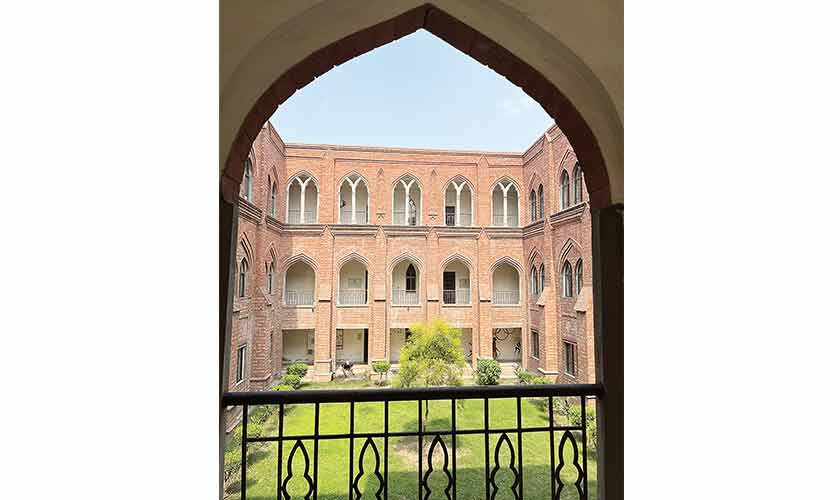
n the heart of Lahore’s historic Walled City, where Mughal grandeur intertwines with modern aspirations, Government College University is shaping a transformative chapter in Pakistan’s cultural narrative.
Established in 2021 as the nation’s first dedicated Department of History of Art, nestled within the Institute of Global and Historical Studies, this pioneering initiative fills a critical gap in Pakistan’s educational landscape: the absence of formal training in art history.
Globally, art history is a distinct discipline, separate from traditional history, which often centres on political or social narratives. Having modelled its curriculum after elite institutions like Harvard, Cambridge, and UC-Berkeley, the GCU department is not merely teaching art; it is forging tools to define Pakistan’s cultural identity in a globalised world.
The department offers BS, MPhil and PhD programmes, blending rigorous academic inquiry with practical skills. Its curriculum has foundational courses like art and architecture of the Muslim world and the history of South Asian art as well as innovative offerings such as gender in South Asian art, digital media and art in the 20th Century, ideology and display; and art and emotions. These modules integrate digital humanities, gender studies and critical theory, equipping students to address contemporary challenges — from colonial legacies to virtual exhibitions.
The department’s engagement with Lahore’s tangible heritage is exemplary. A standout project is the curation of Barkat Ali Islamia Hall, a historic landmark near Mochi Gate that once buzzed with political fervour. Built in 1888 by Khan Bahadur Barkat Ali Khan, founder of Anjuman-i-Islamia, Punjab, the hall hosted Muslim League gatherings after the 1940 Lahore Resolution. In December 2022, the Walled City of Lahore Authority led a Rs 20.2 million restoration project, repairing beams, filling cracks and reviving the façade. GCU’s History of Art faculty spearheaded its curation, transforming it into a vibrant cultural venue that would host poetry symposia, musical evenings, literary sittings and theatrical performances.
The department also curated Akbari Kutab Khana at the Lahore Fort and is now preparing to modernise the Lahore Police Museum, underscoring its role in preservation while training students in exhibition curation — skills vital for Pakistan’s growing heritage sector.
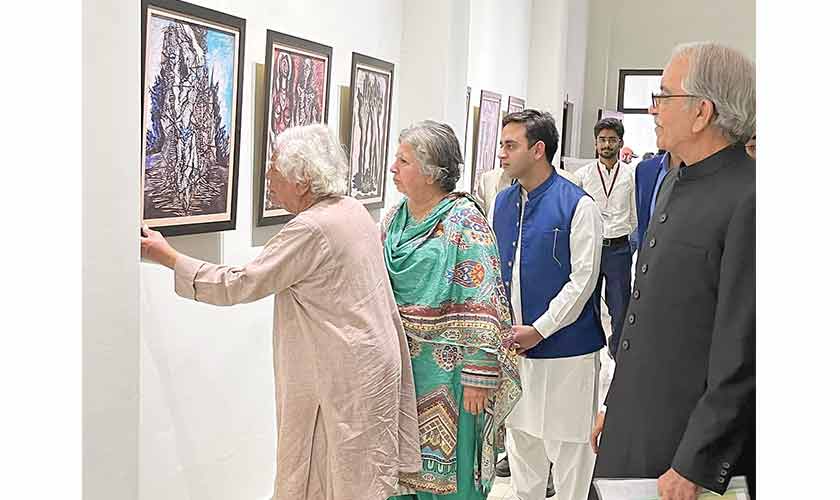
An early triumph for the department was the November 2021 exhibition of legendary artist Sadequain’s work. It featured prints donated by his nephew, Sultan Ahmad, that are now part of its permanent gallery collection. Inaugurated by painter Dr Ajaz Anwar, the exhibition celebrated Sadequain’s genius as a painter, poet and calligrapher.
Since its inception, the department has organised 14 major events, including online conferences with YouTube recordings accessible globally, fostering dialogue on topics from South Asian visual culture to war imagery in ancient art.
Art history departments at Oxford and Columbia produce curators and policymakers shaping cultural diplomacy. In Pakistan, where societal narratives often feel disconnected from global currents, GCU’s initiative is revolutionary. It bridges the gap by linking local motifs — like Mughal miniatures and Indus Valley artifacts—to universal themes, promoting pluralism and empathy rooted in ancient Greek philosophy and mystic traditions.
Market prospects are bright. Pakistan’s heritage industry, fueled by tourism and conservation, requires skilled professionals for UNESCO sites such as the Lahore Fort. Graduates are poised for roles as curators at institutions like the British Museum, or as consultants at Sotheby’s, leveraging digital tools for virtual reality tours. With the global art market projected to reach $67.8 billion by 2026, Pakistani art historians can amplify voices from the Global South, enhancing the country’s cultural presence.
In an era of cultural contestation, GCU’s Department of History of Art is a cultural bulwark. By weaving Sadequain’s mysticism with Barkat Ali’s activism, it invites Pakistanis to present their narrative — one brushstroke at a time. Faculty members believe that these efforts will inspire future generations and ensure that Lahore’s legacy endures not as a relic but as a living dialogue.
Shifa Ahmad is in charge of Department of History of Art, Institute of Global and Historical Studies, at the Government College University, Lahore