Print Story
X




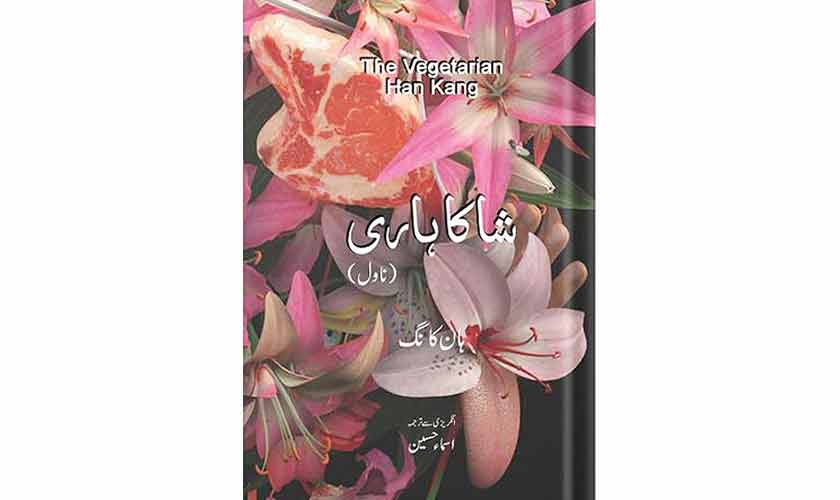
Han Kang’s The Vegetarian, now in Urdu, shows how dreams can overwhelm the rational self
| R |
eading Han Kang’s Korean novel in Urdu is like engaging with the novel’s globality. This genre surpasses various boundaries, including ideological ones, and encompasses diverse identities, be they racial, religious, linguistic or cultural. The novel unites humanity through its transcendent nature. Translation itself performs this transcendence. The Vegetarian was initially written in Korean. Its English translation by Deborah Smith in 2015 extended its reach beyond South Korea’s linguistic confines, allowing the novel to gain global access through English and subsequently through translations into other languages, including Urdu. The notion that the Urdu translation is distanced from the original by two steps is only relevant if we can detect any missteps.
The traditional view of translation suggested that it was akin to violating the virginity of the original text, resulting in a poor copy. However, we have now come to understand that the concepts of original and copy are both arbitrary and potentially harmful to the reading experience.
The moment you realise that the copy deviates not only from the original but also sometimes misrepresents it you begin to experience a sense of loss instead of gaining insight from the book. The question arises: where does this dichotomy exist? Is it within the text or beyond it? The fact is that this dichotomy often exists outside the text, rooted in the academic discussions surrounding translation. In translated works, we encounter only the quality of the translation itself. The Urdu version of The Vegetarian is so well-crafted and engaging that you don’t sense the absence of the original or feel that its essence has been compromised. Asma Hussain possesses an impressive mastery of both English and Urdu, knowing how to preserve and, at times, recreate the narrative spaces where characters fully engage, live and die. Shaka Hari serves as an impeccable translation of the term vegetarian.
Han Kang, who won the Man Booker International Prize for The Vegetarian in 2016 and the Nobel Prize in 2025, appears to embed her fiction into an exploration of the unexpected and often disturbing paths that human desires can take, while also addressing the fundamental question of human reality. The Vegetarian, as the name implies, is not merely about embracing a vegetarian way of life. It does not relate anything like the physical, psychological, moral or spiritual advantages of being herbivorous; nor does it highlight the risks associated with a carnivorous diet. Instead, it delves into the complex relationship between dreams and reality.
Dreams are a crucial aspect of our existence; yet they often end up discarded in the dustbin of forgetfulness or lost in the intellectual fog created by interpretation. We strive to guard the boundaries of our rational selves by warding off the spectres of dreams. Yeong-hye, the protagonist in The Vegetarian, defies this norm by allowing her dreams to overwhelm her rational self. She is not obsessed by her dreams but lets her dreams guide her.
She has worked as a graphic instructor and is considered rather plain. A passionate reader, she is a loving and unobtrusive wife, as her husband Mr Cheong describes her. After adopting a vegetarian lifestyle, she has begun retreating into the past—not her personal past, but the past of humanity and of life. She has not only given up meat but also renounced physical desires. Her commitment to vegetarianism consumes all her corporeal cravings.
She experiences a vivid dream of entering a jungle inundated with streams of blood and meat. Yeong-hye appears to think that this dream is not merely a confused fantasy or a deep symbol that requires interpretation and then dismissal, but a true revelation. Her immediate decision to stop eating meat, which ultimately leads to suffering from anorexia nervosa, demonstrates her strong conviction that her dream is indeed a revelation. Yet it did not originate from any otherworldly, metaphysical realm. It arose from an archaic world where humans lived in harmony with nature, refraining from cutting down trees and killing animals. Yeong-hye embarks on a journey back to this archaic, mythic world. She continually dreams of this primordial world, viewing each dream as a revelation and a source of guidance. Every time, she relinquishes her rational, everyday self in the face of the revelation in the dream.
It appears that she has adopted a lifestyle centred around a refusal to consume flesh. Sexuality and social interaction have become taboo. She has lost her attraction to her husband and her respect for her parents. Her feelings of loneliness and silence intensify. She survives on minimal sustenance. Her health starts to deteriorate. Her father, wielding his traditional authority, attempts to compel her to eat meat, even resorting to slapping her, yet she remains resolute. She disregards medical advice concerning her health. She prioritises her vegetarianism over her marital relationship. The more she commits to vegetarianism, the further she alienates herself from her family. She evolves into a staunch vegetarian. She shuts herself off from the realities of the outside world. The narrative of the novels unfolds in response to the inquiry regarding the ultimate purpose and boundaries of immersing oneself in the archaic world of harmony with nature and non-duality.
The first part of the novel narrates the journey of becoming a vegetarian in a conventional sense. The subsequent section centres on Yeong-hye’s aspiration to find harmony with nature. This path to harmony is stumbled upon by chance. Yeong-hye’s brother-in-law, a video artist, learns from his wife that a Mongolian mark is naturally etched on Yeong-hye’s hip. He contemplates the idea of filming this Mongolian mark alongside painted flowers adorning her entire body. He resolves to create a video featuring a man and a woman engaged in sexual intercourse, their bodies adorned with painted leaves and flowers. Yeong-hye consents to his concept. For her, a body painted like a tree symbolises harmony with nature and a non-dual existence. The experience of this non-dual existence is so sacred to her that she perceives no harm in participating in sexual intercourse with her brother-in-law and a stranger, who are also painted with leaves and flowers.
Flesh has lost its purpose and has become superfluous. She no longer possesses any desires of the flesh. She finds no pleasure in nor does she connect with her femininity during sexual encounters. The overwhelming experience of unity with nature blinds her to the fact that she is being exploited. It appears that after relinquishing her rational, everyday self to the realm of dreams, she has transformed into a mere image of those dreams. The images exist in a world that is non-verbal and non-corporeal. When her elder sister In-hey discovers her in the nude with her husband in her apartment, she fails to recognise that she is being exploited. She is teetering on the edge of suicide when emergency services arrived to save her.
The third and final section of the novel, Flaming Trees, while recounting the events of Yeong-hye’s final days in a mental hospital at Mount Ch’ukseong, reveals the mystery of her complete detachment from the rational-social-human self. Medically, she is diagnosed with anorexia nervosa and schizophrenia. She perceives that she was once an animal and has now transformed into a tree.
Kang has expanded her own short story in which a woman believes that she has become a tree. During her time in the hospital, Yeong-hye often stands on her head. She tells In-hey that her hair represents her roots. She senses that branches, leaves and flowers are sprouting from her body, particularly between her legs. She refuses to eat, asserting that trees only require water. By declaring her transformation into a tree, she appears to renounce her belonging to the human world, finding herself instead in the realm of nature.
She experiences no emotions towards anyone. Not only is she relentlessly pursuing her dream, but she has also transformed into the spirit of that dream. Communication with the spirits of dreams is impossible. Yeong-hye’s narrative, divided into three sections, is recounted by her husband, brother-in-law and sister. She appears disinterested in sharing the tale of her transformation from animal to tree. For her, loneliness and silence are essential elements of this journey, embodying the two characteristics of a tree that she has always possessed.
The novel is multilayered. A significant theme of the book revolves around the fluidity between dreams and reality. It appears to explore the nature of this fluidity. This fluidity encourages us to cross boundaries. Yeong-hye chooses to immerse herself in the dream realm. As she enters this dream world, she finds it impossible to return to the mundane, real world. The non-dual aspect of the dreamlike realm closely resembles a form of ametaphysicality, but not spirituality. She finds herself in a consecrated, isolated and non-social environment. Although she endures torment and suffering, she remains silent, much like trees. In contrast, her elder sister experiences pain; so does the reader.
Another key theme of the novel is that while we can remember, discuss and yearn for the non-dual past of humanity, it is something that cannot be reclaimed. The duality will forever remain a part of our evolutionary history and a romantic notion. This novel also explores the limits of the desire to be free from desire. Another crucial theme is the fragility of human relationships. Yeong-hye serves as the central character of the novel, and much of the narrative centres around her, yet it also tells the story of the family’s disintegration. In the latter part of the novel, In-hey reflects on the small events that led to the family’s breakdown and the life of Yeong-hye.
The novel is crafted in a simple yet engaging prose style. Its themes are philosophically dense but the narrative style is uncomplicated. The story flows like a stream. The novel is a creation by women in every aspect. The author, the protagonist and the translators into both English and Urdu are all women. This, however, is merely a coincidence, a lovely one. Asma Hussain has done an excellent job with the translation.
Shaka Hari
Author: Han Kang; translated by
Asma Hussain
Publisher:
Maktaba-e-Danyal
Pages: 210
Price: Rs 1,500
The reviewer is a Lahore-based Urdu critic and fiction writer. He currently serves as Head of Publications, Gurmani Centre, LUMS. His new book Mera Daghistan-e-Jadeed is in press