

Print Story
X




Private-public partnerships can help Pakistan close its infrastructure gaps, create jobs, and stabilise its economy
| P |
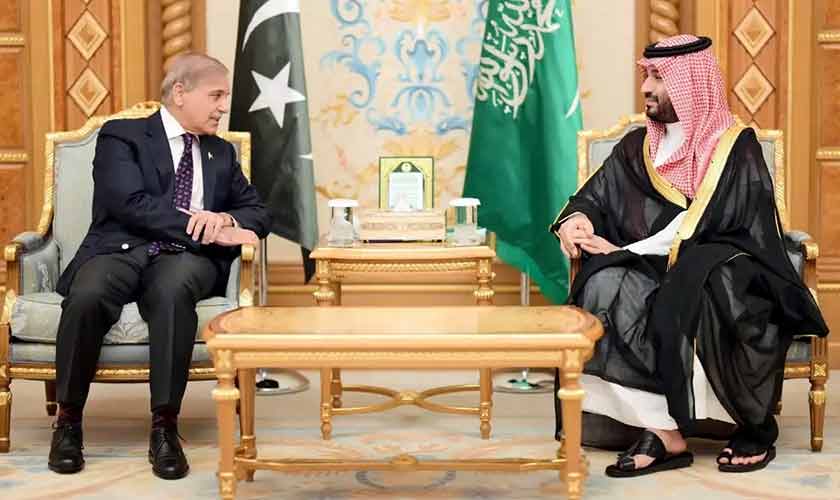
akistan and Saudi Arabia are at a new juncture in their long relationship, based on common faith, mutual trust and a history of solidarity. Saudi financial assistance has been a stabilising influence for Pakistan in times of financial stress. As the two nations confront the evolving demands of the 21st Century, the contours of this partnership appear set to shift in a new dimension. Prime Minister Shahbaz Sharif’s recent visit to the Kingdom has signalled a transition from aid-driven support to investment-led collaboration moving beyond episodic relief towards sustainable economic cooperation.
Public private partnerships (PPP) can mark a new era of cooperation that unites governments and private sector investors to develop, finance and manage joint projects of national and commercial importance. Pakistan can reduce its fiscal burden through PPP by upgrading energy, infrastructure and agriculture. PPPs also complement Saudi Vision 2030, which aims to diversify investment and ensure energy and food supplies. In this vision, PPPs can form the bedrock of a partnership-oriented future.
Pakistan is currently struggling with great economic stress. Its large debt, recurring balance of payment problems and limited fiscal room have made it increasingly difficult for the government to fund energy infrastructure and industrial ventures. Private capital, in the form of foreign direct investment (FDI), has become a necessity.
Kingdom’s Vision 2030 is directing an ambitious economic transformation with the aim of reducing dependency on oil revenue by channelising investment into renewable energy, technology, logistics and agriculture. The drive aligns well with several untapped strengths of Pakistan including youthful workforce, fertile land and geography.
The PPP model offers a mechanism to fill the complementary gaps. Pakistan can provide market potential and public support, and Saudi investors capital, knowledge and long-term commitment.
Areas ready for PPP cooperation
Energy and Renewables: Many Saudi firms, including ACWA Power, have international presence in solar and wind energy projects. Pakistan’s persistent power deficits and environmental-friendly policy framework provide a perfect platform for PPP in renewables. A PPP arrangement can involve Saudi companies investing in the Punjab’s large-scale solar parks or Sindh’s wind farms. The governments can offer land, guarantees and regulatory support.
Mining and Minerals: Pakistan is home to Reko Diq copper and gold reserves as well as massive coal, chromite and rare earth mineral deposits. Saudi Arabia has indicated interest in strategic mineral wealth through its Public Investment Fund. A PPP framework can enable Pakistan to keep sovereign ownership while offering revenue sharing with Saudi partners.
Agriculture and Food Security: PPP schemes could allow Saudi agricultural enterprises to rent land, bring in advanced farming technologies and build cold-chain logistics. Pakistan could gain greater productivity, rural jobs and export revenues.
Infrastructure and Transport: From airport modernisation to port and highway expansion, infrastructure is the pillar of economic development. Pakistan has already welcomed Saudi investment in airlines and airports in joint ventures. A PPP concession model may enable Saudi private companies to run terminals, logistics centres and industrial estates under build-operate-transfer contracts.
Technology Startups: Saudi venture capital is also looking for exposure to tech ecosystems with high growth. Pakistan’s IT and freelancing economy, which is growing rapidly, can be scaled up immensely if Saudi venture capital is connected through PPP-funded incubators and innovation parks. This provides a diversification opportunity for both sides.
The prime minister’s recent visit to the Kingdom has signalled a transition from aid-driven support to investment-led collaboration moving beyond episodic relief towards sustainable economic cooperation.
Institutional framework
Realising the importance of foreign investment, Pakistan has constituted the Special Investment Facilitation Council, a one-window operation to expedite approvals and eliminate bureaucratic delays. The council has assigned the highest priority to investment from Gulf nations, especially Saudi Arabia. Connecting the SIFC framework to formal PPP law in consultation with Public Private Partnership Authority will help Pakistan build a more investor-friendly and predictable environment.
Saudi Arabia’s Public Investment Fund, one of the world’s leading sovereign wealth funds, is actively pursuing international collaborations. The PIF’s entry into Pakistan by adopting PPP framework could mean long-term stability and encourage other investors to take the same route.
Challenges
Success will depend upon negotiating structural challenges:
Regulation: Uncertain taxation and frequent policy changes discourage investors to plan long-term investment. Therefore, transparent and stable PPP legislation is essential.
Political stability: An unstable political environment dampens investor’s confidence. Institutional guarantees and sovereign support agreements can mitigate this risk to take on PPP projects.
Capacity gaps: PPP projects demand advanced contract management and monitoring. Pakistan’s public institutions will require technical capacity-building.
• Public opinion: PPPs must not be viewed as “selling off national assets.” Bidding and accountability must be highly transparent to ensure public faith.
A win-win framework
If designed right, PPPs between Pakistan and Saudi Arabia can achieve three core objectives:
Economic development: Pakistan can build energy, agriculture and infrastructure in bulk without placing the national exchequer at burden through mobilising foreign capital.
Strategic security: Saudi Arabia can secure food supplies, diversifies its investment portfolio and strengthen a valuable ally by investing in Pakistan.
Regional stability: Economic dependence strengthens stability and cooperation in a region.
The PPP concept in Saudi-Pakistan relations is not academic. In the last year alone, several memorandums of understanding have been inked on energy, mining and aviation. Saudi delegations traveling to Islamabad have expressed tangible interest in multi-billion-dollar ventures. The shift from MoUs to actual investment will, however, hinge upon whether PPP models can deliver clarity, fairness and predictability.
It is for Pakistani authorities to move proactively. Drafting fair contracts, having mechanisms in place for dispute resolution and providing sovereign guarantees will be crucial. The Saudi investors need to consider the projects in terms of long-term development rather than short-term profit.
The Pakistan-Saudi relationship is at a turning point. The conventional aid-based dynamic is yielding to a new investment-driven partnership. Public private partnership offer a platform for this change that can address state needs, private interests and citizens’ aspiration.
The PPPs can help Pakistan close its infrastructure gaps, create jobs and stabilise its economy. For Saudi Arabia, they can provide safe access to strategic assets and a credible partner in its diversification efforts. For both, they realise the promise of a common future founded not merely on trust and friendship, but also on sustainable prosperity.
The writer, an independent consultant on sustainable public private partnership projects, holds a PhD degree in the subject. He can be reached via waseemalitipu@gmail.com