Print Story
X




In 1989, two brothers committed parricide in Beverly Hills. With nuance and attention to detail, this series unpacks the case that sent shockwaves through America

Netflix has released the second chapter of its Monsters anthology, The Lyle and Erik Menendez Story, a dramatisation that revisits a case that has remained part of American popular culture for more than three decades.
The series focuses on the 1989 murders of José and Kitty Menendez by their two sons, Lyle and Erik and the subsequent trials that became national spectacle. The production, which raises uncomfortable questions about privilege, secrecy and abuse, concentrates on both violence itself and the social environment that shaped the brothers.
Across nine episodes, the story is told in a strictly chronological order. Instead, it uses alternating perspectives, shifting between the courtroom, the family home and the media frenzy that surrounded the brothers.
It keeps the narrative tense while reflecting the way the public encountered the case in fragments during the early 1990s. This way, the viewer is constantly reminded that the truth is both layered and contested. This heightens the unease that defines the series from start to finish.
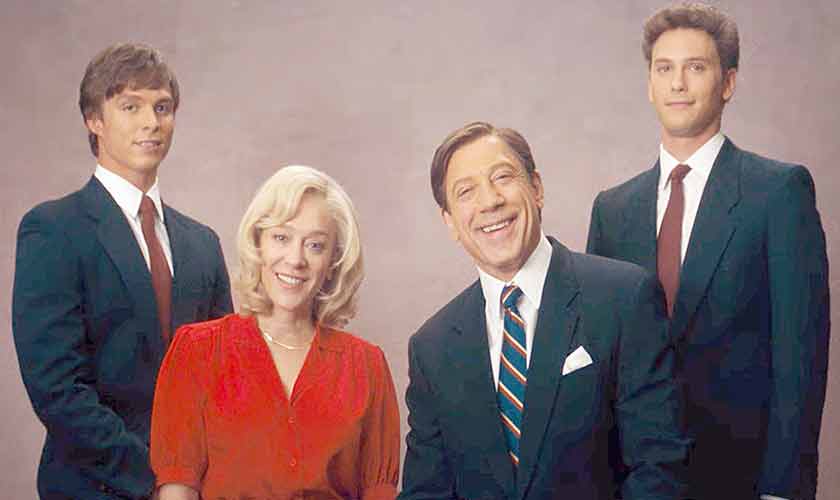
The performances of Nicholas Alexander Chavez as Lyle Menendez and Cooper Koch as Erik Menendez are the centerpiece of the production. Chavez captures the intensity and defiance of the elder brother; Koch conveys the fragility and self-doubt of the younger sibling. Together, they create a portrait of two young men deeply tied to one another yet burdened with conflicting emotions about their parents and about themselves. The bond between the brothers, carrying both tenderness and despair, sounds authentic, making the story feel more human.
What separates this production from other true crime dramatisations is its refusal to offer clear answers. The series does not suggest whether the brothers should be viewed as cold-blooded killers or victims of long-term abuse. It presents evidence, perspectives and memories, but leaves the viewers to wrestle with the contradictions.
Javier Bardem delivers a commanding performance as Jose Menendez, presenting him as a man driven by ambition and the will to control. His presence dominates the household scenes, embodying both the promise of success and the fear it produced in his children. Chloe Sevigny portrays Kitty Menendez with a mixture of vulnerability and volatility, suggesting a woman caught between dependence and resentment. Their portrayals ensure that the parents are not seen only as victims but as individuals with their own flaws and contradictions. This choice prevents the narrative from descending into moral simplicity.
The dialogue is precise. Courtroom exchanges are brisk yet intense. Domestic scenes often rely on silences and hesitations that carry as much weight as words. This allows the viewers to experience both the noise of public spectacle and the quiet pain of private life. This balance stops the story from relying too much on ‘drama.’ It builds tension through subtlety, which makes it more unsettling.
The most challenging aspect of the show is its depiction of abuse. The production does not sensationalise it, but neither does it obscure it. By presenting detail, the series forces viewers to confront the disturbing claims that shaped the brothers’ defence.
Whether or not a particular account is accurate is less important in the end than the effect it has on the viewer. The series conveys how trauma can remain hidden in families that outwardly appear secure and successful. This thematic choice makes the series disturbing to watch, but is part of why it leaves such a strong impression.
What separates this production from other true crime dramatisations is its refusal to offer clear answers. The series does not suggest whether the brothers should be viewed as cold-blooded killers or as victims of long-term abuse. It presents evidence, perspectives and memories but leaves the viewers to wrestle with the contradictions.
While this may frustrate those who want a definitive conclusion, it makes the story far more compelling. It acknowledges that reality is rarely neat and that courtroom verdicts cannot fully resolve emotional and moral complexities.
The supporting cast enriches the production. Ari Graynor as defence attorney Leslie Abramson demonstrates both empathy and strategic determination. Nathan Lane as journalist Dominick Dunne highlights the role of media in shaping the public perception of the case. Their performances add important dimensions, reminding viewers that the Menendez story was never about the family alone, but became part of a larger conversation about wealth, justice and the spectacle of televised trials.
As a viewing experience, The Lyle and Erik Menendez Story is demanding. It is not casual entertainment. It requires attention, patience and a willingness to endure disturbing material. It rewards that effort with a portrayal that is both emotionally powerful and intellectually engaging.
As a viewing experience, The Lyle and Erik Menendez Story is demanding. It is not casual entertainment. It requires attention, patience and a willingness to endure disturbing material. It rewards that effort with a portrayal that is both emotionally powerful and intellectually engaging. The series combines strong performances with thoughtful storytelling, resulting in a show that unsettles rather than comforts and questions rather than simplifies.
The series succeeds precisely because it avoids sensational shortcuts. It presents a disturbing family tragedy with honesty and care, creating a picture of complexity rather than caricature. For viewers prepared to sit with discomfort, it offers an absorbing portrayal of one of the most notorious cases in American criminal history and a reminder that beneath public spectacle often lies private pain.
The writer is a freelance contributor