

Print Story
X




The protests in Bangladesh in 2024 led to a regime change
| P |
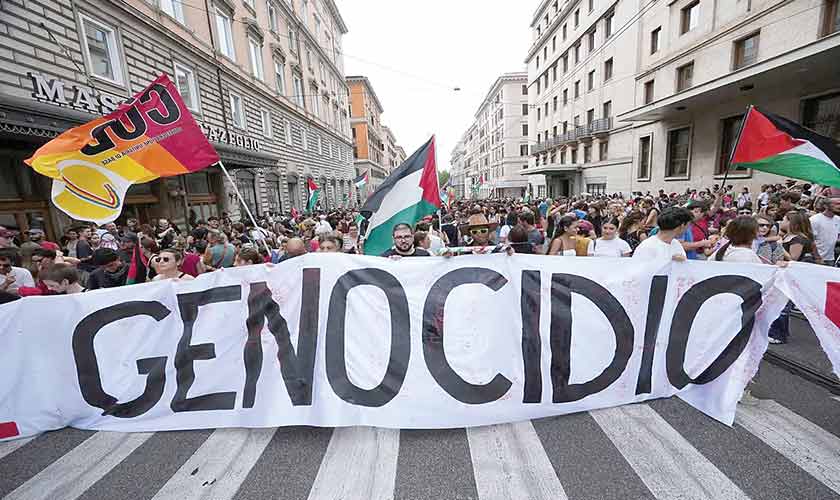
rotests erupted worldwide well before the invasion of Iraq in March 2003. However, those failed to prevent the invasion. Israel’s on-going assault on Gaza has reignited similar global protests. Nearly every major city has witnessed streets taken over by demonstrators demanding action against the genocide and ethnic cleansing of Palestinians. So far, these atrocities have only escalated. The Black Lives Matter movement, too, continues to be an ongoing struggle, now more of a campaign than a protest. Unlike the Occupy Wall Street movement, it has not faded away.
The protests in Bangladesh in 2024 led to a regime change. In 1977, the so-called Tehreek-i-Nizam-i-Mustafa protest resulted in the promulgation of a martial law and the execution of Zulfikar Ali Bhutto. However, the 126-day sit-in following the 2013 elections and the Pakistan Tehreek-i-Insaf’s protests following a successful no-confidence vote against its government proved futile.
Indonesia’s Suharto and Marcos of the Philippines were ousted after prolonged, persistent mass movements. In contrast, Adolf Hitler’s downfall came through military defeat and his suicide. Mussolini of Italy and Pinochet of Chile lost power after fighting erupted within their ranks. Mussolini met a remarkably gruesome end. Pinochet escaped relatively unscathed. The Iraqi people revolted against Saddam Hussein in 1991 and again in 1999. However, these uprisings were crushed with brutal oppression, and Saddam survived as long as his international support remained intact. A similar fate befell Libya’s Gaddafi.
This brief overview suggests that street protests do not always fully represent the people’s will. This raises two key questions: why do people protest; and what determines whether protests lead to positive or negative outcomes?
Psychologically speaking, protests spring from fear, anger, hope or moral outrage. Fear remains fear only up to a certain point; once it crosses a threshold, it transforms into motivation to resist and retaliate. Fear of losing land or livelihood has sparked many recent protests. For example, the 2016 Standing Rock Sioux protest in the USA opposed the Dakota Access Pipeline crossing sacred indigenous land. In India, some agricultural laws faced similar protests from small farmers fearing loss of income and land ownership. In 2000, residents of Kerala protested Coca-Cola’s bottling plant, which extracted 1.5 million litres of water daily, drying wells and ponds and raising pollution concerns.
Street protests do not always fully represent a people’s will. This raises two key questions: why do people protest; and what determines whether protests lead to positive or negative outcomes?
Among all these, the fear of annihilation is perhaps the strongest motivator. The Holocaust resistance movements of Jews in Nazi camps during the 1940s aimed to overcome the fear of extermination by Hitler. This fear translated first into anger and later into brutal aggression. Palestinians and Kashmiris are motivated similarly; their protests arise from a complex interplay of fear and hope.
Anti-immigrant campaigns reflect a similar fear: locals feel culturally invaded by immigrants. This sentiment was openly expressed by Angela Merkel, the former chancellor of Germany, in 2010 when she declared Germany’s multiculturalism experiment a failure. Right-wing movements in Europe and the US exploit this fear politically. The September 13 anti-immigrant protest in London, dubbed the Unite the Kingdom rally, epitomised this trend. The participants waved English, American, Israeli and Union Jack flags; Trump’s MAGA hats appeared prominently. The rally raised more questions than it answered. Tony Robinson, founder of the English Defence League and an anti-Islam campaigner, was the chief organiser and symbolically significant. Elon Musk’s speech at the rally, ominous and suggesting possible violence if immigration policies did not change, underscored rising tensions.
This historical survey of protests reveals various forms of suffering that compel people to outcry. However, protests motivated solely by moral outrage are relatively rare. After the Vietnam and Iraq wars, the Palestinian cause has uniquely inspired massive global rallies. Participants often have no racial, religious or political ties to Palestine; and they are neither directly impacted by the Gaza crisis nor beneficiaries of its resolution. Yet they mobilise, stepping out of their comfort zones. This illustrates pure public solidarity, even as most governments and capitalist institutions oppose such protests.
Protests never fail completely. Even when they do not achieve their stated goals, they reflect the mass mood, highlight critical issues, express resentments and surface collective conscience. Whether these protests will lead to a free Palestine remains uncertain, but their participants will persist in raising their voices for justice people at the verge of extermination.
The writer is a clinical psychologist. He is the author of Istemaar Ki Nafsiat published by Ilqa Publishers in 2024