Print Story
X




Education in Pakistan is a poly-crisis exacerbated by climate change
| I |
n Pakistan, the education sector has been plagued by systemic challenges, leaving more than 26 million children out of school, and 75-77 percent of 10-year-olds unable to read and understand a simple text. The crisis of access and quality is compounded by stark inequities based on gender, disability, religion and the rural-urban divide, with disparities in Sindh, Balochistan and the merged districts of Khyber Pakhtunkhwa particularly pronounced.
Compounding these inequities is the recurrent and frequent crisis of climate change across Pakistan. In 2025, this has manifested through prolonged heavy monsoons, cloud bursts, GLOFS, rural and urban flooding and the opening of spillways by India amidst the overflowing of Ravi, Chenab, and Sutlej Rivers unleashing havoc along the way.
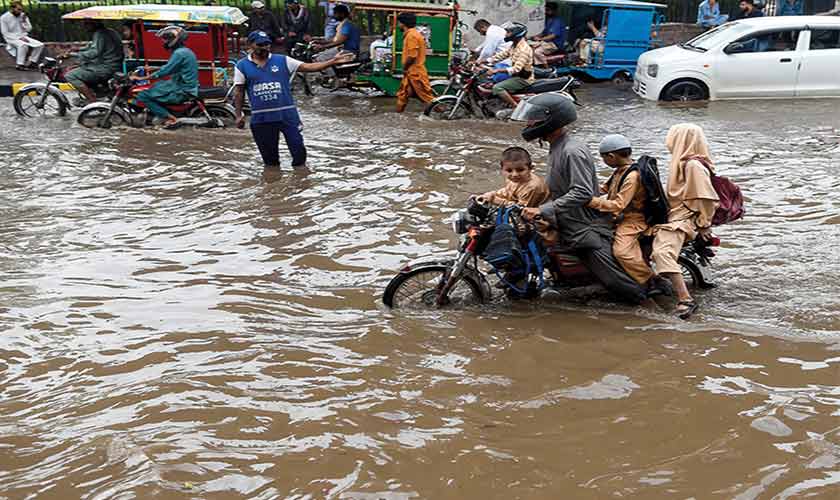
The issue today is not just of disrupted livelihoods, but also of the destruction of homes and schools used as temporary shelters. This extreme disruption adds up figures on both enrollment and learning losses—something Pakistan can ill afford. It is, after all, the number one country on the Global Climate Change Risk Index (2025).
To effectively address this issue, we must look beyond education alone. The Nurturing Care Framework offers a holistic perspective by recognising the child as a whole, emphasising the need for integrated interventions across health, nutrition, responsive caregiving and safety and security. Education in Pakistan is a poly-crisis with a complex web of challenges along the NCF’s components, exacerbated by climate change. And the climate story is not just that of floods. Smog, urban heat, droughts, food insecurity and the loss of livelihoods, particularly in fishing and agriculture, are all aspects of a broader climate crisis that worsens the vulnerability of children.
Some of Pakistan’s regions had barely recovered from the 2022 floods before glacial melt, landslides, torrential rainfall and river flows from India brought destruction, exacerbating pre-existing vulnerabilities, with the education sector taking a massive hit. At the most fundamental level, 255 children lost their lives during the floods, with a further 320 injured. Deaths and injuries point to the failure to provide for the primary need for safety and security.
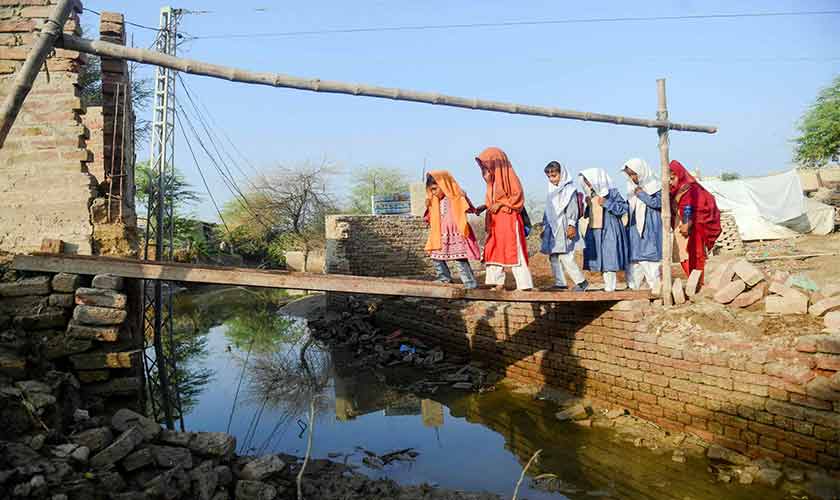
Thousands of schools across the Punjab, Khyber Pakhtunkhwa and Sindh were either damaged or repurposed as emergency shelters. As of September 2025, 2,000 schools in the Punjab alone have been submerged or damaged, with many now serving as temporary shelters. While some schools and facilities have been rebuilt after the 2022 floods under a climate resilience umbrella, many remain vulnerable to future flooding due to a lack of climate-resilient infrastructure. This puts children’s safety at risk and disrupts their access to education during disasters like the recent floods.
Beyond the physical damage, the floods have disrupted early childhood education, which is crucial for a child’s development. Without structured schooling, safe spaces for play and early stimulation, young children are at a greater risk of falling behind in cognitive and emotional development. For children with disabilities, already marginalised in Pakistan’s education system, the floods have worsened their exclusion.
The damage goes beyond the classroom.
The floods have intensified the marginalisation of the most vulnerable communities. In regions like Sindh and Khyber Pakhtunkhwa, children are facing the dual challenge of disrupted education and deteriorating health and nutrition. With food supplies compromised due to 2.5 million acres of farmland destroyed in the Punjab alone, children are at heightened risk of malnutrition, which severely impacts cognitive development and learning. UNICEF’s rapid response reported that with 100 outpatient therapeutic programme centres forced to close, around 5,000 children are at risk of severe acute malnutrition.
With sanitation infrastructure similarly destroyed and standing water present everywhere, a public health crisis is brewing; in Charsadda, 725 dengue cases have been reported.
In urban areas, the situation is just as dire. The floods in cities like Karachi and Hyderabad have caused significant disruption to transportation and infrastructure, leaving students stranded in schools or without learning for weeks due to school closures. In many cases, schools lack the administrative support and preparedness to cope with the challenges. Unfortunately, many climate refugees in cities settle in areas prone to urban flooding. For example, a settlement in Karachi hosts refugees from the 2011 and 2022 floods.
Additionally, anxiety and mental health crises are multiplying. Our systems are not adequately prepared for these complex issues in classrooms and all learning environments. To address this, we need an approach that integrates social-emotional learning with an understanding of climate change crises and on-the-ground actions. This requires a less overloaded curriculum and syllabus, with flexible timetables and a move away from rigid, fixed-duration periods, ultimately fostering positive mindsets instead of fixed ones to better equip students for a complex future.
Many caregivers, especially mothers, are overwhelmed by the stress of recovery. Displacement and destruction carry deep mental stress. A lack of focus on mental and psych-social support in aid activities means there is insufficient support for them to continue providing the nurturing care that children need for healthy development.
The 2025 floods have deepened critical vulnerabilities in Pakistan’s education system, particularly in the most underserved regions of Khyber Pakhtunkhwa, rural Sindh and South Punjab. While the institutional response has been commendable in some areas, it has been marred by fragmented efforts, inadequate infrastructure and insufficient support for caregivers in many areas. As Pakistan begins the long road to recovery, we must take a comprehensive, multi-sectoral approach to rebuild our education system and ensure that the necessary services are in place to mitigate the long-term impact of such crises.
We must address not only the immediate restoration of educational facilities but also other needs of children and their communities. To this end, we must strengthen early warning systems to minimise future damage from disasters, establish temporary learning centres in flood-affected areas to ensure children have continued access to education, and implement accelerated learning pathways to recover lost educational time. Mental health and psychosocial support must be prioritised, offering essential services to both children and caregivers to help them cope with the long-term effects of the floods.
Finally, we must focus on building climate-resilient schools and facilities designed to withstand future natural disasters, ensuring that the education sector is more resilient in the face of climate-induced challenges. Emergency education planning and budgeting must be mainstreamed in annual budgets and systems ensuring the integration of early childhood development into disaster risk management plans to safeguard the developmental needs of our children.
Baela Raza Jamil is the CEO of Idara-i-Taleem-o-Aagahi, a Pakistan Learning Festival founder, and a Learning Generation Initiative global champion. She can be reached at baela.jamil@itadec.org.
Adil Ashraf is a public policy and research professional interested in the politics of education.