

Print Story
X




A cycle of natural disasters challenges legitimacy of state institutions by restoring or eroding public trust
| W |
hile deliberating the impacts of environmental collapse on institutions of governance and public trust in elected leaders, Ilhan Niaz argues in his book Downfall: Lessons for Our Final Century (published in 2022, the year of devastating floods in Pakistan) that “in the years and decades to come, political orders and governance structures will be severely tested,” and resultantly “many states will fail due to environmental collapse, while others might evolve into dark dystopian versions of themselves.” In such dystopias, leaders are likely to employ racial and religious identities with renewed vigour to deny the humanity of others while promising solutions based on repression and hatred.
Plato, in his monumental work The Republic, proposed a solution to the predicament: the rule of the qualified as opposed to the rule by the popular, the demagogue, the rich and the powerful. To escape the possibility of falling into the hands of populist leaders, the most qualified people—scientists, philosophers and technical experts—should make the all the important decisions. In our country, people with expertise are rarely heard in public policy formulation. Recent environmental changes and climate change induced challenges have made it clear that governments need to constitute advisory bodies with qualified technical experts to meet the challenge and make policy decisions to adapt.
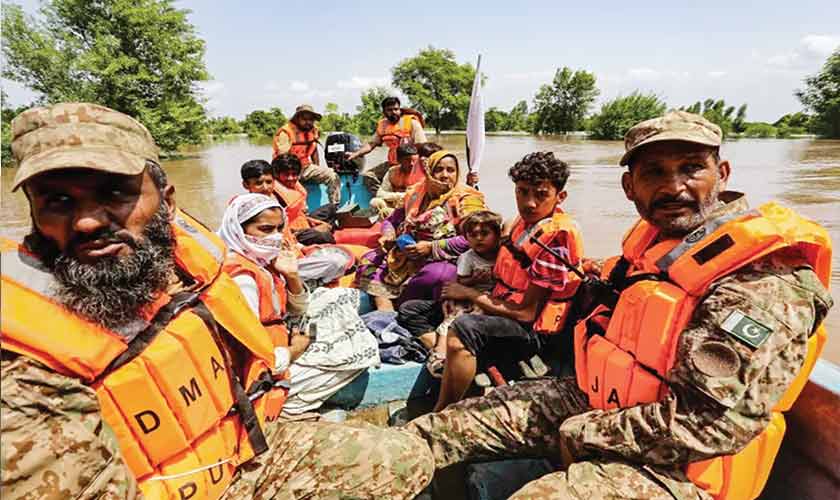
In the wake of a dwindling legitimacy and low public trust in key institutions of governance, the devastating cyclical floods witnessed by the country may potentially harm citizens’ judgment on relief, rescue and rehabilitation efforts by the government. In a crisis situation, perceptions that relief aid failed to reach in time or was misallocated or hogged by the elite, sharply reduces trust in institutions and the leadership. For instance, some reports and surveys relating to Pakistan’s 2022 floods evidenced that large parts of the population rated government response to the floods as poor or very poor and expressed concerns about proper utility and disbursement of relief aid. To reduce such trust deficits, governments should engage environmental and financial experts.
Another key aspect of such a post-disaster situation is the sudden inflation in the reconstruction and emergency costs (Pakistan’s 2022 Post-Disaster Needs Assessment report estimated damages worth $30 billion) that forces governments to reallocate already scarce budgets. This potentially slows down public services and reform agendas that had been prioritised by governments earlier. Such a fiscal squeeze is likely to increase dependence on external donors like the IMF, thereby constraining policy options. Recurrent floods repeatedly damage infrastructure while recovery in provinces with weaker local governments is dismal. Humanitarian assessments have documented lapses and governance challenges in the past as well.
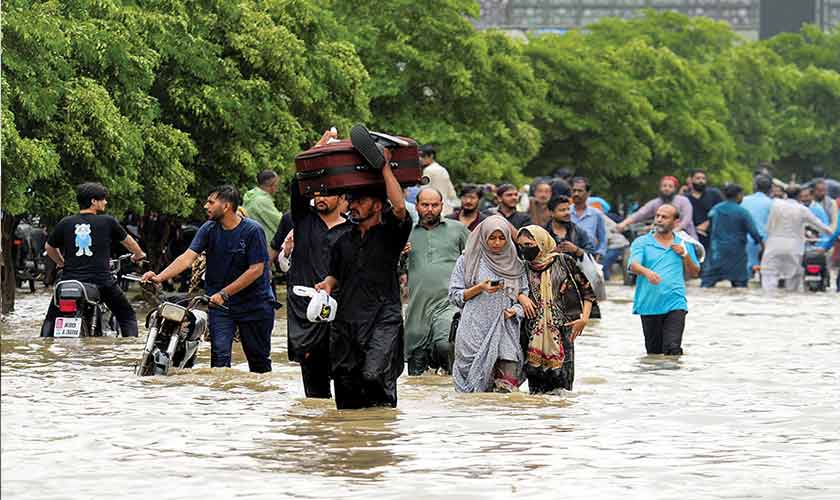
When responses are slow, opaque or disparity-prone, trust in institutions of governance, policy and leadership dwindles fast. Conversely, when responses are fair, fast and well-coordinated, disasters can become opportunities to rebuild trust.
For nearly two decades, Pakistan is facing an issue of increased political polarisation. Disasters and widespread floods attract opposition. The media coverage too lays bare capacity limits of the incumbent. In such an environment, the affected people feel left behind in the absence of better relief or prevention against extreme weather conditions.
Short-term relief work is a double-edged sword; it can both harm and help political trust. Scholarship points to two countervailing trends in which poorly delivered relief reduces trust or well-targeted, transparent relief bolsters political trust and mitigates conflict legacies and polarisation. Thus, quality and fairness of response matter more than quantum of long-term relief efforts. In addition, chronic displacement, disrupted education and reduced availability of opportunities of livelihood reduce public trust in state institutions of governance and public policy. Recent floods are no different in that these have yielded enormous infrastructure damage and human cost.
Certain policy steps such as transparent and timely humanitarian cash transfers, strengthening local governments and community networks, independent monitoring and efficient grievance mechanisms, pre-disaster investments like early-warning systems and climate-resilient infrastructure, well-coordinated public communications, budgetary transparency and integrated mental health as well as long-term recovery and rehabilitation can reduce trust damage to institutions of governance.
Niaz argues that the implications for governance arising from ecocide are stark and severe. Whatever little gain the developing world has experienced regarding the rights of the women and children and fragile democratic institutions of governance may evaporate as temperatures rise and states and economies fall. In such a situation, life expectancy may revert to medieval levels because disease, starvation and violence may destroy populations. In worst case scenario, he writes, “by 2100, as temperatures soar by four degrees, water resources disappear and the population collapses, it is not likely that any state worth the name will be left standing in the Global South.”
Cyclical natural disasters and floods do far more damage than destroying properties. They also cause repeated challenges to legitimacy of state institutions and erode popularity of the incumbents. Resultantly, when responses are slow, opaque or disparity-oriented, trust in institutions of governance, policy and leadership dwindles fast. Conversely, when responses are fair, fast and well-coordinated, disasters can become opportunities to rebuild trust. The World Bank is of the view that the difference is governance quality: early action, transparency, local capacity and accountability are the levers that determine whether disasters erode or restore public trust in the state and its institutions of governance and policy.
The writer heads the History Department at the University of Sargodha. He has worked as a research fellow at the Royal Holloway College, University of London. He can be reached at abrar.zahoor@hotmail.com. His X handle: @AbrarZahoor1.