Print Story
X




Despite resource constraints, there is much that can be done to address mental health issues of those affected by the floods
Door: “Why it’s simply impassible!”
Alice: “Don’t you mean impossible?”
Door: “No, I do mean impassible. (chuckles) Nothing’s impossible!”
— Alice in Wonderland
| O |
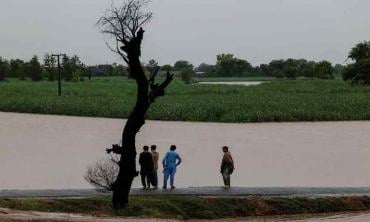
ur monsoon season is almost over. This time, the rains and the accompanying floods—now a regular event played out in real time—were on everyone’s social media. Short videos of inundated fields, and of roads and homes being swept away were a terrifying reminder of nature’s fury. Of course, this being Pakistan, there were also videos of people jumping into the raging waters, seemingly for ‘fun.’ I saw a video of a young man in a rural area instructing his friend to make a proper video then driving his motorcycle across a flooded road and promptly being swept into the water with his motorcycle. His friends could be heard laughing in the background.
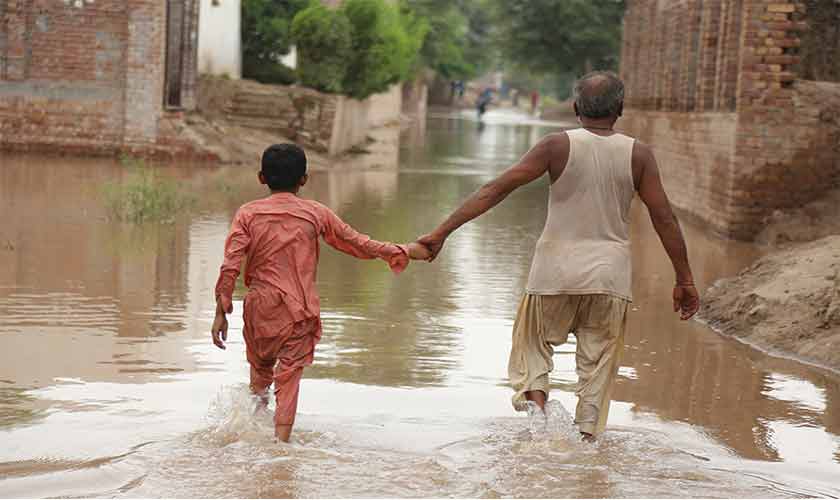
For the millions of people who have been displaced by the raging waters of the Chenab, Sutlej and, after a long time, the Ravi, it is no laughing matter. The devastation is ongoing with the floodwaters now in the south of the country. Pakistan is, by all accounts, squarely in the crosshairs of climate change-related disasters. Rapidly melting glaciers, searing heatwaves followed by torrential and unpredictable rains and depleting ground water due to our rapidly growing and unplanned population growth and urbanisation, all will continue to worsen. Since this entire region is subject to the same climate changes, political conflict such as the recent row over the Indus Waters Treaty, which nearly led to a full-scale war between Pakistan and India, will also escalate. Given the state of our economy and our productive capacity, no quick or short-term fix appears possible.
Given these constraints, what, if anything, can be done to help those whose homes, livelihoods and, sometimes, loved ones have been swept away and lost forever in this most recent disaster?
Fortunately, mental health professionals in Pakistan are used to working within severe constraints. In fact, those of us who have been doing it for a while can see that we have more room to work with now than a decade ago. The importance of mental health is no longer questionable. While infectious diseases, trauma, mother and child healthcare, and other health related priorities lay claim to our scarce resources, everyone—from the average person on the street to a policymaker at the highest level—understands that there is no health without mental health.
At two of our large public hospitals in Lahore, we have not yet had a chance to work directly with the flood affected on mental health issues. We have been sending regular flood relief missions to affected communities since late July, mostly to help with food rations, and to provide immediate medical help and connection to disaster relief resources. This is psychological first aid—an important first step in helping victims of any disaster. In addition, our national organisation, the Pakistan Psychiatric Society, has been at the forefront of arranging mental health camps in the hardest hit areas, as and when conditions permit. As the flood waters recede, it is time now to ramp up these efforts and work on rehabilitation of flood victims. Despite our resource constraints, there is much that can be done. This includes, as mentioned earlier, psychological first aid, where we need to train community volunteers (e.g., teachers, religious leaders) in basic PFA (listening, stabilising and linking to support services). The average cost for this is less than $5 per person. It was successfully implemented in Sindh after the 2022 floods reducing acute distress by 20-30 percent.
We also need to work on community-based group interventions. These include peer support groups using culturally adapted tools like storytelling or faith-based coping (e.g., integrating resilience narratives from Islamic teaching and traditions). There is no specialised training or expertise needed for this; it can be run in relief camps. Evidence from Haiti and Japan shows 40 percent symptom reduction in mental health distress through this intervention. It is easily scalable in Pakistan via NGOs like Edhi Foundation and others.
Helplines and digital tools such as Taskeen’s low-cost mental health service can reach areas cut off from physical interventions. These need to be supported and expanded across all provinces, not just now but also in anticipation of the next flood or natural disaster. Low-bandwidth apps for self-help (breathing exercises, grief modules) cost less than Rs 130 per user and were able to reach more than 10,000 users in Balochistan in 2023.
We need to reiterate our longstanding demand that mental health and psychosocial support need to be embedded and integrated into our national and provincial disaster management agencies’ protocols. One example of this is to screen survivors and those affected for mental health distress at aid distribution points. Training 10,000 or more lay health workers annually would cost around $10 million, a small sum in the scheme of things. This can be obtained from donor funding. This would need to prioritise women and children who face higher risks (e.g., maternal mental health via midwife training), the elderly, those who are medically ill and other high-risk groups.
Finally, long-term resilience building can include things like school-based programmes teaching coping skills pre-disaster; microfinance for livelihood recovery to cut economic stress (linked to 25 percent lower depression rates); and other strategies. We can leverage international models but we need to localise them to avoid the stigma associated with Western styled therapies.
Sometimes, it appears that the biggest challenge in Pakistan for most of us is to believe that things can change for the better, and that we can, in fact, make a difference. Given our current national predicaments and a global atmosphere pervaded with bad news, it appears impossible that anything can be done. But as Alice found out in Wonderland, that is not always true.
“There’s no use trying,” she said. “One can’t believe impossible things.”
“I daresay you haven’t had much practice,” said the Queen. “Why, sometimes I’ve believed as many as six impossible things before breakfast!”
The writer is a psychiatrist and faculty member at King Edward Medical University. He is the author of Faiz Ahmed Faiz: A Biography, Sang-i-Meel Publications, 2022. His X handle: @Ali_Madeeh.