

Print Story
X




A tale of how water binds generations, memory and destiny in intimate ways
| T |
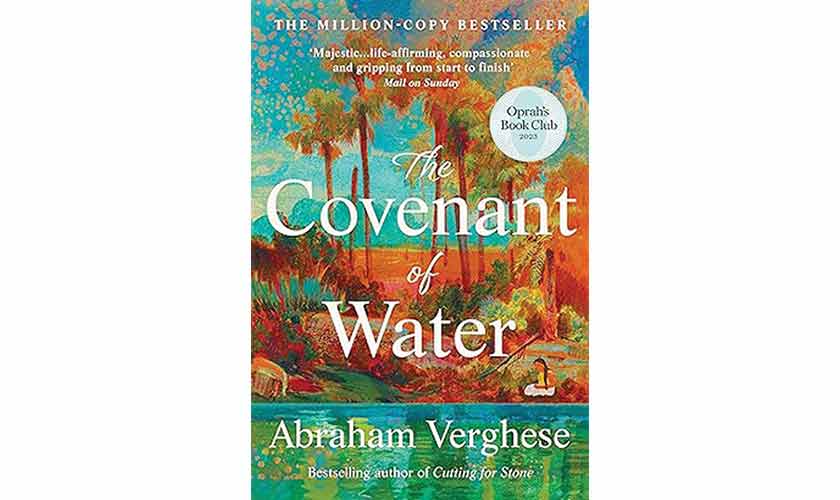
here are books we read and set aside; and then there are books that linger with us. We savour them, for devouring them would not do justice to the story, its simmering plot and its plethora of emotions that echo in the mind long after the final page has been turned. The Covenant of Water belongs to the latter category. Abraham Verghese’s sweeping saga, spanning three generations of a Malayali Christian family in coastal Kerala, left me not just moved but bereft.
At the heart of this tale is a hereditary enigma, “the condition,” an affliction that claims at least one family member by drowning in every generation. What might easily have remained a simple plot device evolves under Verghese’s masterful hand into something far more intricate: a meditation on ancestry and inevitability, on the unseen chains that bind us through lineage and blood.
Verghese vividly describes Kerala, his chosen canvas, a fish-shaped coastal territory at India’s southern tip. Like an accomplished painter, he sketches its rains and rivers, its undulating terrain and spice-laden air with reverence. Here, water is not merely an element but a force that shapes destinies, much as it does for nations bound by the same rivers and fragile agreements. Though rooted in a specific culture and climate, the narrative is far from parochial. Universal themes of feminism, love, justice, genetic inheritance and miraculous medical advancements resonate deeply with readers across the world.
At the heart of the novel are three formidable women: Big Ammachi (Mariamma), the matriarch who bears the weight of tradition and loss with unwavering strength; Elsie (Elseyamma), torn between art and domesticity and between longing and loyalty; and the younger Mariamma, a doctor by profession and a dreamer by compulsion, who shoulders the family burden of the unnamed illness, determined to uncover its secrets. Verghese’s portrayal of these women is honest, textured and profoundly respectful, a celebration of their inner strength and integrity. He also writes candidly about the men who orbit their lives: Big Appachen, kind to everyone at Parambil, who waits patiently for his child bride to grow into womanhood; Philopose, whose intellect and emotional depth are often underestimated; and Dr Digby Kilgour, whose love for Elsie transcends social norms, geographical boundaries and the stigma of diseases such as leprosy.
Verghese, a physician by profession and a storyteller by instinct, navigates both bodies and emotions with surgical precision. His treatment of leprosy, a diagnosis that once, was tantamount to inevitable exile, is rendered with solemnity and compassion:
The novel invites us not just to observe a family’s trials, but also to consider how our own lives are shaped by things left unsaid, unhealed and unresolved.
“Mariamma wants to argue, to protest. But the truth is, if she weren’t a physician, would she even be inside the walls of the leprosarium? She is a physician, a disciple of Hansen; she is someone who has dissected leprous tissue; she knows the enemy….”
Water is the novel’s most persistent and protean character. Verghese returns to it not only as the agent of tragedy but also as a metaphor for memory, history and the continuity of life itself. It is both source and solvent, the link between past and future. In one of the most evocative passages, he writes:
“The water she first stepped into minutes ago is long gone and yet it is here; past, present and future inexorably coupled, like time made incarnate. This is the covenant of water: that they are all linked inescapably by their acts of commission and omission, and no one stands alone.”
This is a novel preoccupied with linkage between generations, between science and story, between land and body and between what we know and what we sense. It invites us not just to observe a family’s trials, but also to consider how our own lives are shaped by things left unsaid, unhealed and unresolved.
For all its grandeur, its 700+ pages, its shifting perspectives, its historical breadth, The Covenant of Water is a deeply intimate novel. It is as much about anatomy as it is about ancestry; as much about devotion as it is about disease. As I closed the book, I found myself thinking not of how the story ended, but of what it left behind in me - a renewed awareness of how our actions, like water, ripple outward, touching shores we may never see.
The ‘covenant’ feels eerily relevant to present times. The recent suspension of Indus Waters Treaty between India and Pakistan marks the breaking of a different kind of pact, – one in which rivers once pledged as shared lifelines, are recast as instruments of power. Just as the Verghese’s characters discover that the fracture of their covenant with water carries profound and lasting consequences, so too must nations recognise that water is never merely a commodity. It is memory, sustenance and the powerful thread on which peace and survival can depend.
The Covenant of Water
Author: Abraham Verghese
Publisher: Grove Atlantic
Pages: 715
The reviewer is a consultant family physician who divides her time between England and Pakistan