

Print Story
X




Pakistan’s protest to ICC is not the first occasion. India also protested umpire Steve Bucknor’s decisions in the 2008 Sydney Test
Cricket is often referred to as the “game of gentlemen” because of its core values of fairness, respect, and sportsmanship. It is a sport that emphasises integrity, honour, and discipline both on and off the field.
Last week during the high-voltage Asia Cup encounter between Pakistan and India concluded on a sour note, as the Indian players walked straight into the dressing room after winning the match convincingly. The Men in Blue avoided the customary act of shaking hands with their opponents, even closing the door of their dressing room after the return of their players.
However, it is worth mentioning that the act of shaking hands after the game’s completion is not mandatory for the players. It is indeed considered a gesture to show sportsmanship, but the ICC, in its Code of Conduct, does not have a separate clause that talks about the repercussions of intentionally skipping the customary post-match handshakes.
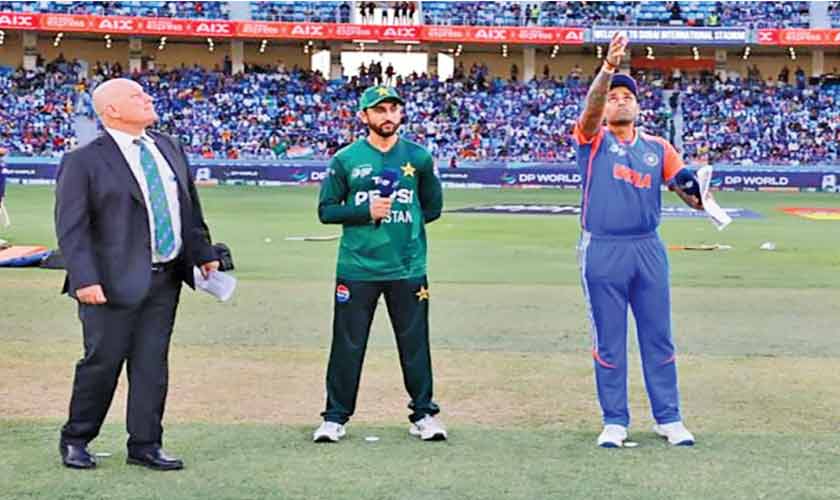
The PCB had lodged a complaint with the ICC against match referee Andy Pycroft over his alleged violations of rules pertaining to the “Spirit of Cricket”, with the board claiming that the referee had asked the Pakistan and India captains “not to shake hands at the time of the toss” In protest, the PCB has lodged a formal complaint with the International Cricket Council (ICC), calling for the immediate removal of the referee.
The former Zimbabwe international reportedly informed Pakistan captain Salman Agha about the move, and then he conveyed the same message to India captain Suryakumar Yadav. The PCB has underscored that Pycroft’s actions undermined the spirit of the game and violated established protocols.
The PCB had lodged an official complaint with the ICC regarding violations by the Match Referee of the ICC Code of Conduct and the MCC Laws pertaining to the Spirit of Cricket. The PCB has demanded an immediate removal of the Match Referee from the Asia Cup.
The board believed that the instructions had been influenced by the Board of Control for Cricket in India (BCCI) after consultation with the Indian government.
The situation got worse after India’s players and staff opted not to shake hands with their Pakistani counterparts after the match.
India captain Suryakumar Yadav confirmed that the decision had been aligned with guidance from the Indian government and the BCCI.
Experts believed that instead of complaining for “not shaking hands”, the Pakistan Cricket Board must raise their voice against Indian captain Suryakumar Yadav’s press conference in which he dedicated their victory to Indian armed forces.
Speaking to the media, Suryakumar explained that the decision was made in alignment with instructions they received. We stand with the BCCI and the government. Some things in life are more important than sportsmanship.
But before the Pak-UAE decisive game, the issue had been resolved as the Zimbabwean referee Andy Pycroft apologised to the manager and captain of Pakistan over a controversy during the Pakistan-India match.
Overall, Zimbabwean match referee Andy Pycroft’s record against Pakistan not good. On November 4, 2014, Pakistan all-rounder Mohammad Hafeez has been reported with a suspected illegal bowling action during the first Test against New Zealand in Abu Dhabi by match referee Andy Pycroft.
Andy Pycroft was also the match referee when off-spinner Saeed Ajmal was reported during the Galle Test against Sri Lanka in August last year. Pycroft was the common match referee in both the Ajmal and Hafeez cases.
It was not the first time when India politicised the game, in May this year, as the Chairman of the International Cricket Council (ICC), Jay Amitbhai Shah stirred criticism after he posted a statement on Instagram expressing solidarity with the Indian armed forces amid recent border tensions with Pakistan.
Following the controversial social media post by ICC chairman Jay Shah faced a worldwide criticism on his post. While the post was later deleted, it raised eyebrows internationally, especially given the position of Jay Shah as the head of a supposedly neutral global body.
The International Cricket Council (ICC) is officially the global governing body of cricket, but many fans and critics often sarcastically refer to it as the “Indian Cricket Council.” This perception largely stems from India’s immense influence in world cricket. With the Board of Control for Cricket in India (BCCI) being the wealthiest and most powerful cricket board, its financial dominance significantly impacts ICC’s decision-making.
Pakistan’s protest to ICC was not the first occasion when any team protest against ICC umpire or referee. Team India did protest the umpiring of Steve Bucknor against Australia in the 2008 series, India's officials demanded that the International Cricket Council (ICC) remove Bucknor due to several controversial decisions in the second Test in Sydney, including a missed catch that allowed Andrew Symonds to score a large number of runs and contributed to India’s loss.
The ICC ultimately agreed to remove Bucknor from the third Test of that series, replacing him with Billy Bowden.
There are many cases here international cricketers being fined, reprimanded, banned or otherwise sanctioned by the ICC (or national boards under ICC oversight) for making political statements, slogans, or doing something that is considered political/controversial during internationals.
During a Test between England and India in 2014, England’s all-rounder Moeen Ali wore wristbands with the slogans “Save Gaza” and “Free Palestine”. ICC’s Equipment & Clothing Regulations forbid messages associated with political, religious or racial causes in internationals. The match referee told Moeen Ali to remove the wristband and warned not to wear them again. He was banned from wearing the wristbands during international play, though he was not suspended off the field, i.e. not banned from playing.
In a T20I match against Sri Lanka in 2017, South Africa’s spinner Imran Tahir after taking a wicket lifted his shirt to reveal a t-shirt underneath showing the late Pakistani singer/evangelist Junaid Jamshed. The ICC rules require prior approval for “personal messages”, especially those with religious content. The ICC warned him but not impose any ban.
Australian Test opener Usman Khawaja charged for wearing a black armband during the first Test against Pakistan in Perth in December 2023.
Usman Khawaja also attempted to wear shoes with messages (“All lives are equal”, “Freedom is a human right”) and a peace symbol in 2023. The ICC refused approval, considering them political. He ended up wearing a black armband, but was reprimanded by ICC for breach of Clothing and Equipment Regulations. But the ICC never questioned the Indian management or banned any player for violating the ICC code of conduct.
ICC is responsible for ensuring that the game is governed fairly and equitably for all member boards. It is crucial that his leadership remains unbiased, promoting harmony and transparency in the cricketing world.
BCCI’s prominence within the ICC has often led critics to nickname the ICC as the Indian Cricket Council highlighting India’ss dominance in global cricket affairs.
Cricket should be free of politics. Such a policy should ensure fairness, transparency and accountability across the entire cricketing community. No individual, team, or national board should be considered above the law or treated with undue preference. The integrity of the game depends on equal treatment and the strict adherence to a universally applied set of rules and standards.
It is now an appropriate and crucial time for all members of the various cricket boards around the world to come together and collectively raise their voices. They must strongly urge the International Cricket Council (ICC) to establish and enforce a consistent and uniform policy that applies equally to all its member boards.
khurrams87@yahoo.com