Print Story
X




The lack of strong correlation between formal education and work is glaring
| I |
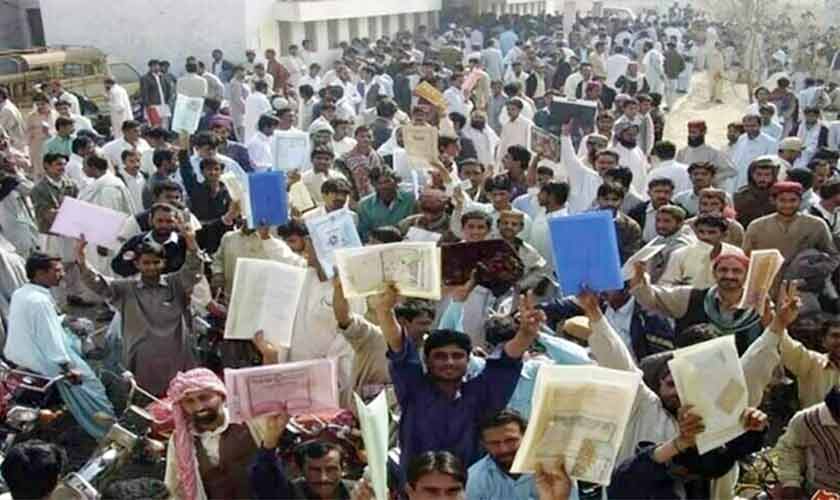
run the operations of a public authority in the Punjab that works across the province and opens doors for young people with new and innovative ideas. The idea is to give them space to bring their creativity to the public. It is almost like an open incubation centre. Sadly, most of my visitors are not innovators. They are simply job seekers. Many of them carry degrees with impressive grades but lack the skills needed to create something new; even something that will meet the job market demand.
Every year, Pakistan’s universities celebrate doubtful success by awarding nearly 800,000 degrees. Families are proud; garlands are placed around the graduates’ necks; and hopes for a bright future fill the air. For many young men and women, this joy is short-lived. Several months on, they find themselves still unemployed and frustrated. According to the Labour Force Surveys, there are around six million jobless youth in Pakistan. It is not just unemployment, but unemployment among people carrying university degrees.
The lack of a strong correlation between formal education and work is glaring. In industries such as information technology, healthcare, energy and construction, employers regularly advertise vacancies. Many of these positions remain unfilled because the applicants do not have the technical expertise required. On the other hand, graduates with general degrees in subjects like arts or humanities chase after low-paying clerical jobs that are becoming fewer by the day. Economists describe this situation as Pakistan’s “education paradox.” The country produces degree holders faster than it creates meaningful jobs for them.
This crisis is hurting the economy. The Asian Development Bank has estimated that the mismatch between education outcomes and market needs costs Pakistan about two to three percent of its GDP every year. This means that billions of dollars are lost because young people are not trained in the right skills. Agriculture is one striking example. Pakistan had to spend ten billion dollars on food imports in 2023-24, because its farm productivity remains low. There are simply not enough trained agricultural technologists and irrigation experts to modernise the sector. The energy crisis continues because the country does not have enough renewable energy technicians and engineers. In healthcare, Pakistan’s weaknesses became painfully clear during the Covid-19 pandemic. The country has fewer than a nurse per 1,000 people; the World Health Organisation recommends at least three. These shortages can prevented by better planning in vocational training.
The Asian Development Bank has estimated that the mismatch between education and market needs costs Pakistan about two to three percent of its GDP every year. This means that billions of dollars are lost because young people are not trained in the right skills.
Comparisons with some neighbouring countries are quite stark. India’s IT industry exported services worth over $250 billion in 2023; Pakistan managed only $3.8 billion. Bangladesh, having focused on training women in the garments sector, has taken its exports beyond $40 billion. Pakistan has been unable to do likewise. Less than 20 percent of women in Pakistan are enrolled in technical or vocational programmes. The World Bank says that if women were equal participants in the workforce, Pakistan’s GDP could grow by 30 percent.
Pakistan’s main problem is not a lack of talent but a lack of direction. In schools and universities, rote learning still dominates. Students are rewarded for memorising textbooks instead of learning to solve problems. Universities rarely track how many of their graduates get jobs in the relevant fields. There are some technical and vocational training institutes, but their total capacity - around 314,000 seats a year – is far below the demand. Millions of young people are left with no option but to pursue traditional degrees that often lead nowhere. Those choosing vocational diplomas or global certifications such as Cisco, AWS or NEBOSH often end up earning more than graduates with master’s degrees.
To end this crisis, reforms must begin now. School curricula need to change so that students are introduced to digital literacy, critical thinking and practical training from an early stage. Strong connections between universities and industries must be made mandatory, so that students gain real workplace experience through internships and apprenticeships. Technical education must also be treated as equal to higher education, not seen as a lower choice. Government subsidies for international certifications can make it easier for young people to qualify for well-paid jobs both at home and overseas. Most importantly, women must be included in skill-building programmes. To this end, safe training centres, childcare support and digital opportunities must be expanded.
With 64 percent of its people under the age of 30, the country is sitting on a demographic goldmine. This population can be trained to drive the economy forward. Otherwise, it can turn into a burden. A degree without employable training is no more than a piece of paper. The future belongs to those who can design, build, repair, innovate and deliver, not to those who can only recite textbooks.
The writer is a chartered accountant and a business analyst