Print Story
X




Mechanisation can improve farm performance and diminish the threat of food insecurity
| O |
ne can’t solve a food crisis with their bare hands. Yet, that’s what many of us continue to expect from Pakistan’s farmers.
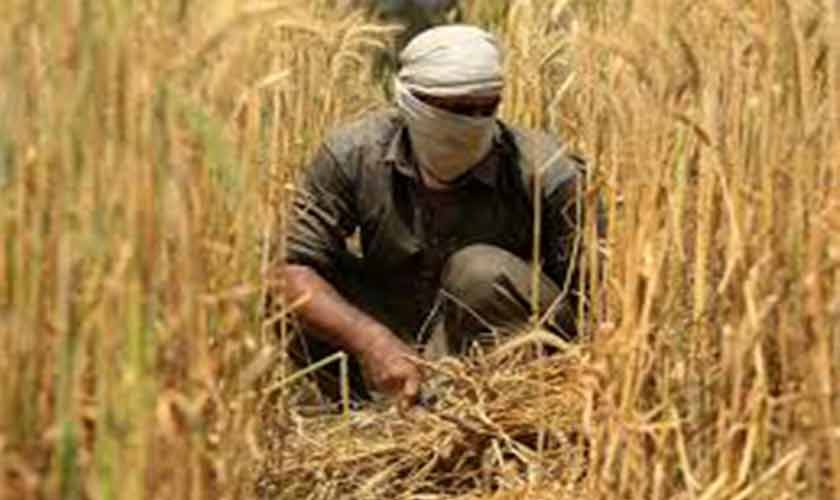
While rest of the world talks about food security in terms of climate finance, artificial intelligence and sustainable innovation, much of our country’s wheat is still harvested manually. That means scythes, sickles, donkey carts and long, blistering hours under the sun; no machinery, no precision; backbreaking labour, fragile yields and hope. Many of us talk about food security as though it were a policy issue. Look closer, and you’ll see the real bottleneck: we haven’t mechanised; not at the scale we need, not at the speed we need and not with the urgency this demands.
According to the Asian Development Bank, Pakistan loses between 20 and 40 per cent of its agricultural output post-harvest due to outdated manual methods, inefficient handling and poor storage infrastructure. A study on wheat crop losses specifically estimated that manual harvesting alone contributed up to 16 per cent loss during the harvest and threshing process loss that could be dramatically reduced with proper mechanisation.
Pakistan’s available farm power is estimated at 1.6 kilowatts per hectare, far below the internationally recommended level of 1.82 kW/ha for efficient crop production, as per research published in the Journal of Agricultural Engineering. We continue to ask farmers to feed a population of over 240 million using techniques more suited to the previous century.
Full mechanisation has been shown to increase farm performance by up to 55 per cent and boost food availability by as much as 125 per cent, according to recent findings reported in Frontiers in Sustainable Food Systems. This isn’t just about metrics. It’s also about time. Every extra hour a farmer spends manually plowing or harvesting is time lost not just in productivity, but also in dignity. Mechanisation gives farmers back their hours, their efficiency and their agency. It gives them the breathing room to think, to plan, to build. Imagine telling a university graduate to do their job without a laptop. That’s what we ask farmers to do every single day: run Pakistan’s most vital industry without modern tools.
Every percentage point of post-harvest loss, every kilowatt of missing farm power and every hour lost to manual labour adds up to the same thing: a country trying to feed the future with broken tools.
It’s easy to blame a lack of access to credit, policies or gaps in rural infrastructure; all of those are real issues. But there’s a deeper problem as well: the mind-set. We still see tractors and harvesters as optional, not essential. Mechanisation is treated like a privilege a nice-to-have rather than baseline infrastructure. Like roads, electricity and the internet, machines are what unlock productivity in the 21st Century. It’s time our national dialogue caught up.
Pakistan doesn’t need sympathy for its farmers. It needs systems. It needs financing that understands smallholders. It needs local manufacturing that’s competitive and resilient, and policy frameworks that reward mechanisation, not ignore it. We also need to stop romanticising the “hardworking farmer with calloused hands” as our hero. That narrative doesn’t serve anyone. Let’s celebrate the farmer with access to appropriate tools, time and training. That’s the future.
Every percentage point of post-harvest loss, every kilowatt of missing farm power, every hour lost to manual labour adds up to the same thing: a country trying to feed the future with broken tools.
Pakistan’s food security challenge isn’t some distant, global crisis. It’s right here, in our fields, waiting for a better answer. The answer isn’t another loan, it’s a machine.
In the end, this isn’t just about agriculture. It’s about priorities. If we can’t invest in the people who grow our food, we’ll keep paying for it in ways far more expensive than we can afford.
The writer, a communications professional and published author, is a senior communications manager at Al-Ghazi Tractors Ltd.