Print Story
X




Democracies do not collapse abruptly; they deteriorate with a gradual weakening of democratic institutions
| T |
he International Day of Democracy, observed on September 15, was established by the United Nationals General Assembly in 2007. The choice of this date is linked to the adoption of the Universal Declaration on Democracy by the Inter-Parliamentary Union on September 15, 1997. The purpose of the observation of this day is to highlight the significance of democracy, human rights and the rule of law – the norms that are increasingly under threat of speedy erosion by powerful states and myopic leaders who prefer populist euphoria to principled commitments. Democracy is buoyed by debate, conversation and unending dialogue. It is doomed in a culture of regimentation, uniformity and intolerance.
John Locke and Thomas Hobbes were both concerned with the central concept of a social contract. However, their ideas about freedom, rights and democracy diverged sharply. Whereas Hobbes viewed humans, by nature, as selfish, competitive and driven primarily by fear of death and hence the human life in a ‘state of nature’ as solitary, poor, nasty, brutish and ephemeral, Locke regarded humans as rational and capable of cooperation. He believed that humans possess a sense of morality and can respect one another’s rights even in the absence of forceful imposition. While Hobbes thought that too much freedom would lead to chaos, Locke believed that freedom could coexist with order.
Hobbes argued, in his famous book Leviathan (1651), that the only natural right is self-preservation. Therefore, he said, people should be willing to surrender almost all rights to a sovereign authority in exchange for security and order. Locke in his major work, Two Treatises of Government (1689), contended that humans have inalienable natural rights—life, liberty and property— that cannot be surrendered to a government or sovereign. The purpose of government, for Hobbes, is to impose order and prevent conflict or anarchy. However, Locke argued that if a government violates natural rights, the citizens have the right to resist or overthrow it. In short, Hobbes favoured absolute monarchy where sovereign’s power should be unquestioned but Locke made the case for representative democracy with checks and balances. For him sovereignty lay, not with the ruler, but with the people.
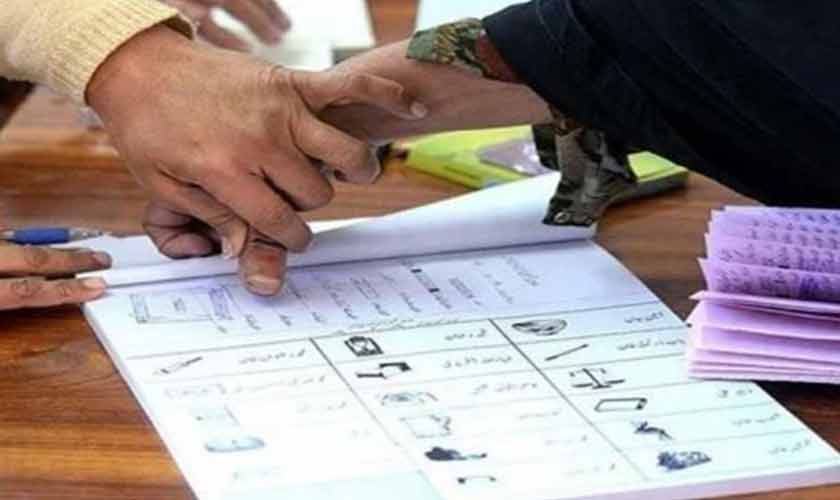
Relevance of these propositions cannot be overstated in today’s context as democracy is evermore threatened due to decreasing interest in formal education, complexity of governance, economic disparities, concentrated and centralised information networks, ebbing freedom of the press, disregard for human and civil rights, burgeoning misinformation and disinformation, majoritarian tendencies, cultural conflicts, increasing populist politics and, above all, questionable elections even in countries where trust in the electoral exercise has been established. In 2024-25 alone, serious allegations regarding transparency of elections were raised in Venezuela, Myanmar, Belarus, Honduras, Philippines, Pakistan, India, Georgia, Serbia and Moldovia. When fairness of elections is doubted, democracy erodes.
The challenge for the intern -ational community is to promote robust and resilient democratic institutions, norms and practices that can arrest the democratic downslide.
Erosion of democracy is a multifaceted phenomenon. The process involves incremental deterioration in the freedoms, guarantees and checks that are vital to its functioning. Democracies do not collapse abruptly, they deteriorate with the gradual weakening of democratic institutions. The global wave of democratisation, witnessed in 1980s and 1990s, has receded. In the current century, democracies are being replaced by either autocracies or hybrid systems of dwindling democratic quality. This is evident from the 2024 report of the Economist Intelligence Unit that registered the lowest global democratic index score ever for 130 out of 167 countries studied. Likewise, annual surveys by Freedom House have reported two decades of global decline in rights and liberties that sustain democracy.
As mentioned earlier, the year 2024 was dubbed as “the year of elections” in which around 3.7 billion people—almost half of the world’s population—in 72 countries participated in elections making it the biggest election year in history. One may ask that if such a huge number of people voted, how can democracy be considered a declining trend. The fact is democratic erosion often occurs despite, and even through, the voting process because citizens may vote away the values they cherish. One needs to understand that democracy is not about elections alone; it is a set of values, norms and participatory mechanisms that need to be continuously guarded and strengthened.
Indicators that point to democratic erosion - such as anti-democratic actors gaining and consolidating power, weakening of balancing institutions and norms, entrenched divisions in polity, loss of faith in democracy and support for and use of violence as a means to capture power - can be useful in understanding the state of democratic erosion in a country. In 2024, Pakistan was placed in the ‘hybrid regime’ category by Economist Intelligence Unit and ‘partly free’ by Freedom House, with a score of 40/100, six points lower than the previous year.
The challenge for the international community is to promote robust and resilient democratic institutions, norms and practices that can arrest democratic downslide. Harari argues that “in a well-functioning democracy, citizens trust the results of elections, the decisions of courts, the reports of media outlets and the findings of scientific disciplines because citizens believe these institutions are committed to the truth.” When people are forced to believe that power is the only reality, they lose interest in these institutions. Following the atrocities committed by Israel in Gaza, for instance, people in several nominal democracies are on one side of the aisle and their governments on the other.
Pakistan is at a crossroads. We have to work hard and consistently for both economic development and nurturing of democracy. The people of Pakistan deserve a better future.
Dr Muhammad Abrar Zahoor heads the History Department at University of Sargodha. He has worked as a research fellow at Royal Holloway College, University of London. He can be reached at abrar.zahoor@hotmail.com. His X handle: @AbrarZahoor1