


Print Story
X




Many citizens are complaining that flour prices have risen sharply over the last three weeks. The Food Department denies that there is a wheat shortage
| I |
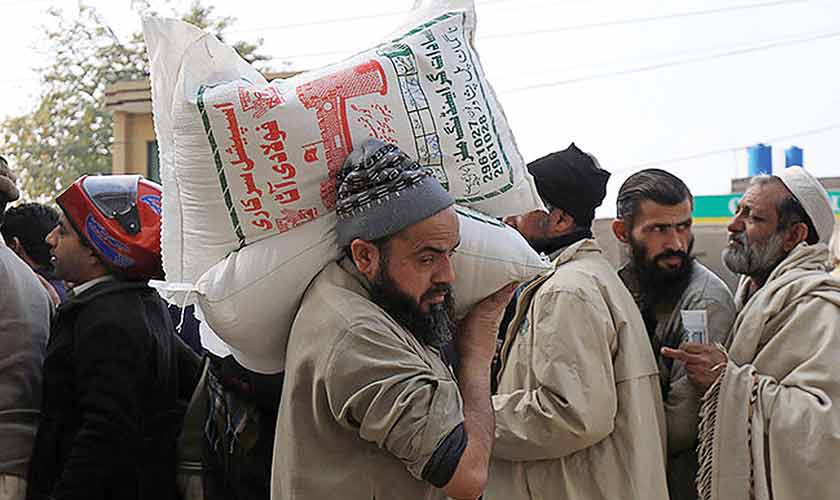
In Peshawar, the price of wheat flour has been rising at an alarming pace, with a 20-kilogram bag costing nearly 1,000 rupees more in just over three weeks.
The surge began after restrictions were allegedly placed on wheat supplies from the Punjab. The alleged ban has fuelled anxiety, frustration and anger among residents of the provincial capital.
For many households, flour is the single most essential commodity, forming the backbone of their daily meals. The rapid rise in its price is stretching family budgets.
Zahid Shah, a resident of Peshawar’s Gulbahar neighbourhood, says he is shocked by how quickly the prices spiralled out of control. “Just two weeks ago, I bought two 20 kilogram bags for Rs 1,600 each. Today, the same bag cost Rs 2,200,” he says.
“Two months ago, the ministers were assuring us that there was no shortage of wheat or flour in the province. If that was really the case, then why are the prices skyrocketing?”
Shah says the provincial government needs to take immediate measures to stabilise the market and provide relief to consumers. He says many feel betrayed by official claims that the situation is under control.
Flour vendors say they, too, are struggling to cope with the sudden surge. Yaseer Hamid, who runs a small flour business in Peshawar, says he has watched his costs climb sharply. “A 20 kg bag that cost us Rs 1,300 a month ago is now selling at Rs 2,100,” he says.
“When we ask our suppliers why the prices are going up, the explanation we get is that wheat supply has been disrupted.” Hamid says that the uncertainty is forcing shopkeepers to pass the rising costs onto their customers.
“Two months ago, the ministers were assuring us that there was no shortage of wheat or flour in the province. If that was really the case, then why are prices skyrocketing now?”
The ripple effects of the crisis are being felt in classrooms, markets and homes. Nargis, a private school teacher in Peshawar’s City area, says that the steady price hike is deeply worrying for already struggling working families. “With prices climbing every single day, it feels like we are heading toward another crisis. Flour prices might soon reach Rs 3,000 a bag,” she says.
Recalling a similar shortage two years ago, Nargis says that the province had experienced a near-crisis when flour dealers rationed sales, requiring customers to present national identity cards for each purchase. “It was humiliating and distressing. We cannot go through that pain again,” she says.
The crisis has left many asking whether repeated government assurances of “no shortage” reflect the reality on the ground.
According to the Food Department, Khyber Pakhtunkhwa requires 5.3 million metric tonnes of wheat annually. Of this, 1.4 million metric tonnes is produced locally. The remaining demand is met through supplies from other provinces, primarily the Punjab. Currently, the department has approximately 273,000 metric tonnes of wheat in its warehouses across the province.
In a recent communique, the department insisted that there was no shortage of wheat. It noted that wheat prices had started to fall. Officials expressed hope that a further reduction in flour prices could follow in the coming days.
The Food Department maintains strategic as well as operational reserves. The strategic reserves are kept for meeting unforeseen events like natural calamities. The operational reserves are released to flour mills to stabilise the prices of flour in the open market during the lean period (September to April).
Samin Khan, a shopkeeper in Chamkani Morr, noticed a sharp drop in flour prices on Friday when he purchased supplies from a nearby mill. “A week ago, the price of a 20 kg bag was Rs 2,500. Today, the mill officials handed it to me for Rs 1,900, an unexpected decline,” Khan says.
The writer is a multimedia producer. He tweets @daudpasaney