

Print Story
X

| N |
ot long ago, I visited a public hospital where a doctor was examining more than 100 patients a day. A consultation lasted no more than a few rushed minutes. The physician, like many others, was doing his best in an environment stretched far beyond reasonable.
As a surgeon, public health researcher and medical educator, I’ve spent more than two decades in healthcare systems across the world. No matter the setting, the care gap is consistent. There is not enough time and not enough hands. Far too many patients are left waiting. The situation reflects a larger truth. Across healthcare systems, the greatest challenge is often not a lack of medical expertise or compassion. It is a lack of capacity.
In Pakistan, more than 87 million people still lack access to basic medical care. Unless there substantial investment and innovation in the health sector, the number is projected to increase, according to the World Health Organisation. Our physician-to-patient ratio remains among the lowest in the region. Doctors are overburdened by paperwork, delayed by inefficiencies and often lack time or tools to deliver the kind of care they were trained to provide.
However, there is a quiet but potentially profound transformation under way that has the power to reshape this reality.
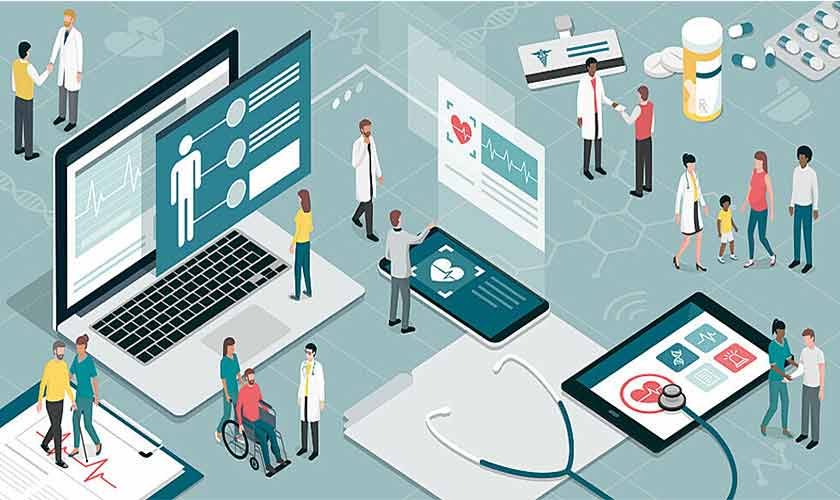
Artificial intelligence (AI) is already demonstrating its worth in hospitals, clinics and community health settings. It is no longer an experimental technology. From analysing X-rays to summarising patient histories and flagging high-risk symptoms,the AI can help deliver faster, more accurate and more accessible care. The true promise of AI lies in its ability to support medical professionals do what they do best: listen, think and care.
Imagine a physician’s assistant that reviews lab results, listens to patient histories and generates a preliminary note, before the doctor walks into the room. Imagine rural health workers, often operating without specialist support equipped with AI tools that flag warning signs, suggest diagnostic paths and help with timely referrals.
Next, imagine the power of these tools deployed in disaster zones. This is even more poignant when we consider the floods currently ravaging entire villages and communities in Northern Pakistan. Thousands of people - injured, displaced and vulnerable - are in desperate need of timely medical care. As a trauma surgeon, I have seen how every minute matters in saving lives. This is where AI tools can make a decisive difference: rapidly triaging large numbers of injured patients, guiding frontline staff through emergency protocols and ensuring that the most critical cases receive attention first.
The future of AI applications in healthcare shouldn’t be imported, it should be invented locally. In the Global South, as innovation is born out of necessity, we have the talent, the urgency and the will to lead.
These are not hypothetical scenarios. They are already being piloted and implemented around the world.
After years of seeing brilliant physicians burn out and patients slip through the cracks, we created Boston Health AI to design and develop tools that make care faster, more efficient and more humane.
During the Covid-19 pandemic, I remember talking to a junior doctor at a government hospital in Sindh. She was the only physician on duty for hundreds of patients. She lacked access to diagnostic resources, a specialist backup and the time necessary to provide each patient with the care they required. At the same time, hospitals in the United States were reporting record levels of burnout, with ICUs crowded and physicians under tremendous pressure to make life-or-death decisions. These experiences were not unique; they revealed how even the most advanced systems can falter without support.
Responsibility must be the guiding principle of this revolution.
The highest ethical and clinical standards must be applied to AI in healthcare. Systems need to be impartial, transparent and thoroughly validated. Most importantly, patients must remain at the centre of every solution we develop.
The future of AI in healthcare shouldn’t be imported, it should be invented locally. In the Global South, as innovation is born out of necessity, we have the talent, the urgency and the will to lead.
Whether we are addressing daily gaps in care or responding to large-scale crises, the challenge remains the same: how do we build tools that respond faster, work smarter and serve more equitably? Pakistan has the ability to influence technology and to lead the way. Our solutions stand to benefit the world, not just ourselves as we construct with empathy and account for our own realities.
As I often say to my team: AI won’t replace physicians. But physicians who don’t use AI will be replaced by those who do. The future is already here. The question is how we choose to shape it.
The author is the founder and CEO of Boston Health AI, a former dean of the Medical College at Aga Khan University and a global leader in surgery, public health and healthcare innovation.