Print Story
X




In a new poetry anthology, Dr Naveeda Katper confronts patriarchy, grief and the silence of exile
| I |
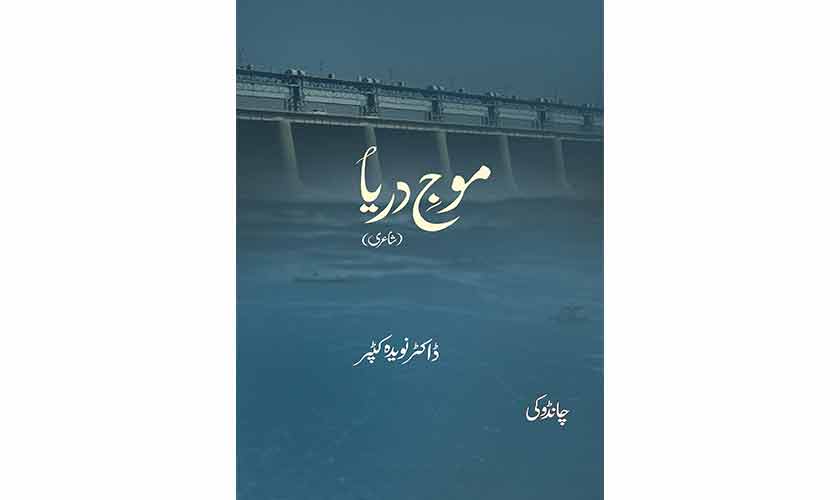
n the vast and often turbulent river of South Asian poetry, Mauj-i-Darya by Dr Naveeda Katper flows with both gentleness and force, a rare meeting of personal pain and collective consciousness.
This collection is more than a vessel of verses; it is a journey through emotional estuaries, feminist frontiers and spiritual tides. Katper, well known in both Sindhi and Urdu literary circles, brings to it a seasoned authenticity and lyrical strength that recalls the great resistance poets.
At first glance, one might be tempted to romanticise the title, Mauj-i-Darya, as a soft metaphor. But Katper’s ‘waves’ do not just caress: they also erode, question, cleanse and confront. In a literary climate where a lot of poetry veers towards escapism or pretension, her work stands out as a defiant affirmation of lived reality. She writes not from a distance but from the heart of experience; her poetry becomes a lived truth.
Katper’s style reflects a contemplative resilience with a grave maturity, where murmurs rise even from rose petals. In her poetry, one finds the fierce clarity of Kishwar Naheed, the melancholic realism of Himayat Ali Shair and the socio-political insights of Fehmida Riaz. Yet Katper is no echo: she is an original voice, rooted in the Sindhi soil and sharpened by the silence of an internal exile.
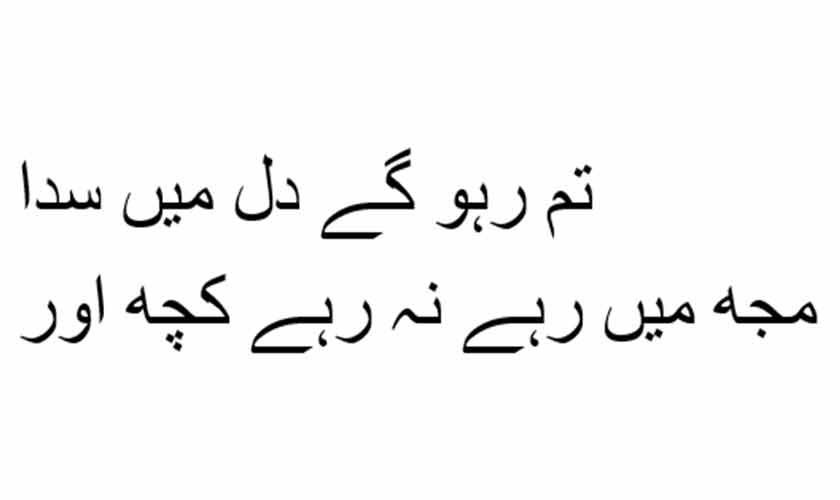
The collection is thematically diverse, shifting between the emotional and the existential. Katper’s ghazals carry the pain of unrequited love but never collapse into helplessness. In one verse, she declares:
[You shall always dwell in my heart,
even if nothing else remains in me.]
Here, Katper conveys the dignified sorrow of someone who has transformed heartbreak into a spiritual expression of love. This motif recurs like a refrain throughout the book. Her nazms and free verse poems stand out for their contemporary sensibility. In Ae Aadmi, she confronts patriarchy head-on, not as an abstract ideology but as a daily cruelty inflicted on countless women. The poem is neither rhetorical nor restrained: it is an indictment written in ink and blood. It recalls Fahmida Riaz’s searing verses in Chadar aur Chaardiwari, yet Katper’s tone carries added anguish, perhaps because she speaks as much for the soul as for the body.
Her poem Mauj-i-Darya, which gives the collection its title, is both an ode and a protest. The river is not only a metaphor for resilience but also a symbol of Sindh’s cultural and ecological legacy, now endangered by exploitation and political neglect. Her lament for the dying river mirrors Sarwat Mohiuddin’s environmental grief, reminding readers that poetry remains a powerful medium for activism.
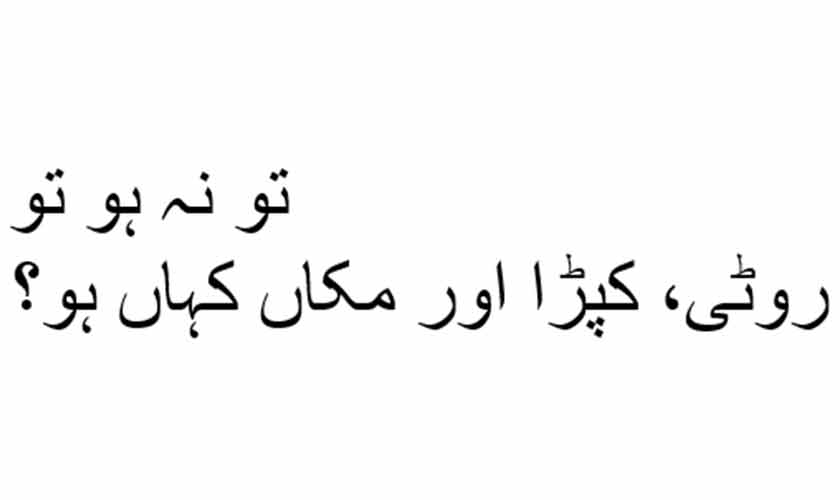
[If you cease to exist,
Where will bread, clothes and shelter be?]
This refrain carries a national urgency. It is the voice of the land speaking through a woman who has witnessed its droughts, both literal and moral.
Stylistically, Katper’s poetry avoids flamboyance. Her diction is deliberate and accessible, a reminder that clarity is not the opposite of depth but its highest form. In this, she follows poets such as Afzal Ahmed Syed and Amjad Islam Amjad, whose simple vocabulary often conceals vast emotional range. Katper distinguishes herself with an emotional sincerity that never lapses into sentimentality; her vulnerability is her strength.
Mauj-i-Darya is more than a collection of poems: it is a literary testament to the power of a woman’s voice when it refuses to be silent. It speaks not only of love and loss but of land and longing; nation and nurture; faith and fracture. It reminds us that the poet’s role is not only to craft words but also to bear witness. At a time when noise often masquerades as voice, Dr Naveeda Katper shows that true poetry still springs from the deepest wells of conscience. In her work, the personal becomes political, and the poetic becomes prophetic.
Amrita Pritam once wrote:
Ajj akhaan Waris Shah nu, kithon qabraan vichon bol...
[Today, I call upon Waris Shah to rise from his grave and speak…]
With Mauj-i-Darya, it is not Waris Shah but Dr Naveeda Katper who has risen to speak, to cry and to cleanse. Her words strike like lightning, for unlike Dylan Thomas she does not agree that “The dark is right.”
Mauj-i-Darya
Author: Dr Naveeda Katper
Publisher: Chandoki
Publication, 2025
Pages: 143
Price: Rs 500
The reviewer is an English graduate from NUML, Islamabad and the author of Song of the Soul. He may be reached at mangriogul@gmail.com