

Print Story
X




In his memoir, Shueyb Gandapur recounts a short journey to India
| S |
hueyb Gandapur has hardly sat still in his life. A chartered accountant by profession, he has been an obsessive traveller. His choice, made early in his life, has taken him to more than a hundred countries – eighty-five of those on his Pakistani passport. However, there was one country that remained out of reach, a land he had never set foot in, but to which he felt tethered. The longing was born not of memory but of nostalgia handed down through inheritance. That country was India.
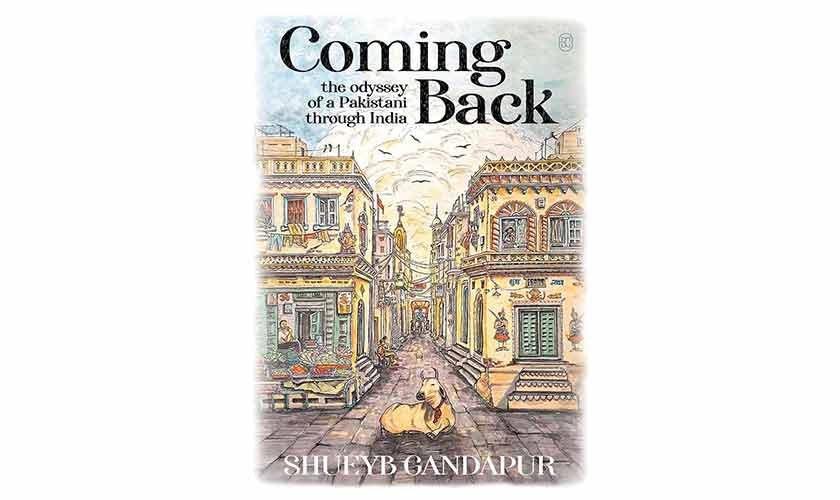
In the summer of 2017, Gandapur finally got the chance to answer that longing. He was allowed a short journey across four cities in India – Delhi, Varanasi, Jaipur and Agra. Coming Back: The odyssey of a Pakistani through India is the story of that trip, a memoir that shows how sometimes travelling to a place you have never seen is the only way to return to yourself. From Aanchal Malhotra’s Remnants of a Separation, which explores memories passed down through generations, to Anita Desai’s Clear Light of Day, where a family’s ancestral home becomes a vessel for memories of the Partition, writers from the subcontinent have long been writing about the lasting pain caused by the division. Gandapur’s memoir follows this tradition from a deeply personal angle.
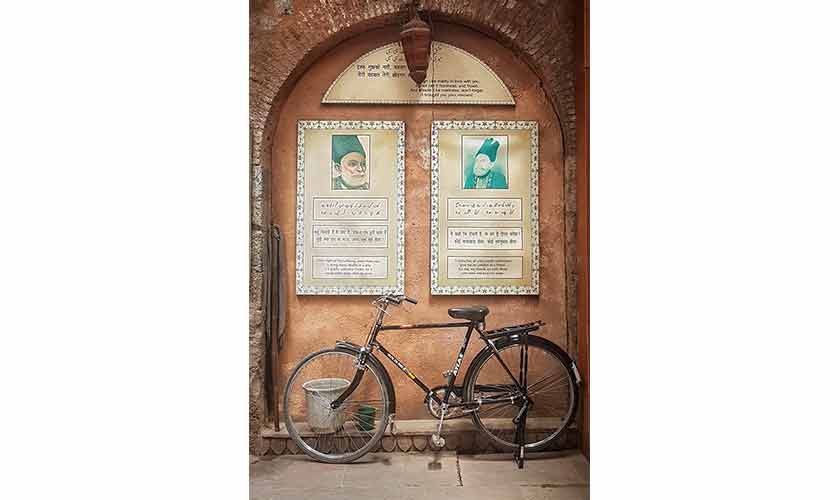
In his hands, this foray into the land he first heard about from his grandfather doubles as a search for identity. His narrative skitters from the qawwalis at Nizamuddin Auliya’s dargah and the red walls of Lal Qila in Delhi to the burning ghats of Varanasi, “a city where people go to die.” In Jaipur, also known as “the Pink City,” he is drawn not only to the colour that dominates the architecture of the city but also to the unusual names of its streets and squares, such as Daadi ka Phatak. He visits the grave of his literary idol, Qurratulain Hyder, in the Jamia Millia Islamia cemetery and goes looking for a school in Delhi named after his hometown, Dera Ismail Khan.
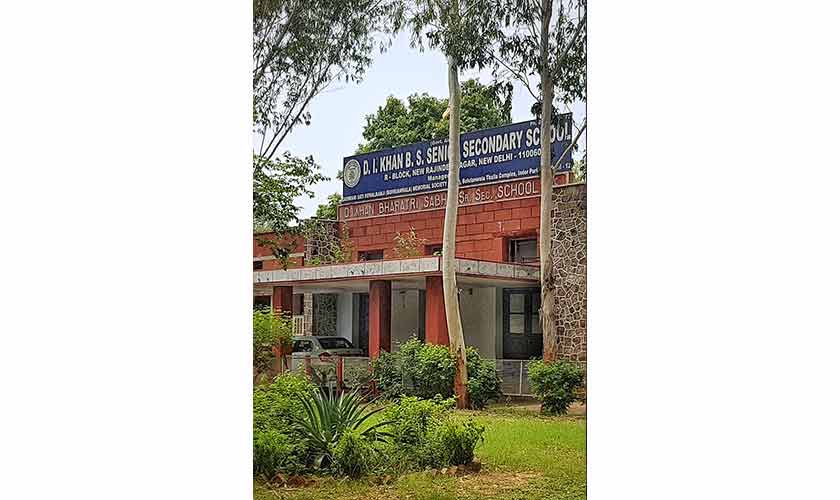
Just as easily as he writes about the many wonders he stumbles upon, he doesn’t forget the ordinary that reminds him of home: the ease of buying antibiotics over the counter; the never-ending love of the people for chai; and the brusque traffic wardens, among many things. Alongside the light, he also finds himself observing the dark – the rapidly shrinking space for faiths to coexist under the current political climate. The shift, he notes, can be observed in how some of his online friends have gradually changed their views, becoming more openly biased against Pakistan.
Several chapters in the book follow a specific formula. He arrives in a new city, checks into a hotel – often after facing many bureaucratic hurdles as a Pakistani traveller – and ventures out to the next site. We meet his drivers, guides and the people he encounters on the streets, listen in on their conversations and catch the brief moments of wisdom they share. But Gandapur is not only looking outward; he is also looking inward. As he does that, he peels back layers of identity with every stop in his journey.
The book itself is a sight to behold, beginning with a striking painting by Gandapur on the cover and continuing with the many photographs that he took on his journey. The chapters are short and digestible, though sometimes leaving the reader wanting more. The writing is simple and conversational, which makes it easy for the reader to follow along and feel a part of the journey. One can almost feel like one were walking beside him, sharing the frustrations of heavy paperwork at the airport or the familiar comfort of a cup of chai.
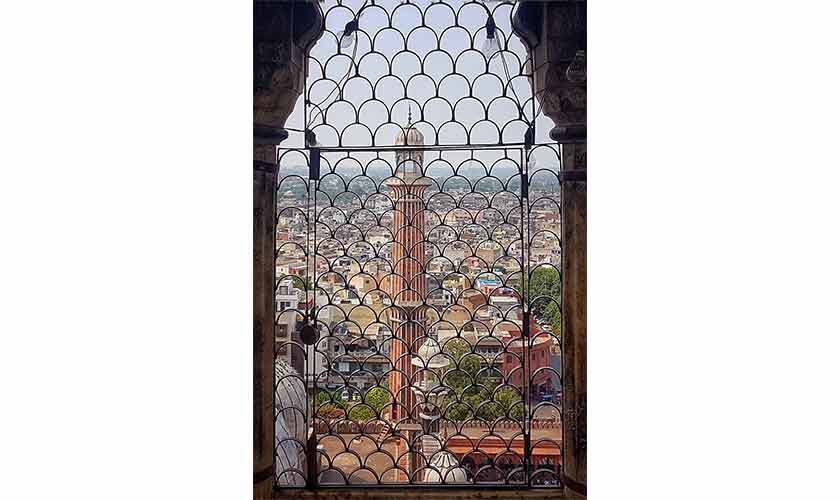
Coming Back knits together the author’s own experiences with histories of some of the places he has never lived in. Finally, it is not a book about sightseeing. It is about memory, about inherited nostalgia, about the strange way someone else’s story can become your own. The author longs for places he has never known and that longing is oddly familiar.
It is no surprise, then, that the most resonant moment in the memoir comes not at a monument but in Old Delhi’s Paranthe Wali Gali, where, while looking for the perfect paratha, the author hears a server call out to him: Bohot dinon baad aaye (It took you long to return).
A simple sentence, yet one that perhaps made its way into the title of his book and came to encapsulate the spirit of his entire journey, offering him not only a sense of belonging but also something he had long been looking for: a sense of freedom. “It seemed that those barriers had failed to diminish the connection between the people of the region, a bond that goes back many centuries. My decision had been made for me,” he writes. “I walked into his café.”
Coming Back
The odyssey of a Pakistani through India
Author: Shueyb Gandapur
Publisher: Book Corner, Jhelum, 2025
Pages: 152, Paperback
Price: Rs 1,995
The reviewer is a staff member