Print Story
X




The occupants of Khaima Basti, a flood relief camp in Chuhng, are unsure what future holds for them
| F |
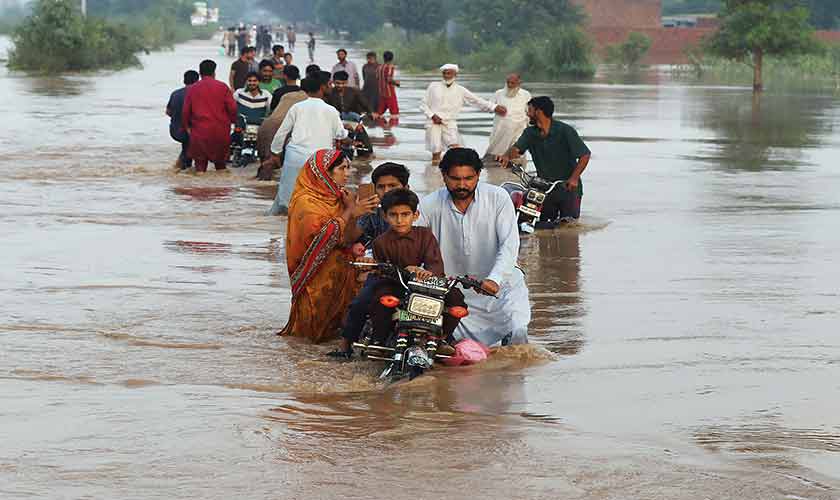
or the inhabitants of the Chuhng area, along Multan Road, life changed dramatically as floodwater destroyed their properties and cast away their livestock. Their new abode is now the relief camp set up along the road.
Relief camps are run by the social welfare wings of different religious parties. Interestingly, political parties are completely absent from the scene.
Khaima Basti in Chuhng is one such camp. True to its name, it’s a ‘town’ full of tents. The tents are of white and blue colours. Each of them is occupied by families — men, women and children. The adults sit around lazily on charpoys, most of the day, ruminating on the disaster that has befallen them. The children, mostly barefoot, find ways to have fun at the puddles. No one knows what future holds for them.
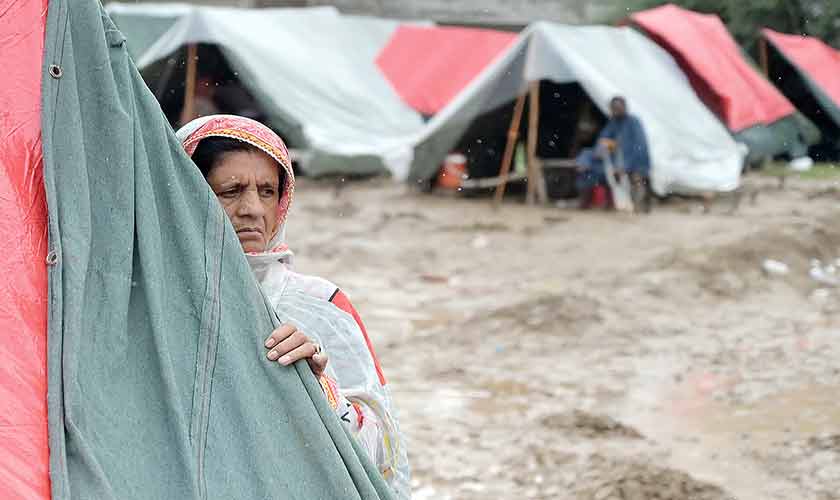
On August 28, floodwater from the Ravi entered five residential areas of Lahore. Among the most affected areas were Shafiqabad, Farrakhabad, Tallat Park near Shahdara Bridge and Park View near Chuhng. The residents of these localities are now facing the worst crisis of their lives — displacement.
As this scribe entered Khaima Basti, the silence was palpable. Maqbool Ahmed, a poor man pushing 50, was forced to leave their house. When asked as to how long he saw himself staying at the camp, he said, “No one can answer this. Water has receded a lot but we still can’t return [home].”
Maqbool also spoke of how his work had been affected. “The company owners have left the building,” he said. “My salary for a month is pending. I can’t seem to know its status.”
Talking about living conditions at the camp, he said, “The weather is changing, it gets cold at night. We need blankets.”
Another camper, Nazeer (full name not provided), told TNS that he was employed at a small-time local resturant. “The hotel is intact, but our home in Theme Park is badly damaged.”
On August 28, floodwater from the Ravi entered five residential areas of Lahore. Among the most affected areas were Shafiqabad, Farrakhabad, Tallat Park near Shahdara Bridge and Park View near Chuhng. The residents of these localities are now facing the worst crisis of their lives— displacement.
Nazeer said that he had been based in Theme Park for almost a decade. Did he have no idea that the area was flood-prone?
“No, nobody told us that. We were told that the water levels could rise, but we weren’t sure,” he replied.
When does he hope to return? “The road leading to our house is still inundated. I recently visited the place. The roof of the building is cracked.
“Looks like we’ll have to stay here for another 10 days or so. Food and water are available, but there aren’t enough cots for the people here,” he added.
Nazeer said that his children were missing school which had been closed due to the flood situation.
| A |
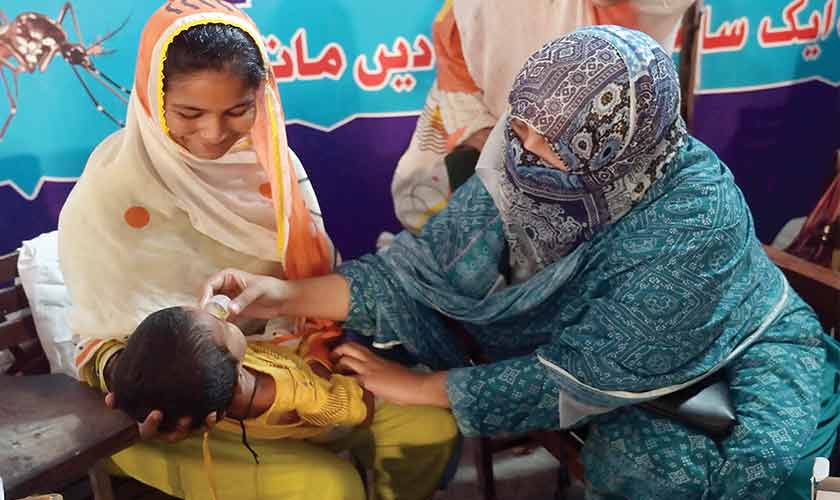
At Khaima Basti, one saw a number of volunteers. Doctors and paramedics moved around with medicine boxes, attending to women and children in particular. Dr Abdullah, who was treating a child suffering from high-grade fever, said, “When [relief] camps are set up, people live close together and even share little, little things with each other. That’s how viruses and bacteria spread, too.
“People at the camp have multiple complaints, chiefly, scabies and fungal infection. These are all water-borne diseases,” he added.
The camp is run by Muhammad Ammar, who leads the humanitarian wing of the Pakistan Markazi Muslim League. While the volunteers handed out food items to children, Ammar had a word with TNS. He said, “On August 28, when the water entered Park View, Theme Park and Loharanwala, we began our rescue operation. For three days, we used boats to move people out.
“A lot of people who refused to leave their homes were content to shift to rooftops. We deliver food to them every day. We’ve set up a medical camp. We’ll keep working for our people until they are home and safe.”
Ahsan Raza is the editor of Minute Mirror. He can be reached at ahsanbudh @hotmail.com