

Print Story
X




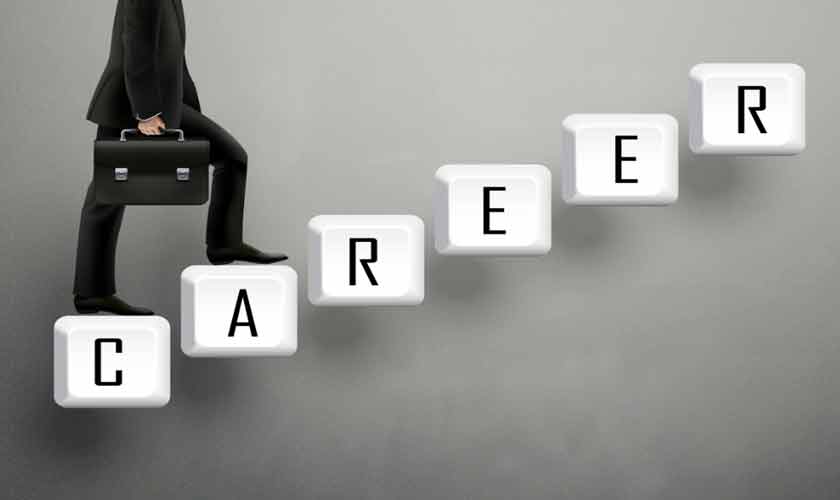
Pakistan urgently needs a comprehensive national career counselling framework
| W |
ith university admissions underway, thousands of families find themselves at the crossroads of decisions that will not only shape individual careers but steer the country’s economic trajectory. Yet, despite producing thousands of graduates annually, higher education in Pakistan continues to foster unfulfilled promises. Degrees, once symbols of secure futures, too often fail to translate into meaningful employment, personal fulfilment, or national progress.
The reason is clear: the global landscape is shifting rapidly. Demand is rising for expertise in digital and sustainability-focused fields that are transforming economies and societies, such as artificial intelligence, quantum computing, data science, cybersecurity, nanotechnology, blockchain, smart manufacturing, advanced robotics, bioinformatics, biotechnology, smart agriculture, green technologies, sustainability, digital health, green finance, sustainable urban planning, smart mobility, digital entrepreneurship, regenerative economies, immersive digital environments, circular economy solutions, etc. Our approach remains stagnant to conventional outdated career choices that neither meet market needs nor nurture innovation.
Today, in forward looking societies, interdisciplinary synergies combining disruptive technology, social sciences and human-centred design is reshaping industries and knowledge ecosystems, demanding graduates who combine technical skills, critical thinking and social insight to solve real-world problems; and who can think holistically, adapt rapidly, and craft solutions rooted in context and creativity.
But in Pakistan, students are rarely guided toward this future.
The real challenge begins after intermediate education, when students are expected to choose academic paths but are left to navigate their careers blindly. The vast majority have little to no awareness of emerging disciplines, market trends or their own aptitudes.
As a result, choices are too often dictated by family expectations or outdated notions of ‘safe’ professions—medicine, engineering and law—leaving little room to explore new career options that are becoming increasingly essential for serving the society and the country.
As a result, many students end up in programmes misaligned with their interests or future demand. The outcome? Disillusionment, unemployability and a widening skills gap. Graduates enter the workforce ill-equipped for the interdisciplinary and technologically complex world they must compete in.
Yet, no profession is inherently inferior so long as the market needs it; what matters most is aligning career decisions with personal interests—what one truly wishes to do, how one hopes to serve, and where one can contribute with passion—before choosing the right educational programme or the university to nurture that path.
Few students take the time to read a university’s prospectus or explore the scope of a departmental programme, curriculum, facilities or career prospects. Institutional social media pages remain largely inactive, offering little in terms of career insight or student engagement.
There are no structured national platforms, no online career simulators, no interactive forums, and virtually no pre-admission counselling—whether physical or digital. Further, the candidates’ aptitude and their readiness for a transformative journey is no criteria in admissions to degree programmes. As a result, many students enter degree programmes without a clear understanding of what they will study or where it will lead to. By the time they get some clarity, it is often too late.
The country must move beyond producing directionless graduates and instead nurture skilled graduates who can contribute to research and entrepreneurship.
In this context, career counselling is a proven enabler of informed academic and professional choices, yet it remains largely confined to elite private schools and a few urban universities. What Pakistan urgently needs is a comprehensive national career counselling framework, with a strong emphasis on college-level admission counselling to help students make informed, future-oriented academic decisions.
Here, digital platforms also have a crucial role to play, offering aptitude-based assessments, real-time manpower market insights, AI-powered academic guidance, alumni tracking and employer feedback to support data-driven, student-centred decision-making.
Similarly, college administrations should actively invite industry and academic professionals for regular guest lectures and organise educational tours to universities and industrial sites, while universities should conduct awareness drives, thought leadership sessions and outreach visits to colleges. Just as universities host various student-led societies, dedicated career counselling clubs should also be established on campuses to facilitate peer-driven mentoring, organise career-focused events and foster a culture of informed academic and professional exploration.
Parents and teachers need to redefine their roles, not as decision-makers but as facilitators. Careers should not be inherited professions but personal journeys aligning with one’s interest and aptitude, and future market potential.
Furthermore, career counselling must not be a one-time advisory; it must evolve into structured, ongoing guidance that begins from the first semester. Progressive institutions now implement immersive programmes, including summer academies, industry-expert panels, skill-building workshops and curated career tracks that help students explore fields and relevant desired skills.
These programmes offer personal mentorship, market exposure and goal-setting support that aligns academic pathways with real-world aspirations. When students engage in career development from the start, they graduate with more than a degree; they graduate with direction, adaptability and the confidence to pursue meaningful, future-aligned opportunities.
Although student advisory and career counselling units exist in some universities, their role often remains underutilised. There is significant potential to expand their scope and impact, transforming them into proactive hubs that offer continuous, student-centred career support, aligned with evolving academic and market needs.
There is also pressing need to move beyond the debate of ‘skills versus degrees.’ These are not competing paths but complementary forces. A well-structured four-year degree programme inculcates cognitive depth, technical competence and the right attitude. Meanwhile, practical skills provide the readiness to excel in an increasingly competitive market.
It would not be wrong to say that without degrees, skills remain shallow; and without skills, degrees become hollow. The future belongs to skills-integrated degree programmes that blend academic depth with real-world relevance, preparing graduates not merely to earn, but to contribute, innovate, lead and remain professionally relevant throughout their careers.
A trained and future-ready workforce is the backbone of any economy. For Pakistan, investing in career guidance and skill-integrated education is not a policy option but an urgent necessity. A well-directed and skilled human resource enhances productivity, attracts foreign investment, fosters entrepreneurship, and builds a competitive national profile in an increasingly knowledge-driven world.
Unless career choices are based on sound footings and aligned with fast changing demands, Pakistan will continue to produce graduates who are educated yet unprepared for the world ahead. To truly harness its demographic dividend, the country must move beyond producing directionless graduates, instead nurture skilled graduates who can contribute to research, entrepreneurship, indigenous innovation and sustainable growth to build a prosperous, knowledge-driven Pakistan.
Khalid Pervez heads a private sector engineering consultancy. He can be reached at kp@kpwsconsulting.com.
Shafqat Hussain Memon is an academic and researcher based in Jamshoro. He can be reached at hussainshafqat.memon@gmail.com