

Print Story
X




For the rural poor, climate change means failed crops, lost income and a future drying up
| N |
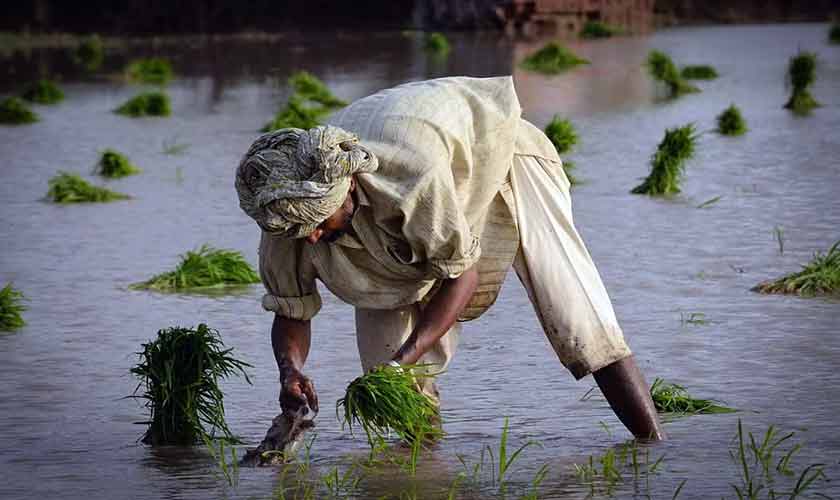
azo Dharejo—once hailed as ‘Pakistan’s toughest woman’ for defending her land in Qazi Ahmed, a farming town in southern Sindh, against 200 armed men—now fights a tougher, unseen enemy: climate change. The fields she once protected wilt under erratic rains, scorching heat and relentless drought, threatening her survival and that of countless farmers in the country.
Across Pakistan’s rural heartlands, climate change is no longer a looming threat; it’s reshaping daily life. Soaring temperatures and unpredictable rainfall are battering agriculture, which contributes 23.5 percent to GDP and employs over 37 percent of the workforce. According to the 2024-2025 economic survey, crop production has plummeted—major crops down 13.49 percent, and the crop sub-sector shrinking by 6.82 percent—turning climate change into a harsh economic and social reckoning for millions like Dharejo.
“The seasons have gone haywire,” she says.
“When it rains, it floods. Winters are shorter. And wheat, the crop we’ve always counted on, has dropped by 50 percent in production; in some places by 70 percent. Even sugarcane, which used to yield 800 to 1,000 maunds, now gives us barely 200 to 500 maunds.”
The very rhythm of rural life, once dictated by nature’s predictability, is now thrown into chaos not just in Dharejo’s farming town but across the country. Despite Pakistan’s relatively low emissions, its vulnerability to climate change is stark.
In Jhang, central Punjab, the previous year has left rice farmer Naeem Tahir both physically exhausted and emotionally drained. “It started well. My Super Fine crop looked promising,” he says, referring to an early-maturing variety that allows farmers to sow another crop—usually Super 1509 or Super 1692—right after harvest. This double-cropping strategy is vital for making ends meet.
“But then came the blast disease, and the heat,” he says. “Then, right when we were ready to harvest, the skies opened up. We lost half the grain before it even left the field.”
Dharejo has seen the same pattern unfold in Sindh. “The moment winter ends, we plunge into a scorching summer,” she says, wiping sweat from her brow as she surveys her sun-scorched wheat fields. “Crops can’t handle it. Neither can we.”
For Naeem Tahir, the trouble didn’t stop at the field. “Threshing was a nightmare. Drying took weeks instead of days—flipping, guarding, praying the sun would stay. And just when you thought it was over, the market price crashed. We were paid Rs 2,000 for a 40 kg bag that went for Rs 4,000 last year.”
Dharejo, too, is blunt about the economics.
“With crop losses and falling prices, our profits are gone. Meanwhile, diesel and fertiliser prices keep rising. It’s like the land takes more and gives back less each year.”
The longer summers and shifting seasons have even pushed wheat cultivation into riskier territory. In some regions, late rains helped ripen the crop, but in fully rain-fed areas, early moisture was lacking, causing serious losses.
“If March isn’t cool,” Naeem Tahir says, “grain formation suffers. This March felt like May.”
Even premium varieties like Kainaat weren’t spared. “It was attacked during mid-growth,” says Tahir. “On 14 acres, I got what I’d usually harvest from just seven. That’s not farming—it’s gambling.”
More and more farmers, both men and women, are wondering how long they can hold on. “Climate change is squeezing us,” says Dharejo, her voice steady but weary. “Once our pride, farming is starting to feel like a punishment.”
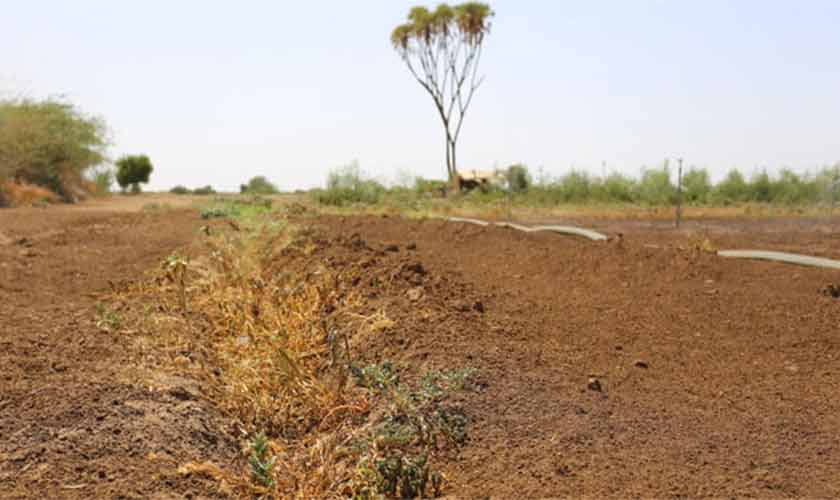
In Chak Arifabad, 32-year-old farmer Amir Husain faced major losses last year because the paddy crop didn’t develop proper grain. “It looked green from the outside, but there was nothing inside. We tried sowing maize in June to make up for it, but the rains never came. The soil stayed thirsty, and so did we.”
But for Amir, the losses weren’t just agricultural—they were deeply personal.
“It’s not just the crops that suffered. Family weddings had to be postponed, school fees went unpaid, and we had to borrow just to keep the house running.” His voice lowers. “You feel like you’re letting everyone down—even when you’ve done everything right.”
In Nutkani village in southern Punjab, Omar Daraz spent 2023 restoring his flood-hit fields only to see his 2024 wheat crop battered by untimely, hail-laden rains.
“The harvest was delayed, yields dropped, and much of the grain turned black and unfit to eat,” said the 32-year-old, his hard work and investment undone by relentless weather.
Rural areas in southwestern Balochistan and northwestern Khyber Pakhtunkhwa have also witnessed extreme climate change events wreak havoc on crops and orchards, according to disaster and relief authorities.
“Collaborative efforts are needed to fortify vulnerable communities against future climatic uncertainties. Diversifying crop choices away from summer crops like cotton and rice can mitigate risks, alongside proactive flood protection measures, to combat unseasonal rains,” says Daraz.
Memories of the devastating 2022 floods persist, with essential waterways still in disrepair, raising concerns about another deluge.
“Recovery from the floods has been challenging, especially in reclaiming flooded lands for cultivation. Government support has been insufficient, with plummeting wheat prices exacerbating financial woes for farmers,” says Daraz.
Climate change has profoundly impacted rural livelihoods.
“Postponed dreams of weddings, education, and infrastructure projects vividly illustrate the profound societal repercussions of agricultural adversity,” he says.
“As for me, besides cutting down several expenses, I’ve halted construction on my house in the nearby town.”
As Pakistan’s farmers struggle to read the changing sky, experts say what’s unfolding is not random.
Dr Muhammad Ismail Kumbhar, director at the Sindh Agriculture University, Tando Jam, confirms that what farmers are facing isn’t just bad luck but the unfolding impact of climate change.
Sitting miles away but echoing the same urgency is Aamer Hayat Bhandara, a young farmer from Pakpattan and co-founder of Agriculture Republic, a policy-focused think tank.
“It’s no longer one crisis at a time. Now we face extreme heat, erratic monsoons and delayed winters all in a single year.”
From Sindh’s banana and cotton belts to Punjab’s rice and wheat fields, the impact is widespread.
“In Sindh, the absence of freshwater in the Indus Delta is pushing seawater inland, salting our soil and killing crops,” says Dr Kumbhar. “Even mango and rice yields are dropping due to temperature shifts. When wheat needed cool nights in March, temperatures spiked. Yields halved.”
In the Punjab, Bhandara says the worst came in 2019-2020. “During the crucial pollination phase of maize and rice, we were hit with a brutal heatwave. Temperatures touched 45 to 50 degrees Celsius. The crops couldn’t reproduce. Yields collapsed.”
From rice grains that no longer form properly to wheat seeds that fail to germinate, entire crop cycles are collapsing. “In March, when wheat needed cooler nights to ripen, we had warmer temperatures instead. Yields dropped from 50-60 maunds per acre to just 25-30 maunds.”
It’s not just wheat. “Bananas, cotton, mangoes—crops with specific climatic needs—are all under pressure,” says Dr Kumbhar. Even the famed Kainaat rice variety, once the pride of Sindhi farmers, is falling to disease and heat stress.
Nowhere is the impact of climate change more visible than in Sindh’s arid and coastal zones. The province is home to riverine belts, a 350-kilometre coastline, and about 60 percent arid territory, making it uniquely vulnerable.
“As a lower riparian region, Sindh is particularly hard hit by water scarcity,” Dr Kumbhar explains. In the Indus Delta, the absence of freshwater inflows has triggered sea intrusion, salinisation, and the collapse of once-fertile lands. “Productive fields are turning barren, especially in drought-prone zones, forcing families to migrate.”
When the rains come, they wreak havoc. Encroachments along natural waterways have clogged flood channels, so storm water now ravages fields and homes alike.
Climate volatility isn’t just reshaping seasons but is bringing in new threats. “We are seeing new diseases and pests that never existed here,” says Dr Kumbhar. “Cotton has especially been hard hit by viral attacks made worse by water scarcity.”
Apart from traditional cash crops, vegetables like tomatoes, onions and potatoes are also affected. “The entire cultivation and harvesting calendar is now under pressure,” he adds.
The invisible cost for women
While both men and women are feeling the squeeze, female farmers and labourers are carrying a heavier burden, warns Dr Kumbhar.
Nazo Dharejo agrees. “We do everything: fetch water, pick cotton, feed livestock, cook, clean. And when crops fail, it’s our health and dignity that suffer first.”
Healthcare becomes unaffordable. Children drop out of school. Women spend hours in queues for small cash payouts, often jostling each other in desperation.
“When cotton yields plummeted, it wasn’t just male farmers who lost income,” says Dr Kumbhar. “Cotton-picking women in districts like Matiari, Sanghar, Nawabshah and Mirpurkhas were left without work.”
The solution, he says, lies in climate-smart agriculture. This means introducing heat and drought-tolerant varieties of crops like wheat, millet, mung bean and sorghum; shifting to low-water-use crops in arid regions; and scaling up sustainable practices like drip irrigation, raised-bed planting, crop rotation and agroforestry.
Some larger farmers have begun adopting these methods, but smallholders lack the training, financing and access. “We need government-backed extension services, digital tools and community-level outreach.”
What stings most, says Dharejo, is the absence of institutional support. “There’s no training, no guidance, no preparation for what’s happening to our climate.”
For women, the path to resilience must go beyond charity. “We shouldn’t just hand out stipends,” says Dr Kumbhar. “We should use platforms like the BISP to build skills in kitchen gardening, poultry farming and vegetable production.”
He proposes forming women-led agricultural cooperatives for grading, packing, and marketing produce, and expanding access to microfinance and rural support programmes to strengthen economic independence.
“The Sindh Agricultural Women Workers Act exists,” he says, “but without implementation, it’s just paper.”
What lies ahead
Looking ahead, the risks are stark. Entire districts—Tharparkar, Dadu, Sujawal, Thatta, Umerkot—face prolonged droughts and water shortages. In the Indus Delta, salinity is accelerating the collapse of wetlands, mangroves and agricultural land. In the Punjab and Balochistan, farmers fear increasing soil erosion, heatwaves and the drying up of seasonal rivers.
Dr Kumbhar warns: “Without urgent climate adaptation and real investment in agricultural resilience, we are not just looking at crop failure but at rural collapse.”
Farmers on the brink
Like others, Bhandara emphasises that climate change is hitting at both ends: reducing yields while increasing costs. “Even before the crisis, we were producing half the global average. While others got 1,000 maunds per acre, we were stuck at 500.”
Farming, he says, is more than an occupation. “If the farmer earns, the labourer earns. Shops run. School fees get paid. If not, everything breaks down—weddings are delayed; medicines are skipped; and households are stressed.”
Many farmers are now walking away from crop farming altogether. “They are turning to livestock,” he says, “but that alone can’t carry the weight of a broken agri-economy.”
A policy vacuum
Bhandara has sat at many policy tables, from Punjab’s Agriculture Commission to national advisory meetings, including one where Prime Minister Shahbaz Sharif spent two hours discussing agriculture post-2022 floods.
While he commends the PM’s global advocacy at COP27, especially pushing for the Loss and Damage Fund, he’s quick to point out the disconnect at home.
“Look at the first draft of Pakistan’s first Climate Change Policy,” he says. “It named the Chamber of Commerce and Industries as the key implementing body. Where are the farmers? The people most affected by climate change are not even in the room.”
“A policy without farmers is a policy without grounding.”
Pakistan is implementing its Resilient, Recovery, Rehabilitation and Reconstruction Framework, dubbed 4RF, a recovery strategy that sets out to build long-term climate resilience and adaptation. A donors’ pledge made early in 2023 to fund it is only slowly materialising, failing to keep pace with the urgency of climate change.
The federal government, in its latest economic survey, admits agriculture is bearing the brunt. It highlights the National Adaptation Plan and Recharge Pakistan Project as federal responses aimed at ecosystem restoration and climate-smart infrastructure. But it also acknowledges: more investment in climate-smart farming, water management and ecosystem rehabilitation is urgently needed.
The survey also talks of provincial actions complementing these efforts such as climate smart technology to shield farming from climate shocks and ensure food security and the Benazir Hari Card in Sindh and Kissan Card in the Punjab, a support mechanism for smallholders.
Who pays for resilience?
Bhandara doesn’t deny the progress even if he’s blunt. “Climate-smart farming sounds good on paper. But someone has to pay for it.”
“Better seeds, smart irrigation, modern harvesters are all expensive. The government can facilitate but it can’t foot the bill alone.”
He calls for a reimagined agri-economy, where those who profit along the value chain—processors, retailers, exporters—invest in farmer adaptation.
“Farmers are the first link. If they fail, the chain fails. Supporting them isn’t charity—it’s self-preservation.”
He proposes community-level adaptation plans co-financed by agri-businesses. “That’s what climate justice looks like.
Farmers, he says, are already adapting but with their hands tied. “Golden rain can still ruin wheat if it falls at the wrong time,” he says.
Untimely rains during harvest are delaying wheat cutting and squeezing the planting window for rice.
“We are trying to shift wheat sowing earlier. But that needs modern harvesters to clear fields quickly. Most farmers don’t have those and that leads to post-harvest losses.”
A call for smart support
The roadmap, Bhandara insists, is clear. “We need real-time weather data, crop insurance, climate-resilient seeds, and access to modern tools. Without these, we are farming in the dark.”
“It’s about rural dignity, economic security and making sure our countryside doesn’t collapse under the weight of a warming planet.”
Anis Danish, chief services executive at HANDS, a development NGO active across Sindh, sees the impact up close.
“In our study across 11 villages in Larkana and Jacobabad, farmers reported up to 70 percent yield losses in rice and wheat due to extreme heat,” he says.
“Crops failed to reach productivity during the growing season. The heat was too much.”
A major issue, Danish notes, is seed quality.
“Most farmers rely on unregulated, middleman-supplied Chinese hybrid seeds not suited for Pakistan’s changing climate.”
Institutions like the Rice Research Institute in Dokri are trying to address this, testing early and late-maturing varieties suited to shifting climate patterns.
“Farmers who sow early are advised early-maturing varieties; late sowers, late-maturing ones. But most smallholders operate without technical guidance,” Danish warns.
“There’s a serious disconnect between research and field realities.”
He urges the government to regulate local seed markets; strengthen extension services and make climate-resilient seeds widely available and affordable.
“Without targeted action millions of rural livelihoods will continue to suffer.”
Even for battle-hardened survivors like Nazo Dharejo, who once defended her land with a gun, the future feels uncertain.
“Climate change is destroying crops. Prices are falling. Inputs are rising. Farmers are losing hope,” she says.
“We fought for the land. Now we fight for a way to keep it alive.”
The writer is a print, broadcast and online journalist associated with Jang Group of Newspapers as editor, special assignments