Print Story
X




Waste can be turned into a resource by realigning policies with climate resilience
| W |
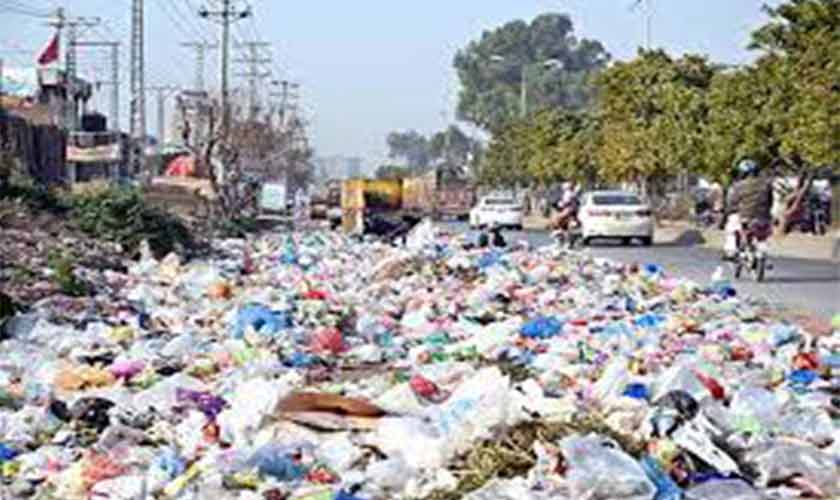
aste is not just about what we throw away; it is about what we choose to value as a society. The piles of plastic bottles, food packaging, and overflowing bins on Islamabad’s streets are not merely an eyesore; they are a mirror reflecting our habits, governance gaps and collective apathy toward sustainability. For too long, Pakistan has grappled with a linear approach to waste: produce, consume and discard, without fully grasping the environmental, health and economic costs of this cycle. Yet, as Islamabad takes bold steps toward modernising its waste collection system, introducing fines for littering, and experimenting with multi-bin models, we stand at a crucial juncture. The question is: will we seize this opportunity to fundamentally rethink how we manage waste, or will we settle for cosmetic changes that do little to alter the system at its core?
The recent announcement by the Capital Development Authority to overhaul the city’s waste collection framework is certainly a promising step. Dividing the capital into operational zones, launching new bin systems for households and commercial centres, and bringing in financially robust international-standard service providers all indicate a seriousness that was long overdue. Equally important is the decision to introduce fines for littering, an enforcement measure which, if applied consistently, could reshape public behaviour in profound ways. Pakistan has often struggled with translating policies into practice but the emphasis on transparency in the bidding process, real-time monitoring through a central control room, and material recovery facilities shows that Islamabad is finally inching closer to global standards.
Yet, the real challenge lies not only in institutional reforms but in shifting the culture of waste management. At present, Pakistan generates over 48 million tonnes of solid waste annually, and plastic waste is among the most pressing threats. Cities like Islamabad may appear greener compared to Karachi or Lahore but the hidden problem lies in the lack of segregation, recycling infrastructure, and behavioral awareness among citizens. Even the most sophisticated systems falter if residents are not sensitized to use them properly. This is where the new bin model, if combined with educational campaigns, could spark the beginning of behavioural change.
Plastic waste, in particular, deserves urgent attention. Despite bans on single-use plastics in certain provinces, the implementation has been inconsistent, and alternatives remain either too costly or inaccessible for ordinary citizens. Walk through Islamabad’s markets, and plastic bags remain the default choice for most vendors. Policy gaps are evident here: we cannot simply outlaw plastics without simultaneously investing in affordable biodegradable substitutes and encouraging businesses to innovate in packaging. If the government wants to succeed, it must create an enabling environment where alternatives to plastic are not a luxury but the norm. This requires collaboration between policymakers, private enterprises, and research institutions to develop and scale up sustainable options.
From a policy analyst’s perspective, one of the most exciting aspects of Islamabad’s new waste strategy is the incorporation of material recovery facilities and green waste segregation. These are the first steps toward transitioning from a linear to a circular economy. Instead of viewing waste as an end product, we need to see it as a resource stream: plastic that can be recycled into building materials; organic waste that can be turned into compost or bioenergy; and glass or metal that can re-enter industrial supply chains. Countries like Sweden and Japan have demonstrated how waste-to-energy initiatives and circular practices can simultaneously create jobs, reduce landfill dependency, and contribute to energy security. Pakistan must not shy away from learning from these models, adapting them to local realities rather than copying them wholesale.
The fines for littering, while necessary, should also be paired with incentives. Penalising citizens without offering solutions may create resentment. For instance, reward-based recycling programmes where citizens receive discounts on utility bills or redeemable credits for returning recyclable items have proven effective in cities across Europe and East Asia. Islamabad could pilot such schemes through digital apps or community centres, leveraging Pakistan’s growing digital infrastructure to encourage participation. This would not only reduce the burden on waste collection systems but also foster a sense of ownership among residents.
Another key dimension that Pakistan cannot afford to ignore is the link between waste management and climate resilience. Floods, smog, and urban heat islands are all exacerbated by poor waste disposal practices. Plastic-choked drains contribute directly to urban flooding, while uncontrolled burning of waste worsens air pollution and public health crises. If Islamabad’s reforms are to be meaningful, they must be embedded within a broader climate strategy that recognises waste not only as an environmental issue but as a risk multiplier for disasters. Integrating waste management with disaster risk reduction plans, especially in vulnerable urban-rural transition zones, is essential for building resilience.
Equally important is involving youth in the process. Pakistan has one of the youngest populations in the world. Their energy, innovation and digital savviness can be harnessed to drive new approaches. From startups developing biodegradable packaging to university-led awareness campaigns and neighbourhood recycling drives, the youth can be at the forefront of transforming waste management into a people-powered movement. Instead of relying solely on top-down enforcement, Islamabad should empower its youth to design, implement and monitor community-based solutions.
But as we consider solutions, we must also acknowledge the underlying political economy of waste. In Pakistan, waste management contracts are often marred by inefficiencies, corruption, and a lack of continuity. A system that depends heavily on outsourced companies risks collapsing if accountability mechanisms are weak. Transparency in procurement is a good starting point, but it must be matched with long-term institutional capacity building. Strengthening municipal institutions, ensuring coordination between local and federal agencies, and creating platforms for citizen feedback can help safeguard against systemic failures.
Ultimately, the transformation of Islamabad’s waste management system cannot be reduced to bins, trucks or fines alone. It requires a reimagining of our relationship with waste itself. Do we continue treating it as an inevitable byproduct to be hidden away in landfills or do we embrace it as an opportunity to innovate, recycle and regenerate?
The way forward is clear: combine institutional reforms with citizen engagement; pair enforcement with incentives; and invest in sustainable alternatives while fostering innovation. Waste, after all, is not just a municipal problem; it is a societal one. By rethinking waste as a resource, aligning policies with climate resilience, and empowering youth as change makers, we can move beyond cosmetic reforms toward ensuring cleaner, more sustainable and future-ready cities.
If we succeed, this could be a model for how developing countries can transform waste into an opportunity. But if we fail, we risk drowning in the piles of plastic and negligence that surround us today.
The writer is a policy analyst and researcher with a master’s degree in public policy from King’s College London