

Print Story
X




The government had promised that no taxes would be imposed on the merged districts for ten years. That pledge went fulfilled
| W |
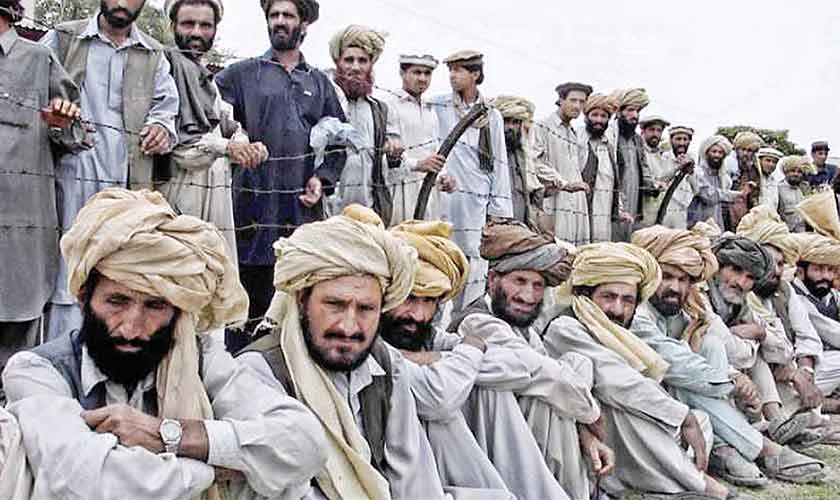
hen the parliament passed the 25th Constitutional Amendment in May 2018, the Federally Administered Tribal Areas- seven agencies and six frontier regions - were merged into Khyber Pakhtunkhwa, ending more than a century of governance under the colonial-era Frontier Crimes Regulations.
For decades, the tribal belt had been treated as a buffer zone rather than an equal part of the federation, its residents were denied the political, legal and economic rights enjoyed by other Pakistanis. The merger was therefore hailed as a historic victory, promising constitutional inclusion, political representation and billions of rupees in development funds for more than ten million people.
Seven years on, however, the people of the merged districts are divided over what they gained and what they lost.
Bismillah Afridi, president of the FATA Grand Jirga and head of the anti-merger tribal movement, says that the tribal people gained nothing from the merger. He says that the FCR was meant only for dispute resolution; the governance was under Article 247 of the Constitution. He says under pressure from external forces, the merger was carried out without consulting the resident tribes. He says a referendum on the proposal was the tribes’ right. Instead, they were pushed into a system that plunged them into ‘further darkness.’
Afridisays that no development work has taken place in the region since the merger. He says that during the FCR era, land had been purchased for a Type-D hospital in TirahMaidan. The hospital has still to bebuilt. He mentions that the admissions quotas for tribal area students in all universities, including engineering and medical colleges, have been abolished. Meanwhile, funds allocated for the merged districts are being used by the provincial government in Shangla, cantonments and Swat.
BismillahAfridi says that out of 12 National Assembly seats, only six have survived after the merger.The FR seats have been abolished. Afridi says FATA’s representation in the National Assembly has thus been reduced by 50 percent.Formal representation in the Senate has been eliminated.
He recalls that the government had promised that no taxes would be imposed on the merged districts for ten years. The pledge went unfulfilled. The provincial government, he alleges, is spending the funds allocated for the merged districtson rallies and political gatherings.
Qazi Fazlullah,a senior journalist,says the merged districts were not given a separate share in the NFC Award. “The promise of Rs110 billion annual development funds for merged districts has turned into a distant dream. He says the recruitment of 25,000 levies personnel was announced, but the khasadar force was also abolished. The provincial government has taken control of the resources.”
For many, the biggest achievement of the merger was the abolition of the notorious Frontier Crimes Regulation. The FCR allowed political agents to jail entire families under collective responsibility, confiscate property and deny appeal. Its abolition was celebrated as the end of a legal apartheid.
“Now we can challenge a wrongful arrest in court. Under the FCR, even our children could be jailed for the crime of one man,” says Advocate QubaisShinwari.
He says the merger also brought better political representation. For the first time in history, the tribal districts elected 21 members to the KP Assembly, giving them a voice in provincial legislation. Roads, mobile phone networks and banking services have begun to connect the once-isolated valleys. Thousands of youngmen from Bajaur, Mohmand and Waziristan have secured jobs in Police, Health and Education Departments thanks to new quotas.He says journalists and NGOs, previously not allowed to enterthe area, now operate openly and highlightvoices long ignored.
Pakistan PeoplesParty provincial council member Atta Muhammad Shinwari says courtscan now address grievances and the citizens can stage protest for their constitutional rights. He says this was not allowed in the FCR.Nobody could protest against a decision of the political agent. Shinwari says most people had expected greater prosperity and peace following the merger. However, he says, the law and order situation is worsening.
For many, the biggest achievement of the merger was the abolition of the notorious Frontier Crimes Regulation. The FCR empowered political agents to jail entire families under collective responsibility, confiscate property and deny appeal. Its abolition was celebrated as the end of a legal apartheid.
For every gain,some of the residents point to what has been lost. Some ‘elders’ lament that the jirga system, though flawed, used to provide swift and affordable justice. Now, some disputes drag on for years.
“In our system, a land dispute was solved within days. Now people have to wait for years, spending money they can hardly spare,” says Malik Noor Rahman from North Waziristan. Others complain that the much-publicised ten-year development plan, which promised Rs 100 billion annually, has not materialised. Less than half the pledged funds have actually been released.Many projects remain on paper.
“We were promised hospitals, universities and industries. Instead, we see broken roads and empty words,” says Farzana Bibi, a teacher in Mohmand.She says the transition to the KP police system has also been rocky. The Levies and khasadars, familiar faces in the communities, were replaced by provincial police, often accused of harassment and corruption.
“Earlier, we dealt with our maliks and the political agent. Now we face police officials who neither understand our customs nor respect our elders,” says Abdul Samad, a shopkeeper in Bara.
For many, the merger brought a sense of identity loss. “Before the merger, we had problems but also autonomy. Now we have neither autonomy nor reliable services,” says Malik Anwar Shah, an ‘elder’ from Kurram district.
Navigating KP’s bureaucracy, residents argue, is no easier than dealing with the political agent.
The government in Peshawar insists that integration is a gradual process. “You cannot undo 70 years of isolation overnight. Courts, police stations, schools and hospitals are being built step by step,” a senior KP Home Department official says. Mainstream political parties like the PTI and the ANP have defended the merger. The JUI-F and some tribal elders have opposed it from the start. The strongest organised opposition has come from the FATA Loya Jirga led by Malik Bismillah Khan Afridi.
“We were not against reforms, but against forceful annexation. The tribal identity, our jirga system and autonomy were snatched from us without our consent. This is why we continue to reject the merger,” Afridisays.
Former provincial minister Ajmal Wazir takes a pragmatic view. He acknowledges the grievances but believes a reversal is almost impossible. “It is almost impossible to reverse the merger after so many constitutional and administrative changes. However, discussions are underway at the federal level to explore a Gilgit-Baltistan-style status that could give to the erstwhile FATA more autonomy within the federation,” he says.
Security officials defend the merger as necessary to stabilise the region. A retired brigadier familiar with tribal affairs argues that militancy thrived in the vacuum of governance. “The FATA was used as a sanctuary by militants because it lacked governance. Mainstreaming it was vital for Pakistan’s security,” he says. Civil society activists, while welcoming the constitutional inclusion, criticise what they describe as half-hearted implementation. “We celebrate constitutional inclusion, but the absence of courts, doctors and teachers keeps people trapped in old miseries,” says rights activist and politician Bushra Gohar.
The merged districts youth are divided. Some welcome the opportunities that came with the merger; others feel betrayed. “I got a police job thanks to the quota. But our girls still have no college. We feel cheated,” says Abid Khan of Khyber.He says though the former khasadars and Levies force had yet to get the police status.
Seven years after the constitutional change, the merged tribal districts represent an uneasy middle ground. They are no longer governed under the FCR, but they are not fully integrated into the provincial system either. Militancy has been reduced, but sporadic attacks on forces personnel,police, journalists and citizens still occur. Roads have improved but some hospitals still lack doctors. Courts exist but justice is often delayed. The merger brought equality on paper but in practice people still wait for tangible change.
Experts say the deterioration in law and order situation in the merged districts is because of the power gamesbetween provincial and federal governments. The way forward for peace and development lies in serious investment and empowering local institutions. They call for the release of more development funds, strengthening of the judicial system with mobile courts and legal aid, integration of jirga into alternative dispute resolution and building a robust local government structure that gives people a voice at the village level. Education and jobs, they stress, must be prioritised to keep the youth from drifting into militancy.
The merger of FATA into KP was an important milestone in Pakistan’s constitutional history. It ended a colonial legacy and extended long-denied rights. But rights guarantees alone do not build schools and create livelihoods. Malik HanifAfridi, an ‘elder,’ concludes, “We gained rights on paper. But in reality, we are still waiting for equality.”
The writer is freelance journalist and social activist