Print Story
X




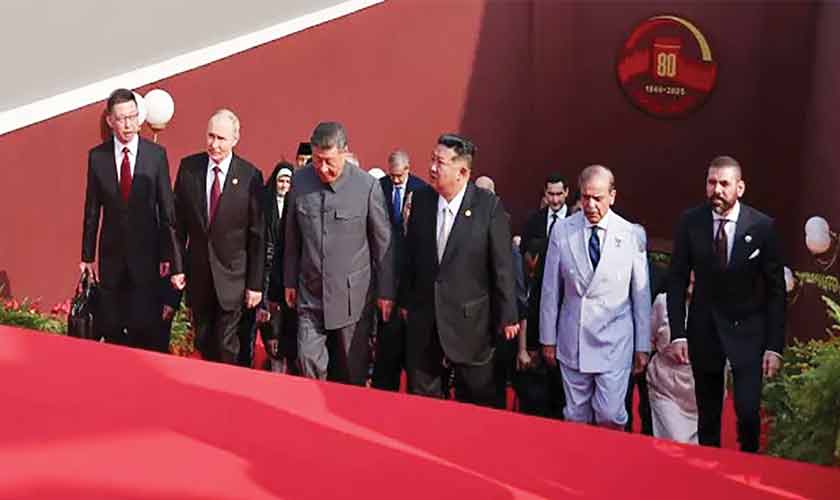
Flanked by Putin and Kim at Beijing’s Tiananmen Square, Xi says the Chinese nation is never intimidated by bullies
| I |
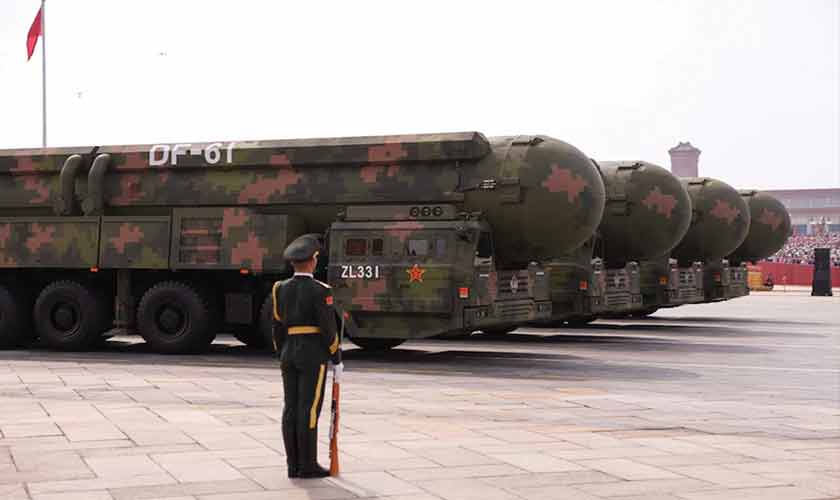
n realist literature exemplified by Graham Allison’s Thucydides Trap, as well as in American strategic policymaking under former president Joe Biden, China has been conceptualised as a systemic rival whose rise could threaten American dominance. This framing views China’s expanding global role as a structural challenge to US hegemony. Under Donald Trump, the competitive orientation intensified through a trade war that explicitly cast Beijing as an economic adversary. From Beijing’s perspective, however, such hostility overlooks the deep economic interdependence that continues to underpin Sino-American relations. Bilateral trade, investment and supply chain integration still tie the two economies together despite political rhetoric that emphasises rivalry over cooperation.
It is against this backdrop of great power competition that China’s hosting of the Shanghai Cooperation Organisation summit in Tianjin early this month carried layered significance. The summit highlighted Beijing’s ambition in terms of shaping regional order while simultaneously projecting a vision of multipolarity. President Xi Jinping presided over a sweeping set of agreements that included a 10-year development strategy; the establishment of a new SCO Development Bank; and the creation of multilateral security centers. Additional commitments were announced in the areas of energy, digital economy, green industry and education. Xi also pledged billions in grants and loans, alongside ‘small and beautiful’ livelihood projects and educational workshops. Commentators in China and elsewhere emphasised that the SCO has evolved into the world’s largest regional organization, commanding trillions in combined GDP and representing nearly half of the global population. International coverage underscored the fact that the summit’s ambition extended to new financial mechanisms, including energy trade settlement in yuan, which conveyed a wider message of diminishing Western dominance.
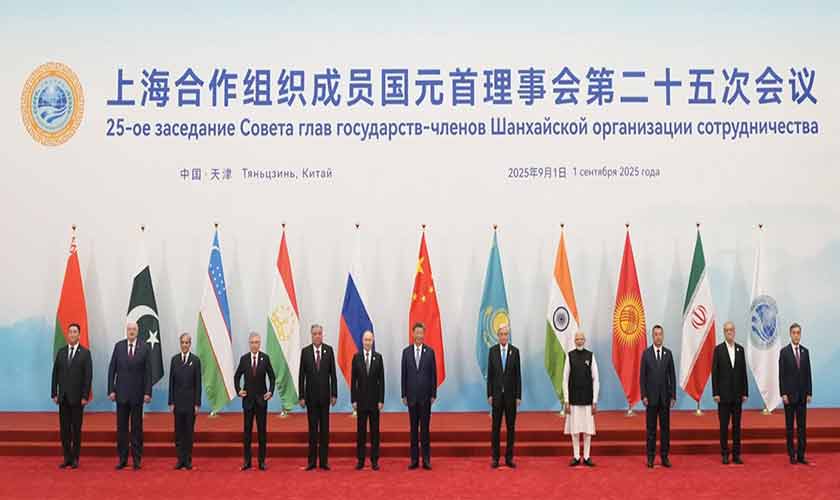
The summit also reaffirmed China’s widening diplomatic engagement with Eurasia, particularly with respect to anchoring Russia and India in its orbit. Since India and Pakistan joined the SCO in 2017, the organisation has come to encompass nearly a quarter of global GDP and over 40 percent of the world’s population. This broad membership highlights its growing economic and political weight. Although India and Pakistan’s historical antagonisms resurfaced in the form of recent war, the summit provided an opportunity for symbolic reconciliation. Prime Minister Modi’s reluctance to fully embrace such gestures, however, limited their potential. For Pakistan, participation reinforced its regional significance, particularly in commercial outreach into Central Asia, evolving ties with Russia and its recent diplomatic recognition of Armenia. In this sense, the SCO served as a reminder that Islamabad continues to be an important actor in a rapidly evolving Eurasian context.
The summit also reaffirmed China’s widening diplomatic engagement with Eurasia, particularly with respect to anchoring Russia and India in its orbit. Since India and Pakistan joined the SCO in 2017, the organisation has come to encompass nearly a quarter of global GDP and over 40 percent of the world’s population.
Equally significant was the reaffirmation of the China-Russia strategic partnership. President Vladimir Putin proposed SCO bonds and a collective payment system designed to shield member states from Western financial dependencies. The growing nexus with North Korea also came to the fore, with Putin publicly thanking Kim Jong-Un for military support in Ukraine while Beijing reiterated its warm ties with Pyongyang. These developments illustrated how the SCO has become a stage for consolidating alternative power centers in global politics, offering platforms for cooperation that bypass Western-led institutions.
Modi’s presence in China after a seven-year absence added another layer of symbolism. Strains in India-US relations, exacerbated by Trump’s tariffs and his public claims of brokering peace in South Asia, have nudged India to cautiously re-engage with China. Trade between the two countries has already exceeds $118 billion; both sides are committed to sustained dialogue over their longstanding border disputes. The resumption of direct flights before Modi’s arrival in Tianjin was an important confidence-building measure. For Beijing, improved ties with India are not intended to come at the expense of Pakistan. Instead, warmer China-India relations may create strategic space for Pakistan to pursue its development goals with Beijing, Moscow and Central Asia; even Washington.
This dynamic highlights an important nuance in Pakistan’s diplomacy. Its partnership with China, symbolised most prominently through the China-Pakistan Economic Corridor, is often portrayed in Western discourse as an impediment to strong ties with the United States. Yet Pakistan-China relations do not have to be cast as detrimental to US-Pakistan relations. Unlike Trump’s transactional insistence on exclusive alignments, global diplomacy rarely follows such singular paths. The past American administrations, while continuing elements of competition with China, engaged Pakistan’s civilian and military leadership in dialogue, particularly in terms of economic cooperation and counterterrorism. Pakistani leadership should, therefore, navigate a careful balance in terms of deepening strategic and economic ties with Beijing while maintaining a functional relationship with Washington.
The challenge for Pakistan lies in sustaining this equilibrium in the face of shifting American foreign policy orientations. If Washington’s approach retains a transactional edge, Islamabad may confront difficult choices regarding aid, security assistance and investment. Conversely, if the US embraces a broader framework for engaging South Asia, Pakistan could leverage its position to mediate between major powers while advancing its own developmental agenda. The SCO summit served as a reminder of this delicate balancing act, where Pakistan’s foreign policy is shaped not only by its immediate neighbourhood but also by global shifts in power dynamics.
Viewed from a broader perspective, the evolution of platforms such as the SCO and BRICS illustrates how the Global South is finding alternative pathways for cooperation with greater dignity and autonomy. These institutions, by consolidating economic, political and security collaboration outside Western frameworks, reflect an emerging multipolarity. For states such as China, Russia, India and Pakistan, participation provides room for maneuver within a shifting international order. The appeal of these forums lies in their emphasis on inclusivity and respect for sovereignty, in contrast to perceptions of Western conditionality.
Thus, the SCO summit in Tianjin carried significance beyond the immediate agreements. It symbolised China’s determination to anchor its leadership in Eurasia, Russia’s resolve to counter Western isolation, India’s cautious recalibration of ties with Beijing and Pakistan’s enduring quest for regional relevance. With respect to global order, the event underscored the gradual diffusion of power away from US-centric frameworks toward more pluralistic arrangements. For Pakistan, the challenge will be to maximise opportunities in this multipolar context while carefully balancing the competing demands of its major partners. The future trajectory of our foreign policy will depend on how deftly we manage these complexities in an environment where alliances are increasingly fluid rather than fixed.
The SCO summit demonstrated that multipolarity is no longer a distant aspiration but an evolving reality. States across Eurasia and the Global South are asserting their agency by investing in new institutions, exploring alternative financial mechanisms and prioritising development strategies suited to their needs. Whether this results in a stable equilibrium or further fragmentation of the global order will depend on how responsibly these actors manage their newfound influence. For Pakistan, the best path forward lies not in choosing sides but in cultivating partnerships that enhance its security, development and strategic autonomy in a rapidly transforming world.
The writer has a PhD in political science from Heidelberg University and post-doc experience at University of California, Berkeley. He is a DAAD, FDDI and Fulbright fellow and an associate professor at Lahore School of Economics. He can be reached at ejaz.bhatty@gmail.com.