Print Story
X




In a landscape defined by programming for adults, Bilal Maqsood is defying convention by creating content primarily for children that is sensitive, educating and the antithesis to the barrage of non-stop breaking news and even drama serials.
| B |
ilal Maqsood’s name carries a resonance that spans decades, a voice that has shaped the soundscape of Pakistan’s pop-rock history through the pioneering band, Strings. After thirty three years in pop music, which included 6 albums, several singles, cross-border collab-orations, and 4 years as co-executive producer of Coke Studio and many, many (live) shows in and outside the country, Strings amicably decided to call it a day.
But Maqsood isn’t interested in past glories even though he remains grateful.
After Strings, both co-founders of the group, Bilal Maqsood and Faisal Kapadia went onto do solo music. While Kapadia dropped an album, launched a record label and continues to be a popular voice in music, Bilal Maqsood, too, pursued music as a solo artist, dropped a bunch of singles and did live shows before devoting himself to pursue children’s content full-time. It was something he wanted to do when Strings was active as a band but there was never enough time.
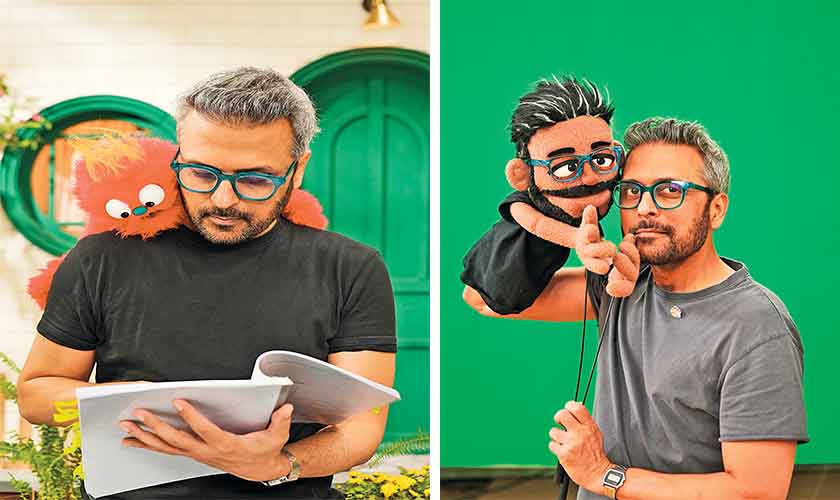
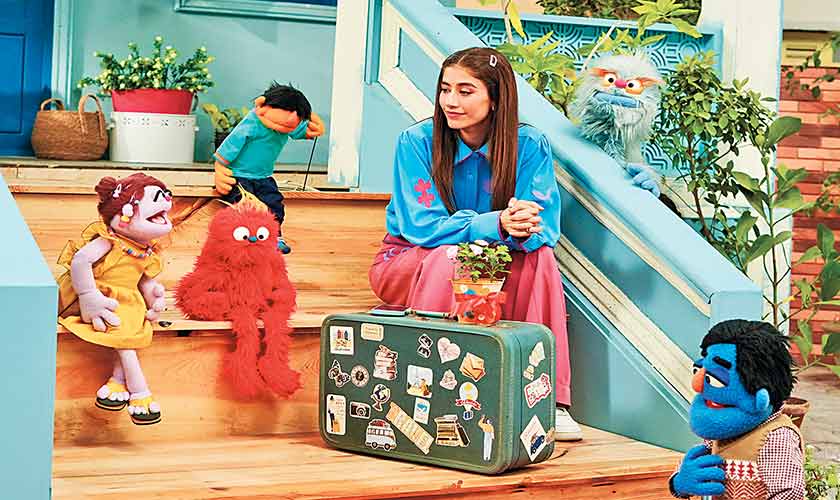
As we talk about the third season of Pakkay Dost - a puppet show that he has created and produced - in his office over a cup of tea and biscuits, it is obvious that Maqsood never left music. He just went in a different direction and now caters to a demographic (primarily children). A case in point is the fact that he has worked on fifty-five songs for Pakkay Dost, he also wrote the lyrics (for nearly all of the songs before season 3’s first episode dropped this past Monday) and still composes each song. For the third season, in the lyrical department, he is collaborating with Saira Fatemah now but his role as creator, producer, script writer and composer remains intact.
It is easy to see the seamlessness of this transition when Maqsood speaks. “I have made music all my life,” he reflects, the weight of decades evident in his voice. Yet moving into children’s programming demanded not only a recalibration of style but also a shift in sensibility. “The first 7 years are very important for a child because that’s when early brain development takes place,” he says, and they are the ones for whom he is making the show.
The art of crafting music for children
in Pakkay Dost
For Maqsood, making children’s music is not a simple process but a refined recalibration of craft. Early attempts to make music for Pakkay Dost, he reveals, sounded closer to his Strings songs and he had to work very hard to lose that form of music and dig deep to find compositions that were closer to the tunes that would make sense for a children’s puppet show. “Every song was sounding like a Strings song,” he recalls. “The idea is to keep the melody simple, but there is a full arrangement behind it,” he explains. The goal, for Maqsood, is to create music that feels familiar yet fresh, educational yet enjoyable. “I didn’t want to keep it very traditional, like Sohail Rana sahab’s songs. I wanted Urdu songs to feel cool for this generation,” he says, emphasising a dialogue between our roots and modern times.
Songs as the
foundation of narrative
At the heart of Pakkay Dost lies a philosophy in which music drives the story. For Bilal, each melody is both a vehicle and a vessel, carrying within it lessons, humour, and and emotions. “Season 3 is finished. I will start season 4 with songs first. Then I will see if there is any overlap — lesson-wise, topic-wise. When the songs are made, we will build the story. Because all the important messages are in the songs which are connected to the stories seen in each season.”
In this show, melody and story-telling intertwine — the rhythm becomes a tool for teaching values, and self-expression. Collaboration, naturally, is essential. For the the third season, he is collaborating with Saira Fatemah who translates his ideas into lyrics. “I give ideas. She converts them into lyrics. Sometimes, it fits as it is. Sometimes, I have to change things. But a strong collaborative equation has been formed. She is very talented.”
Puppetry, human Faces, and emotional resonance
Having seen the first episode of the third season, I can tell you that the addition of Syra Yousuf is a terrific addition to the universe of Pakkay Dost, inhabited by six unique puppets: Mateen, Miraal, Laal Baig, Tufail, Bajjo, and Jagga.
In the first two seasons, themes that have been explored include respect for all religions and people, the importance of sleep, hygiene, education, conserving electricity, embracing diversity and inclusion of people, no matter what ethicity, colour, body type, how it is okay for boys to cry, why it is not cool to cheat in exams, owning your mistakes and learning to say sorry and much more.
But not one of these episodes feel like a lecture. We learn through storytelling and through music. Maqsood has also made sure that Urdu remains the core language. There are original poems, and no matter what episode you’re watching, you will be both amused and wonder why this program isn’t on television (apart from YouTube). When I press Maqsood, he admits that television channels don’t want to make space for such a show because they’d rather run a drama as it will get them ratings.
“There was a time when we had dedicated shows for children. It has been replaced by drama serials and breaking news,” he notes. During the first two seasons, Bilal funded Pakkay Dost from his own pocket. I ask him why and how did he find the humour in these dark times? “Passion. The humour you see is what I’ve seen in my family. I infused that in the show.”
Fortunately, for the third season, funding has come through from the Sindh government (as well as a brand) and Bilal Maqsood is not only grateful but carries a sense of responbility. “Because of the funding by the government, I feel we have to (a) build on the last two seasons and (b) not waste a single cent because it is tax payer’s money. We cannot be cavalier or get lazy.”
How have you come up with themes for the all-new third season after covering so many important subjects in the first two seasons, I ask. “There are always subjects that we need to talk about. For instance, one episode in the third season will be about anxiety and mental health. How can a child explain anxiety when he can’t name it? We need to talk about these things but talk in a way that a child understands.”
The third season will also explore themes such as community building, friendship and jealousy, traffic rules, healthy lifestyle and professions.
This is the generation of smart phones and adults aren’t the only ones swiping a TikTok video or watching something or the other. Kids, too, have access. How do you ensure that they watch this show? “Okay, so, for the first time they need a parent or a caregiver to sit with them and watch it. But the second time, they will gravitate towards it themselves,” says Maqsood.
Pakistan Idol:
Judging singers
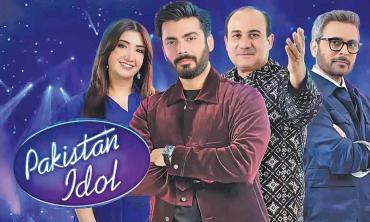
Making a segue from Pakkay Dost to Pakistan Idol’s upcoming season — which will air on Geo TV ahead of other TV and streaming platforms — for which Bilal Maqsood is one of the judges, I ask him why he said yes. As he explains it, his role as a judge on a singing competition like Pakistan Idol is about having the ability to judge singers. “I can easily tell how capable someone is, if their voice is better suited to folk or pop, or if they can sing classical and pop. I can comment on that.”
Yet he hopes to critique with integrity, “I don’t have any interest in promoting myself, so I will be very honest. Unnecessary criticism, making fun of the person — that shouldn’t be on the cards, I hope.”
His reflection on the fragility of musical careers in Pakistan is sobering, “Unless you have corporate backing, very few people in music can sustain as a music group or continue to be a solo artist. Kashmir is consistent, as is Bayaan and there is some good music being released by several artists. But many bands or artists cannot sustain a career because that’s difficult here.” His insight underscores the challenges young musicians face. Having been a judge on Pepsi Battle of the Bands, his commitment to nurturing talent thoughtfully is clearly obvious. But Bilal knows that judging a band is very different than judging a singer. However, thirty-three years in music have equipped him to be a judge of new voices and he intends on letting the focus remain on the talent rather than himself.
A great deal though, he admits, will become clearer as the shooting for the show begins.
Season 3: Themes,
life lessons, and the human connection
In the new season, we will also see guests such as Asim Azhar, Shehzad Roy and Bilal Maqsood. This, after endorsement, for the show by Sharmeen Obaid-Chinoy, Sanam Saeed, Mahira Khan, Iqra Aziz, Adnan Siddiqui so the possibilities are endless.
“The plan is also to take it live on stage — a one-and-a-half-hour proper show,” reveals Maqsood. He also envisions Pakkay Dost to be more than episodic as it is right now. “I hope that we are able to have a permanent Pakkay Dost set in the future. It should stay up throughout the whole year.”
His long-term vision — a permanent studio, multiple shows catering to children — signals an ambitious yet grounded approach to cultivating cultural and creative literacy for young audiences. While that hasn’t happened yet, Bilal Maqsood’s passion to create and promote children’s content beyond Pakkay Dost makes one hope that it does happen in the future. In the meantime, check out the new season.