


Print Story
X

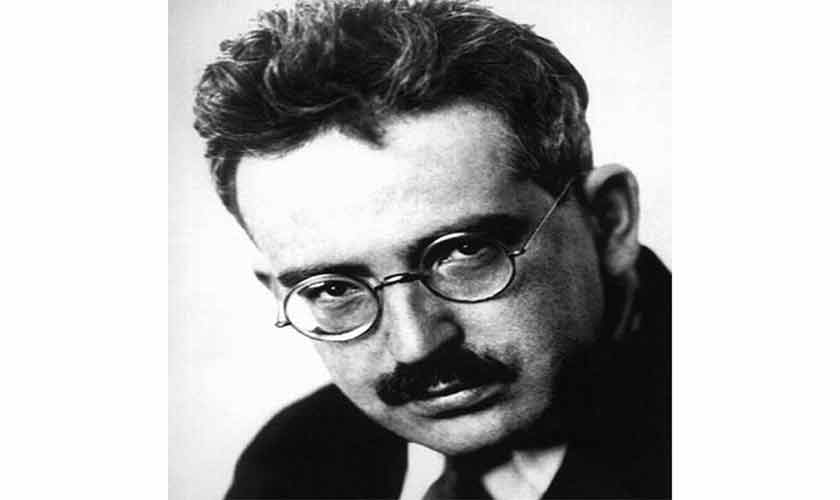
Walter Benjamin’s Theses on the Philosophy of History (1940) is a dense, poetic critique of both traditional historicism and orthodox Marxism, written in the shadow of fascist expansion and personal peril. Challenging the notion that history is a linear progression toward human advancement, Benjamin contends that this idea of “progress” conceals the violence and suffering endured by the oppressed. Drawing on Paul Klee’s Angelus Novus, he portrays history not as a sequence of triumphs but as an unending pile of wreckage, with each generation buried under the ruins of the last. Benjamin also critiques the “scientific” historical materialism of his time, likening it to ‘the Mechanical Turk automaton’ — apparently self-operating, but in fact reliant on hidden theology. He suggests that theology, particularly messianic thinking, is an unavoidable, even necessary, force in any attempt to grasp or transform history.
Instead of viewing time as empty and continuous, Benjamin introduces the concept of messianic time — moments of sudden historical rupture when the past becomes urgent in the present. The historical materialist’s role, he argues, is not to recount the past “as it really was,” but to seize forgotten or suppressed memories in moments of crisis, with the aim of interrupting the status quo and redeeming the past. Influenced by Jewish mysticism and the concept of tikkun (restoration), Benjamin’s vision is redemptive rather than deterministic: revolution is not inevitable. It must be fought for; history must be rescued from the narrative of the victors.
History has long been regarded as the chronicle of victors. The rulers, the conquerors, the dominant powers have inscribed their versions of the past upon tablets, manuscripts and archives. The voices of the defeated often vanish into silence. Yet, as Walter Benjamin argues, the legacy of the vanquished never entirely disappears. If history is written in favour of power, it is also haunted by memories of suffering, martyrdom and resistance. Drawing on Benjamin’s vision of history, this writer argues that some of the most decisive turns in human civilisation have been shaped not by victors but by the vanquished — those whose apparent defeat became the seed of enduring transformation.
Benjamin wrote during the dark night of Europe, as fascism marched across the continent. Against the comforting belief that history moves in a straight line of progress, he issued a warning: every so-called “victory for civilisation” carries with it the hidden wounds of those who were crushed along the way. “There is no document of civilisation,” he wrote, “which is not at the same time a document of barbarism.” For him, history as usually told, is the story of victors — the kings, the empires, the generals. The suffering of the oppressed is buried beneath their monuments.
But Benjamin did not believe the story ended there. He called on us to “brush history against the grain.” That is, instead of reading the past the way it is usually presented — smooth, linear, inevitable — we must look at it from the angle of those who lost. When we do, we discover that history is not a continuous march forward but a broken terrain, full of detours, missed chances and suppressed voices. The cries of peasants, the dreams of rebels, the sacrifices of martyrs may not appear in official histories, but they are not gone. They linger as sparks under the ashes, waiting for someone to notice them. When they are remembered, they can flare up again, igniting new struggles for justice. Orally narrated tales are the best source to tap this flip side of history.
The idea that defeat can be more powerful than victory is not new. The ancient Greeks already sensed it in their tragedies. Heroes like Prometheus were not triumphant warriors but figures who endured suffering for the sake of others. Prometheus, punished eternally by Zeus for stealing fire and giving it to humanity, was to the ancients a criminal. To modern thinkers like Karl Marx, he became “the noblest saint and martyr in the philosophical calendar” — a symbol of rebellion and the courage to suffer for truth.
The same paradox holds for Socrates. His execution was intended to silence him, forever. Instead, it ensured his immortality. By choosing death over compromise, he left behind an image of integrity that would inspire philosophy for centuries. As Kierkegaard put it, Socrates “gave birth to philosophy by dying for it.” His ‘defeat’ became philosophy’s foundation.
History abounds with examples of such paradoxes. Spartacus, the gladiator who dared to lead a massive slave revolt against Rome, was executed along with thousands of his companions. The empire thought it had erased him. Yet centuries later, he reemerged in the imagination of revolutionaries, from Marx to Rosa Luxemburg, as the symbol of freedom’s fire.
The cries of peasants, the dreams of rebels, the sacrifices of martyrs may not appear in official histories, but they are not gone. They linger as sparks under the ashes.
The crucifixion of Jesus Christ (peace be upon him) is perhaps the clearest example. The Romans intended it as a brutal demonstration of humiliation and finality. Yet out of that apparent defeat arose one of the most enduring religious and cultural traditions in human history. As Nietzsche observed, “Only where there are graves are there resurrections.”
The early modern period has more illustrations of this. Joan of Arc was burned at the stake as a heretic, but today she stands as a saint and a symbol of French unity. Giordano Bruno was burned alive for his daring cosmology, Galileo humiliated into recanting his scientific discoveries. Yet their defeats cleared the way for the triumph of modern science. As Jacob Burckhardt wryly noted, “All that the Inquisition burned was not heresy but the future.”
The Islamic tradition also preserves striking examples of victory within defeat. Chief among them is the martyrdom of Imam Hussain ibn Ali (peace be upon him) at Karbala in 680 CE. Vastly outnumbered, he and his companions were martyred. In worldly terms, their cause seemed crushed. Yet his refusal to bow before tyranny turned him into an eternal symbol of courage. As Rabindranath Tagore reflected: “In order to keep alive the spirit of Islam, it was Hussain who stood up and sacrificed everything.”
The story of Karbala shows that some defeats live longer than apparent victories. Generations across the centuries have looked to Imam Hussain’s sacrifice as a guiding light for resistance. Edward Said’s insight is apt: “History is written by the victors, but the defeated never cease narrating their losses.” The Karbala narrative is not a dead memory but a living current, continuing to inspire movements for justice.
Benjamin offers a philosophical key to unlock why these defeats matter so much. He believed that every generation holds what he called a “weak messianic power.” This is not a religious prophecy but a moral responsibility: the ability to rescue the struggles of the past and give them new life in the present.
Thus, the martyrs of history — whether Prometheus, Socrates, Spartacus, Joan of Arc, or others — are not just figures of pity. They are, in his words, “chips of messianic time.” Each of them represents a path that might have changed the world but was violently blocked. Their defeats contain unrealised futures. When we remember them, we are not simply honouring the dead; we are reopening the possibilities they stood for.
This is why Benjamin insists that historians must not be mere chroniclers of victory. It is their duty is to “seize hold of a memory as it flashes up at a moment of danger.” The task is to recover the hopes and sacrifices of the defeated, to carry them forward and to prevent their struggles from being erased. In this sense, remembrance is a form of resistance.
While the victors dictate the official story, the vanquished often shape the deeper moral and cultural legacy of humanity. Their sacrifices destabilise the illusion of power’s permanence. Nietzsche captured this paradox with characteristic sharpness: “Man must be measured by the enemies he chooses.” Those who fall before mighty adversaries often achieve a symbolic greatness denied to their conquerors.
Benjamin helps us reconcile this contradiction. History as written may be dominated by power, but history as lived and remembered is carried forward by those who lost yet refused to surrender their principles. Their defeats become seeds of transformation, offering what Benjamin called “hope for the hopeless” — the enduring possibility that even crushed struggles can echo into the future as victories.
The writer is a professor in the Faculty of Liberal Arts at the Beaconhouse National University, Lahore.