Print Story
X




Punjab’s rapid urbanisation has outpaced its capacity to manage stormwater
| U |
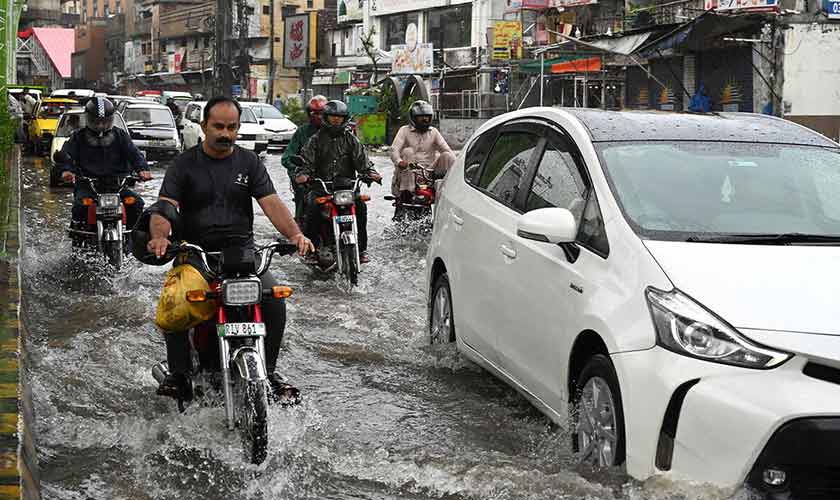
rban flooding has become an increasingly familiar headline in the Punjab. Every year as the monsoon rains sweep across the plains, roads transform into rivers, traffic grinds to a halt and businesses suffer significant losses.
What was once a nuisance confined to major cities like Lahore and Faisalabad has now emerged as a widespread and chronic problem affecting large and small urban centres alike. Beneath this recurring crisis lies a stark reality: the Punjab’s rapid urbanisation has outpaced its capacity to manage stormwater, leaving its cities vulnerable to the seasonal fury of rain.
A study by the Punjab Municipal Development Fund Company, titled, Study on Rainwater Storage Facilities at Various Cities of Punjab, sheds much-needed light on this challenge. The report not only documents the growing threat of urban flooding but also highlights innovative measures — particularly stormwater storage tanks — that are proving a game changers in urban resilience. The findings, grounded in both engineering data and community feedback, present a compelling case for scaling up these interventions.
The Punjab is the most populous province of Pakistan and the second most urbanised. With 41 percent of the Punjab’s 51.97 million urban residents concentrated in Lahore, Faisalabad, Multan, Gujranwala and Rawalpindi, the strain on drainage systems is immense. As cities expand, natural drainage patterns have been disrupted by concrete roads, impervious pavements and sprawling developments that leave little room for water absorption. The water that once seeped into the soil now rushes across asphalt and stone, pooling in low-lying areas and overwhelming the drainage systems.
The sewerage networks are largely a combined system — designed to carry both sewage and part of the stormwater runoff. The sewers are designed to accommodate 33-50 percent of stormwater flows. When monsoon rains, which account for up to 80 percent of annual precipitation, hit the Punjab, there are flooded roads, stagnant pools, traffic chaos and significant risks to property and public health.
The economic costs are considerable. Some businesses close for days as shopfronts are inundated. Roads require frequent repairs and municipal authorities spend millions on dewatering pumps. For residents, the psychological toll of living with recurring flooding cannot be overstated.
The PMDFC study highlights one of the most promising innovations in recent years. In 2019, WASA, Lahore, pioneered underground stormwater tanks. The move would later reshape the Punjab’s approach to urban flooding. The first tank, built in Lahore, was designed to intercept runoff from the surrounding catchment area, temporarily store the water, and gradually release it once pressure on the drainage network subsided. The results was striking: a notorious flood-prone spot was transformed into a flood-free corridor.
Similar tanks were later built in Lahore at Kashmir Road, Sheranwala Gate and the Nishtar Park Sports Complex. The WASA Faisalabad followed suit with a facility on Dijkot Road. The PMDFC has begun constructing tanks in Burewala, Vehari, Khanewal and Wazirabad under the World Bank-funded Punjab Cities Programme. 11 stormwater storage tanks are now being developed across the Punjab. The World Bank–funded Punjab Inclusive Cities Programme, in collaboration with the Chief Minister’s Development Programme, aims to extend these solutions further, ensuring that all intermediate cities are equipped with modern stormwater management systems, including rainwater storage tanks.
Data comparisons of rainfall events before and after the construction of underground storm-water storages show near-total elimination of ponding.
Urban flooding in the Punjab is not merely a seasonal inconvenience; it is a symptom of deep structural challenges in urban planning and infrastructure management.
The benefits extend beyond immediate relief. The stored stormwater is being repurposed for non-potable uses such as irrigating parks, watering green belts and recharging aquifers. This is critical in a province grappling with water stress and shrinking groundwater reserves. By diverting rainwater from roads into tanks and subsequently into green infrastructure, the Punjab is not only reducing urban flooding but also conserving its precious freshwater resources.
The roofs of mast have been landscaped with grass, restoring parks to their original form or creating new recreational spaces.
Data collected from various sites demonstrates that areas that used to go under water with every monsoon are now consistently flood-free. This change has had a ripple effect on the rhythm of urban life. Where once shopkeepers closed their shutters and commuters were stranded, there is now a continuity of business and daily activity.
In Lahore and Faisalabad, stakeholders from local traders to traffic wardens note that disruptions have sharply declined, creating an environment that is more conducive to economic activity and social well-being.
The report also underscores the environmental dividends of these interventions. By reusing stored stormwater for irrigation, watering green belts and maintaining parks, dependence on already stressed freshwater reserves has been reduced.
Retrofitting entire cities with separate sewerage systems can be prohibitively expensive, even disruptive. Sstormwater tanks deliver a low-impact and high-return alternative that integrates seamlessly into existing cityscapes.
The report also provides a roadmap for how more Punjab cities might pursue sustainable water management in the years ahead. At the heart of its recommendations is a call to scale up stormwater storage tanks and replicate them in urban centers across the province.
The study also emphasises the need to bring rainwater management into the household domain. Rooftop rain harvesting, it suggests, should become mandatory through building regulations. Beyond tanks and rooftops, the report encourages the adoption of green infrastructure — permeable pavements, rain gardens and green roofs that absorb rainfall and soften the hard, impervious faces of expanding cities.
Institutionalising the reuse of captured rainwater for non-drinking purposes is another priority. New infrastructure alone is not enough. The study insists on the importance of public participation.
Citizens must be active partners, whether by complying with rooftop harvesting bylaws or by avoiding the common practice of dumping solid waste into drains. Only through this combined effort—technical innovation backed by policy, investment and civic engagement—can Punjab’s cities hope to turn rainwater from a recurring hazard into a managed asset that sustains both urban life and the environment.
Urban flooding in the Punjab is not merely a seasonal inconvenience; it is a symptom of deep structural challenges in urban planning and infrastructure management. Left unaddressed, the problem threatens to worsen with climate change, which is projected to intensify rainfall events in South Asia. The PMDFC report offers both a diagnosis and a treatment. By demonstrating that stormwater storage tanks can turn flood-prone blackspots into resilient urban spaces, it provides a promising model.
Technology alone is not enough. Effective policy frameworks, adequate financing, and strong institutional capacity are essential to sustain these efforts. The change of mindsets is important too. Harnessing rainwater - through both large-scale tanks and household harvesting - can transform Punjab’s relationship with water, turning monsoon from a menace into an asset.
The writer is a communications and public relations professional with 20 years of experience working with diverse organisations across the public and private sectors.