

Print Story
X




Two documentaries zero in on the lived experiences of the flood affected and grassroots implications of systemic failure
| D |
ocumentaries on disasters like floods cannot change the ground realities - rebuild embankments or fill silos —but they can mobilise memory and demand accountability.
As Pakistan faces another flood year, the two films reviewed here are beacons—not of hope, but of warning. They ask: will 2025 finally be the year when data moves infrastructure, when simulations lead to evacuations, when profit-seeking is paused for resilience? Or will it be another chapter in a recurring tragedy—real estate underwater mere months after construction, squandering billions in speculative glitz while villages drown, again?
Disaster cinema - movies as well as documentaries -s has always walked a thin line between spectacle and sincerity. It serves as mirrors—one fictionalised, one painfully real—on how ordinary families are left alone to carry the weight of catastrophe when authorities fail to respond. This is why these films matter. They replace abstract numbers with lived experience. They hold the nation’s memory even when some institutions might succumb to amnesia. They record the voices of those who will otherwise be reduced to statistics—33 million displaced in 2022 and 1,700 dead. If they were only stories of suffering, they would be valuable. But they are also indictments, archives of accountability for a state that seems prone to forgetfulness.
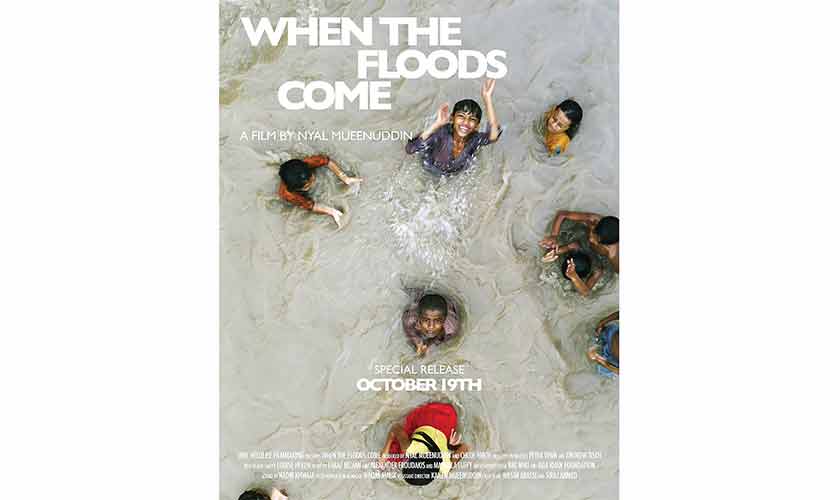
In times of crisis, documentary filmmakers become both chroniclers and conscience-keepers. Nyal Mueenuddin’s When the Floods Come (2024) and Seemab Gul’s Rising Emissions, Rising Waters capture more than Pakistan’s 2022 flood-induced misery. They preserve vivid proof of systemic failure. These films, less artistic expression than urgent records, tell overlapping stories of a nation drowning not merely in water, but also in its institutional neglect.
Mueenuddin’s film traces the Indus River from glacier to inundated plain, lingering on submerged homes, waterlogged fields and silent survivors whose lives were swept away. There is no cinematic flourish—just the quiet horror of land lost and awaited relief.
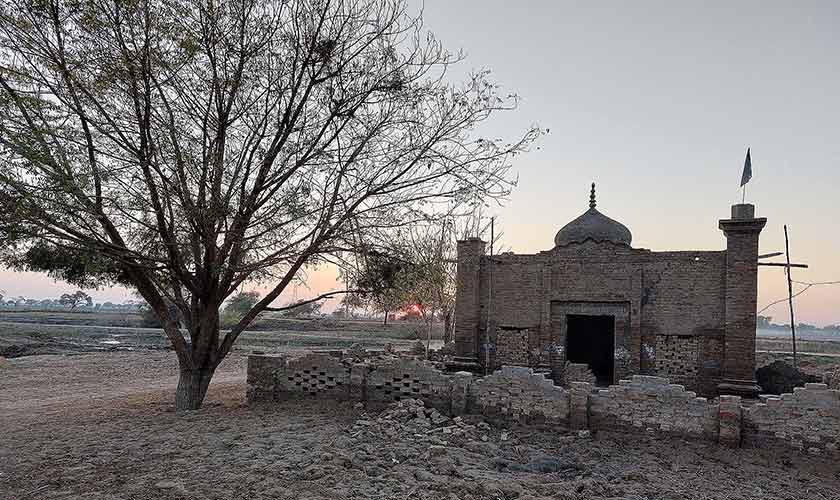
In times of crisis, documentary filmmakers become both chroniclers and conscience-keepers.
In one haunting scene, an old man sits by the water’s edge, his house erased, his land gone. He gestures to the horizon and says, “This river has always been here. We are the ones who forgot.” His soft words carry the weight of national amnesia. His words cut deeper than any academic report.
Seemab Gul’s Greenpeace commission dives deeper into layers of climate inequality. Through the eyes of teachers, farmers and families across Sindh, Khyber Pakhtunkhwa and Balochistan, Gul spotlights the ironic reality: Pakistan contributes almost nothing to global emissions yet bears catastrophic consequences. Her film demands accountability—not just for local officials but also for the fossil fuel giants whose unchecked emissions have amplified the monsoon’s fury.
While children in Balchistan are forced to stand and fish in stagnant mosquito infested waters, local government leaders sit in lavish houses unaware of the nation’s troubles. Those responsible for emissions silently get away.
Both these documentaries underscore one fact: the threat of flood was known, even mapped. Countless other documentaries, released after the catastrophic 2010 floods, are stark reminders that have fallen on deaf ears. Even today, warnings issued by the National Disaster Management Authority remain largely symbolic. The NDMA chief has told lawmakers that 2025’s monsoon brought 22 percent more rainfall than average and that next year there may be a similar surge. He cautioned that the eighth monsoon spell is expected between September 2 and 11 and reported about 800 deaths and 1,100 injuries across the first seven spells. These forecasts and parameters demand operational readiness.
…let 2025 be the year films and data collide —and change policy. Otherwise, the river’s memory will be the only testimony left.
Adding insult to injury, new housing societies keep sprouting up on flood-prone land. The physics of it is clear: melting glaciers inundate rivers. Yet policy and profiteering diverge. Projects like the Ravi Urban Development Project and New Metro City are marketed as symbols of progress, advertised with glossy brochures and celebrity endorsements. The expansions are peddled as riverside utopias — but they sit on unstable floodplains. Developers cash in on branding while natural buffers erode. The disconnect between lived risk and marketed safety could not be more stark. While survivors wade in stagnant waters, the elite are promised luxury on inherently unsafe land.
Will these images remain confined to film festivals and academic circles or shape public pressure? The science is already grim: glacier melt in the north is accelerating, rainfall patterns are becoming erratic, embankments are aging fast. Let 2025 be the year films and data collide and change policy. Otherwise, the river’s memory will be the only testimony left.
The writer has a degree in psychology with a minor in mass communication. She can be reached at ukmaryam2@gmail.com