Print Story
X




In a world where music often chooses between tradition and rebellion, Ali Sethi refuses the binary entirely.
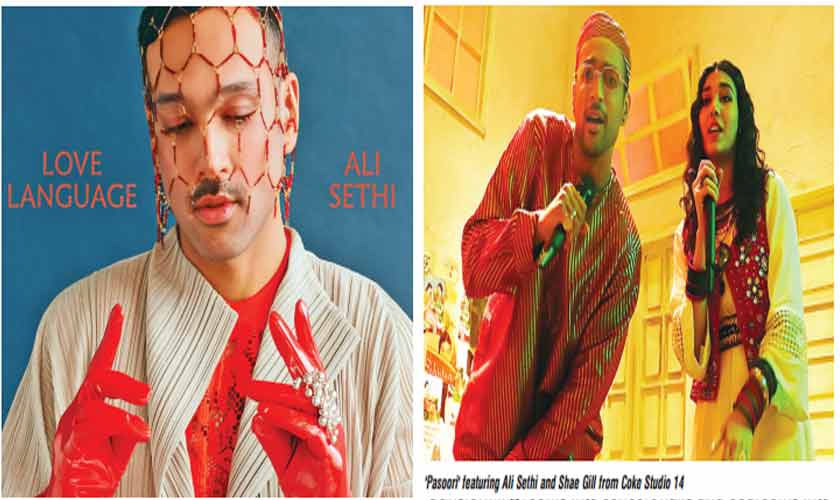
Beyond expected sound
| S |
ome albums are meant to simply be heard; other albums demand your physical foray into their space. Released on August 1, Ali Sethi’s Love Language demands the latter. From the very first note, the album refuses to concede to any of the predictable curves of a debut. It erupts like a greater entity—more of a ritual, or a stage upon which memory, exile, desire, and longing converge underneath crimson light.
Sethi once described it as “a ragamala rendezvous,” and that phrase summarises it perfectly. This is music stitched together from ragas and revelry, from cabaret and mehfil, from heartbreak and protest—an existence that is as much about presence as it is about performance.
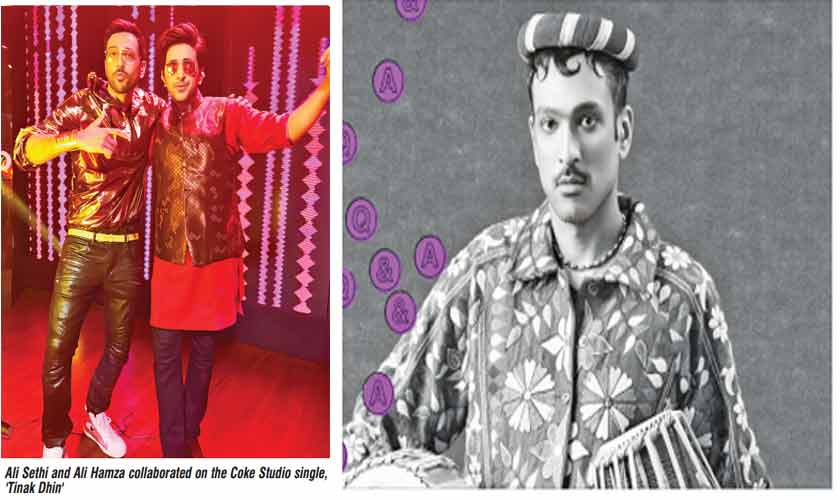
The album doesn’t just play; it takes over space, transforming rooms into concert halls and bedrooms into sanctuaries of sound. What strikes you first is this impertinence—the audacity of such an amalgamation in the age of algorithmic playlists and three-minute attention spans. Sethi has offered us a work that takes time to be consumed, that demands to be heard from beginning to end, as one would read a novel or embark on a pilgrimage. It is an album that asks its listeners: how much can you hold? How far can you go without going anywhere?
Musical
architecture
From the opening tracks, the album creates a theatre of sound. ‘Maya’ and ‘Tera Sitam’ exhibit pop buoyancy but are free-flying. There is a restlessness in their DNA, a refusal to be categorised. Soon, though, the album descends into confrontation. ‘O Balama’ shows its defiance openly, the percussion hammering away like a heartbeat under interrogation, while ‘Bridegroom’ takes an ancient wedding qaw-wali and reworks the traditional chorus to introduce a confident new interpretation.
The brilliance lies in the complete seamlessness of the transitions. Where other artists may second-guess themselves, Sethi finds the flow. The album breathes like a living being, both expanding and contracting, intensely intimate one moment, and brightly theatrical the next.
One notices an almost deliberate excess across sixteen tracks—Punjabi folk dissolving into hyperpop, flamenco flirting with Hindustani ragas, drill beats echoing underneath Sufi chants like thunder before rain.
In its glorious oversaturation, as noted by The Guardian, lies the beauty of its ambition: an unapologetic overstatement, daring in both scale and detail. Each layer needs to be heard closely, revealing new secrets with every encounter.
Love as language and protest
Tracks like ‘Hanera’ and ‘Hymn 4 Him’ speak in shimmer and Pride-anthem imagery set against Punjabi folk textures, creating a sound space where traditional wisdom merges with contemporary courage. The combination is not coincidental, with the past and the present dancing together in defiant harmony.
The album doesn’t just play; it takes over space, transforming rooms into concert halls and bedrooms into sanctuaries of sound. What strikes you first is this impertinence—the audacity of such an amalgamation in the age of algorithmic playlists and three-minute attention spans. Sethi has offered us a work that takes time to be consumed, that demands to be heard from beginning to end, as one would read a novel or embark on a pilgrimage. It is an album that asks its listeners: how much can you hold? How far can you go without going anywhere?
‘Lovely Bukhaar’ pluses like a delirious fantasy, blurring reality and daydream; its rhythm catchy but unsettling like desire itself. There is something almost sculptural about the way Sethi treats emotion on this record. He doesn’t simply express feelings; he builds structures of yearning. The album becomes a map of the heart, defining territories that exist somewhere between what is, and what could be.
Silences made loud
And then there are the absences that are made loud. ‘O Balama’ was meant to be a duet with a Bollywood singer, but bans on India–Pakistan collaborations ensured that the dream fell silent. Rather than giving up the track, Sethi converts the loss into an expression: static, screams, and empty space in the place of the missing duet. Silence becomes protest; absence becomes art. This gesture is both painful and powerful; it reminds us that borders not only divide countries—they cut into songs, intimacies, creativity, and love itself. This political undercurrent flows through the entire album, never overpowering but always present. Sethi is aware that the personal is political, that love songs can be songs of protest, and that choosing to sing in Urdu and Punjabi is a radical act in itself.
Collaborative power
Part of the album’s reach comes from its collaborators, all of whom were selected not for their celebrity but for the textures they could inject into Sethi’s vision.
American music producer and DJ Romil Hemnani crafted the sound structure of ‘Tera Sitam’, imbuing it with experimental depth while retaining the song’s core melodic integrity in a manner that allows tradition and innovation to coexist. The Urdu lyrics by poet Sunayana Kachroo blend tenderness and resilience, like silk against steel, carrying the weight of centuries while confronting contemporary challenges.
Lahore-based singer Maanu injects bold and vibrant energy into ‘Rocket Launcher’, threading through Sethi’s melodies with nuance and resonance. For ‘Subho Shaam’, Indian pop musician Natania Ravi Lalwani, based in Los Angeles, brings a softer, more expressive contrast to the denser textures on the album, her voice a cool breeze across the album’s more heated moments. Juan Ariza, a Colombian producer, and ADP, the British hitmaker, expanded the musical limits of the album while retaining its South Asian roots intact.
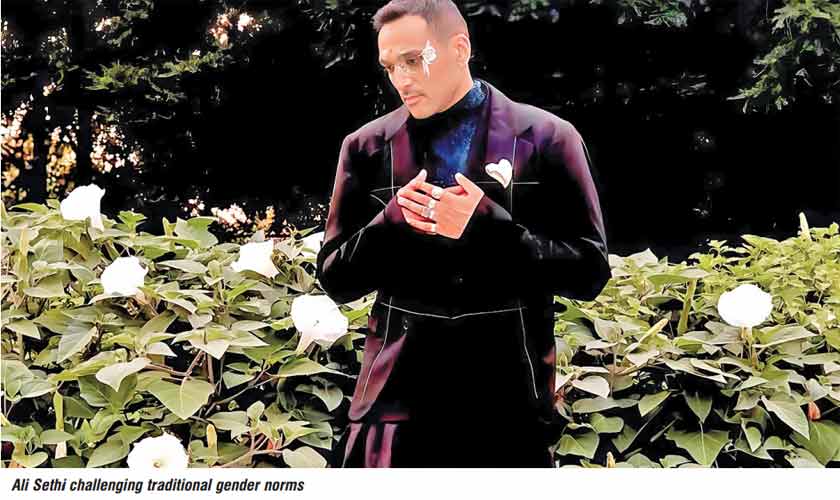
Sethi describes this as a “work of synthesis”—where tradition, modernity, and genre fluidity converse naturally, without dilution. Each collaboration feels like an essential piece of a puzzle, not decorative but part of a larger ensemble that only makes sense when assembled in full.
Cultural context
This isn’t simply about pressing play, but rather stepping into a gathering where Sethi presents the album not in Western terms, but rather as a diary of resurrection, longing, and rebellion—a daastaan, a recital by a storyteller.
It evokes memories of childhood, nights spent at qawwali and ghazal sessions where music was more than entertainment. It was a porous, living space through which stories and emotions flowed freely.
This cultural context redefines how we experience the music. Instead of hits, we find moments of connection. It becomes an album for those who have been born and raised between cultures, between languages, and between worlds.
In various interviews, Sethi reflected, “Things you cannot say in ordinary language, you say in the love language of music.” This philosophy runs through every song, transforming the album into a multilingual conversation where English, Urdu, and Punjabi vibrate together, each lending its own emotional weight to the narrative.
Critical reception and conclusion
Critics have responded favourably to Love Language, with Pitchfork awarding it a 7.3, praising its “playfully subversive pop” and noting that it insists, “tenderly and extravagantly, on the right to love and be loved across every kind of border.” The Guardian dubbed it a “variety show for the end times,” equal parts refuge and rebellion, a place of multiplicity where identities cannot be contained.
Love Language doesn’t make any requests or demands; it doesn’t ask for scores or stars. It stays with the listener through what it provokes, leaving a trail behind. It overwhelms, yes—but defiantly, and unapologetically. What Sethi offers is something greater than music. It is food for the soul: love, as music, crosses borders and cannot be silenced. It finds a way—through laughter, through longing, through an album where tradition and experiment come together and call each other home.
Love Language is simultaneously a love song and lament, ritual and resistance. Its rich orchestration, subversive wit, and layered lyricism speak to the contradictions of the modern South Asian experience—always in movement yet anchored, censored yet insistently present. Sethi has created an album that overwhelms and dazzles.
In the end, Sethi’s message is simple yet profound: music contains within itself all the emotions of the self—exile and desire, rage and tenderness, defiance and love. Love Language is a meditation on belonging, a manifesto on identity, and a celebration of possibilities.