

Print Story
X

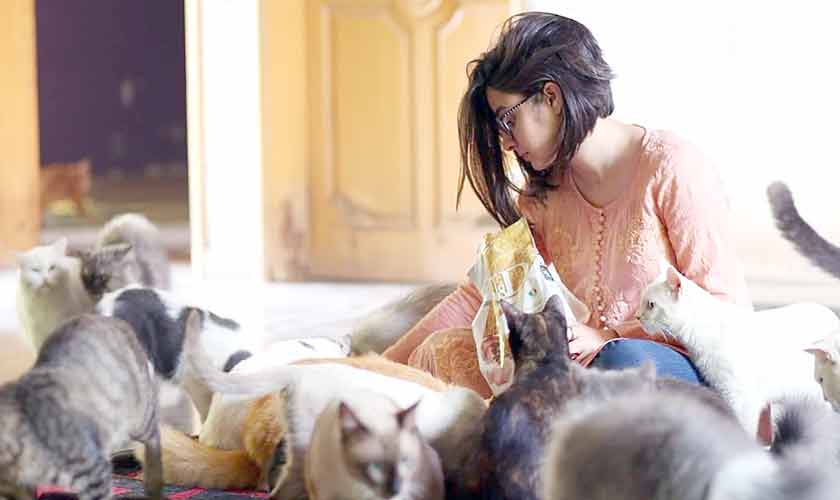
In Lahore, where stray animals are often abused or violently killed, 31-year-old Hannah Muzaffar Shah has built a sanctuary of empathy and resistance — one that exists not in theory, but in the lived, breathing bodies of nearly 90 rescued animals currently in her care.
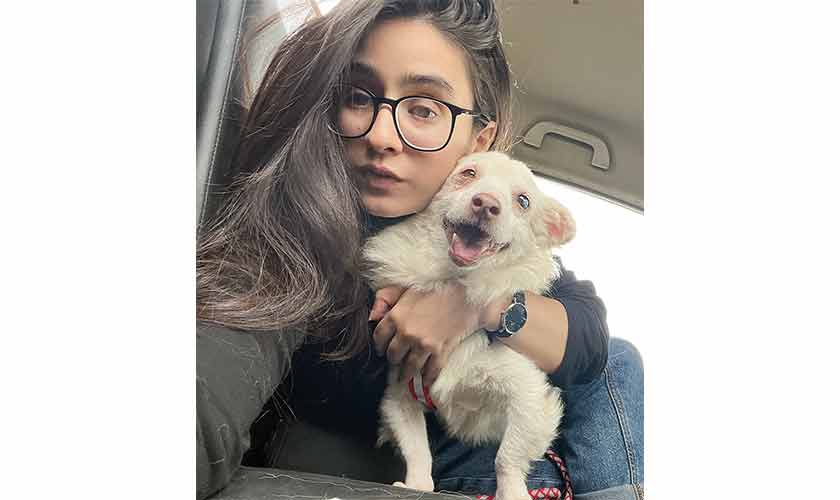
As an animal rescuer, Shah doesn’t just advocate for compassion, she lives by her role and currently houses her rescues in the upper portion of her own home, including in a rented space dedicated to those beyzaban strays with special needs. These animals are blind, deaf, paralysed, epileptic or chronically ill; many of them bedridden and in need of round-the-clock support. They are the ones the world regards as ‘unadoptable,’ but Shah calls them family.
Her initiative, Faltoo Say Paltoo, has rescued and rehabilitated over 1,000 animals since its launch in 2015. But the numbers are only part of the story. What defines her work is the mission behind it, a commitment to those who cannot ask for help, who are considered ‘dirty,’ or a nuisance.
Raised in a household where empathy for animals was absent and hunting trophies hung as symbols of pride, Shah’s compassion was an act of rebellion. As a child, she had fed stray animals in secret, and bonded with a cat she named Meow, instinctively recognising his capacity to feel, suffer and love. That early understanding forms the backbone of her mission at Faltoo Say Paltoo today.
In Pakistan, where animal suffering is often normalised and overlooked, rescuers like Shah do more than just save lives… they challenge a very violent and apathetic status quo.
Excerpts from an exclusive interview with her follow:
| T |
The News on Sunday: Faltoo Say Paltoo has been active for over a decade. How has animal welfare in Pakistan changed since you first launched your initiative?
Hannah Muzaffar Shah: When I started rescuing animals, nearly a decade ago, it was considered an absolutely ‘crazy’ thing to do. People didn’t see it as a social good; they saw it as a waste of time, or worse, a sign of instability. Animal rescue wasn’t just unusual, it carried real stigma. It was isolating, and there was no framework to support or even understand it.
One experience I’ll never forget was during a jury in my bachelor’s programme. A senior academic from a very well-known institute in Karachi listened to my presentation on animal rights and then asked me a deeply flawed question: “If your cook’s son is dying on one side, and a dog is dying on the other, who would you save?” I told her I’d save the animal, not because I didn’t value human life but because animals often have no one while humans still have the capacity and opportunity to seek help. That answer was met with a roll of the eyes, and the academic walked away in disgust. That moment really crystallised how disconnected even some of our most educated voices are from empathy that extends beyond the human world. That’s what makes the shift since so meaningful to me.
Now, when I see schools reaching out to invite rescues; when I see them designing community outreach programmes that include animals; and when I witness children being educated about compassion from the start, I know that real change is taking place. We are beginning to recognise animal welfare as a legitimate and necessary component of a civilised society.
TNS: What challenges have you faced in implementing the trap-neuter-vaccinate-return (TNVR) programmes, especially in areas where stray dogs are viewed with fear or hostility?
HMS: There are many, but the most fundamental challenge is that most people don’t want a solution. They don’t want fewer dog bites. They don’t want population control. They just want the dogs gone, erased. That’s the starting point we are forced to work with. When you propose a gradual, humane method like TNVR, it doesn’t make sense to a society conditioned to believe that if you don’t like something, you kill it. Pick it up. Poison it. Discard it. That’s the normalised model, so any method that requires empathy, patience or structural change is seen as weak, performative or a waste of time.
In recent years, the conversation around TNVR has become louder, but instead of leading to better implementation, it’s now being used as a mask. We’ve seen private societies and local authorities using the language of TNVR to do the opposite: trap and kill. They’ll say, “We’re taking them for neutering,” but the dogs never return. Their bodies wash up in canals. They’re packed in sacks and euthanised under the guise of population control. There’s even a facility near BRB Canal where the sign says Population Management, but all we saw inside were dead dogs. The injection they speak of is not a contraceptive, it’s lethal.
Then there’s the class divide. Ironically, the most violent opposition doesn’t come from the so-called underprivileged communities. We’ve worked in places like Nishtar Colony, Youhanabad and other underserved areas across Lahore where people live alongside animals with grace. They have shelters for dogs outside their homes. They feed them. Their children name them. There’s mutual respect and care. The hostility comes from elite neighbourhoods. There are people who know that a dog won’t attack unprovoked, who understand biology and behaviour. Their issue isn’t fear. It’s disgust. It’s class. It’s that dogs, in their eyes, don’t belong in the ‘clean,’ ‘civilised’ society they’ve built. It’s not about danger, it’s about status and keeping visible reminders of poverty and pain out of sight.
TNS: The Punjab government recently announced a ban on dog culling. What are your thoughts on this policy shift? Is it a real turning point, or do you foresee loopholes in implementation?
HMS: One of the first and most dangerous loopholes in this new policy is how it’s being portrayed in mainstream media. Even though the High Court has ordered an end to culling, many channels have twisted the language to make it sound like it’s still about ‘eliminating’ dogs just using a different method. This is deeply telling. Even a protective policy is being maneuvered and weaponised against the very beings it’s meant to safeguard. That reflects how unprepared the society is to comprehend the real purpose and urgency behind it.
People aren’t being educated about why this policy came about, or what it actually entails. That lack of clarity breeds hostility.
The second loophole lies in the actual implementation. The bodies responsible for implementation, like the Tehsil Implementation Committee, are made up of people who are the farthest from any understanding of animal welfare. You can’t expect compassion from people who just yesterday held guns in their hands and are now being told to pick up dogs, sterilise them and gently release them. That shift doesn’t happen overnight. It doesn’t happen through policy alone. In Pakistan, we are very good at finding the back door that suits our convenience.
Unless civil society actors, animal welfare organisations and people who genuinely care are brought in to design and run these programmes, this policy will fail. Or worse, it will look on paper like it’s succeeding, while dogs keep disappearing on the ground.
TNS: In Pakistan, every time the topic of animal rights comes up, people often respond with, “But what about human rights?” How do you respond to such questions?
HMS: You’re absolutely right. This is the one question we’re constantly met with, almost like a default rebuttal. Honestly, there isn’t one fixed way to respond to it. It completely depends on who’s asking and where they’re coming from.
Sometimes, I respond through the lens of faith. I remind people what Islam says about mercy, that every life matters, that the reward for kindness and the sin for cruelty applies to all living beings, not just humans. Islam doesn’t allow selective compassion.
Other times, I approach it socially. I explain how violence against animals is deeply linked to a culture of violence in general. When people learn empathy and non-violence towards animals, it shapes them into more compassionate, less frustrated human beings. A society that protects the most voiceless is one that’s ultimately safer and kinder for humans too.
TNS: What’s your long-term vision for Faltoo Say Paltoo and for the animal welfare movement in Pakistan?
HMS: My vision for Faltoo Say Paltoo has never been about just rescuing the most animals or running the largest shelter. It has always been about going to the root working on the mindset, the ideology, the psychology that fuels abuse, neglect and indifference towards animals in the first place.
Faltoo Say Paltoo is a philosophy. I want it to become something that feels normal, everyday and deeply embedded in our cultural and emotional vocabulary. A philosophy that sees animals as part of our world, not beneath it.
Sonya Rehman is a journalist based in Islamabad