

Print Story
X




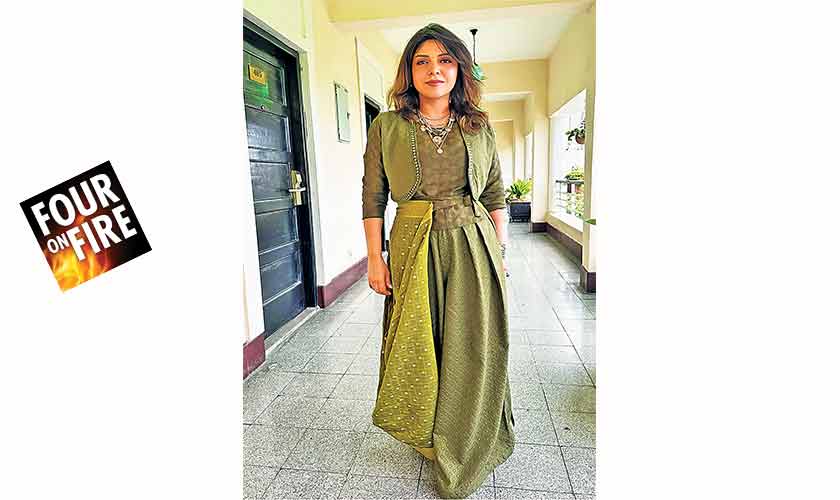
Four dissimilar, brilliant and trailblazing women are all set to take the spotlight Pakistan Day (2026) with the Sitara-i-Imtiaz (Star of Excellence). From chart-topping hits and memorable roles to cricketing glory, these women continue to inspire across music, film, television and sports.
| T |
he Government of Pakistan has announced 263 civil awards for Pakistan Day, March 23, next year, recognising contributions across diverse fields. Among the recipients are Hadiqa Kiani, Fazila Kaiser Qazi, Samina Peerzada and Sana Mir selected for the Sitara-i-Imtiaz (Star of Excellence) —which is the third highest civilian honour — for their work in music, performing arts and sports respectively. The formal investiture will be held at Aiwan-e-Sadr (President House).
Hadiqa Kiani
— Singer
| H |
adiqa Kiani is one of Pakistan’s most beloved and versatile pop and folk artists. She has commanded the music scene for over three decades and rose to prominence in the 1990s with chart-topping songs and hit albums.
What makes her special is how she effortlessly moves between languages — she can sing a soulful Urdu love song, a lively Punjabi folk number or a Sindhi folklore that gets the people dancing. She can perform in English as well, which culminated in an album (Rough Cut) with the late Amir Zaki.
Her album, Wajd, marked an intimate direction towards spiritual and devotional music in multiple languages, distinct from her early works. Hadiqa is nominated for her contributions as a singer and while that is great, it must be noted that she has accomplished just as much as a songwriter, collaborator and culture ambassador.
Her voice has graced stages both at home and abroad. Landmarks such as the Royal Albert Hall and the Kennedy Center have featured her live performances. Her musical expression also extends to film and television playback. Her philanthropic efforts and cultural diplomacy have added depth to her public profile.
In recent years, Kiani has embarked on a flourishing acting career, marking a new chapter. She made her dramatic debut in Raqeeb Se, portraying the deeply poignant role of Sakina, a domestic abuse survivor — a performance that earned praise for its emotional sincerity. She has since starred in Dobara as a defiant widow challenging societal norms. Most recently, she headlined the crime-thriller Hadsa, portraying Taskeen, a sexual assault survivor, displaying her range as an actor across genres.
Her philanthropic work also stands out. When devastating floods struck Pakistan in 2022, she did not just post about it on social media, she acted. Through her Vaseela-e-Raah initiative, she helped build over 370 houses, 2 mosques, maternity centres, a school, and essential amenities in severely affected areas of Balochistan and South Punjab. That impact earned her a place on the BBC’s 100 Women list in 2024.
Hadiqa Kiani is an evolving artist and her recognition through Sitara-i-Imtiaz is thoughtful and well-deserved, reflecting years of hard work.
Sana Mir
— (Sports) Cricket
| S |
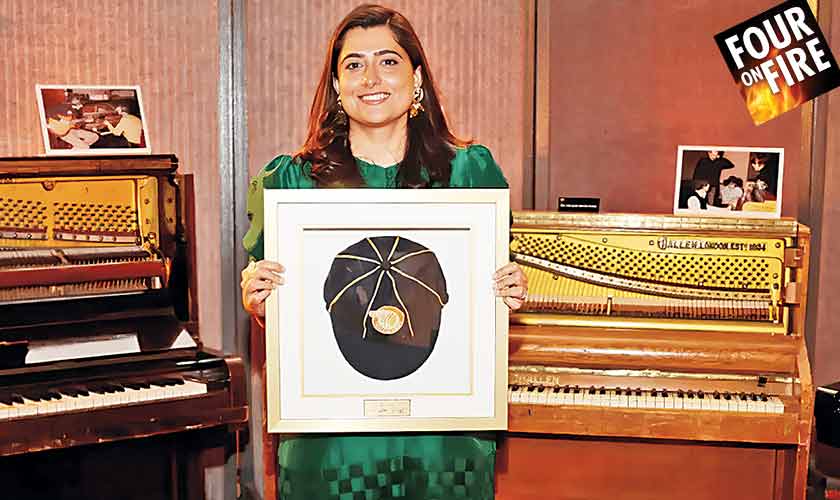
ana Mir, a pioneering figure in Pakistan women’s cricket, is being awarded the Sitara-i-Imtiaz for her remarkable contributions to sports. Her distinguished 15-year career comprised more than 100 matches in both ODI and T20 formats, with eight years of captaincy for the national team.
She took 150 wickets in 121 ODIs and 89 in 106 T20Is. She also made vital contributions with the bat, scoring 1,630 runs in ODIs and 820 in T20Is.
Notably, she was the first Pakistani woman to take 100 ODI wickets and the first Asian woman to feature in 100 T20Is.
She led Pakistan to gold medals at the Asian Games in 2010 and 2014.
In June 2025, Mir became the first Pakistani woman to be inducted into the ICC Hall of Fame, alongside cricket legends including Sir Alastair Cook, Hashim Amla, Graeme Smith, and Kumar Sangakkara.
From Pakistan, the only players previously inducted into the ICC Hall of Fame are Wasim Akram, Javed Miandad, Hanif Mohammad, Waqar Younis, Imran Khan, Zaheer Abbas and Abdul Qadir.
This recognition not only celebrates her cricketing legacy but also reflects the increasing recognition of women’s cricket in Pakistan and globally.
Her induction was met with acclaim: the PCB Chairman described her as a “role model for women cricketers,” while Prime Minister Shehbaz Sharif “reiterated the government’s commitment to gender equality in sports.” As Sana Mir explained, this achievement is for “every girl who picks up a bat or ball, even when told it’s not for them.”
Why it matters: Sana Mir’s career was more than personal brilliance — she led the elevation of Pakistan’s women’s cricket to international prominence, encouraging young girls to take up the sport despite cultural scepticism. Her achievement paved the way for better infrastructure, media attention, and institutional sponsorship.

Fazila Kaiser Qazi — Acting
| F |
Fazila Kaiser Qazi, better known as Fazila Qazi, began her career as a model in the late 1980s and transitioned to acting with television serials in the early 1990s. She became known as the “girl next door” in PTV’s romantic dramas.
Her best performances include various genres — from the popular sitcom Rozi (1990) where she portrayed Nazia, to the historical drama Tipu Sultan: The Tiger Lord (1997) as Tajdar Begum. She took a break from acting to focus on family life before making a comeback to television in 2011 with Khuda Aur Mohabbat (Geo TV), a sensational hit with television and digital audiences. She went on to deliver strong performances in the thriller Dareecha, and in family dramas such as Khatoon Manzil and Nazr-e-Bad.
In recent times, she has appeared in high-profile serials such as Tere Bin and Sirf Tum. Fazila is not only an actor; she is also dipping her feet in the role of an executive producer, with serial such as Khwaab Ankhain Khwahish Chehre in which she co-starred with Farhan Ally Agha and Rubina Ashraf.
After learning she had been awarded the Sitara-i-Imtiaz, the actress took to Instagram to express her gratitude, “Heartfelt thanks to my beloved Pakistan and to all my amazing fans for their unwavering support.
I’m truly humbled to have been nominated for the Sitara-e-Imtiaz, a civil award that honours out-standing contributions. I’m looking forward to receiving this honour on March 23, 2026. This recognition wouldn’t have been possible without the love and enc-ouragement of my country and its people. I’m deeply grateful for this opportunity and promise to continue striving for excellence. Thank you, Pakistan!”
Samina Peerzada
— Acting
| F |
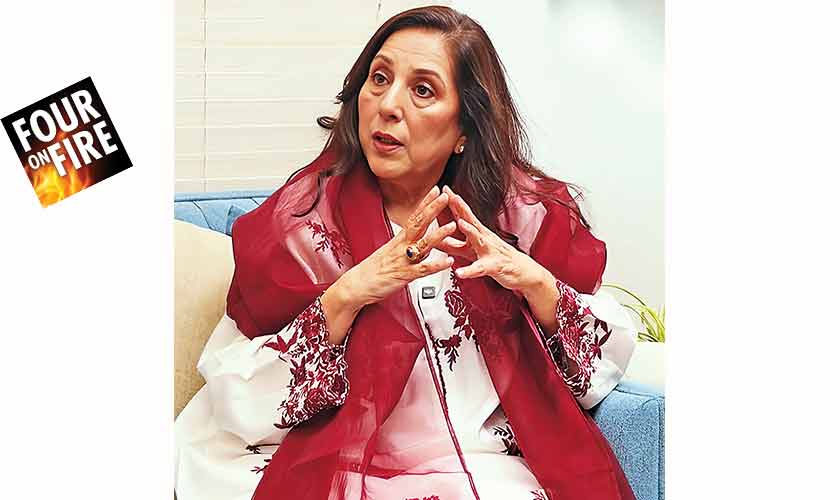
ew names in Pakistan’s entertainment industry command as much respect as Samina Peerzada. With a career spanning more than four decades, Peerzada has had landmark performances on stage, television and in film. She has broken new ground (for future generations) as both an actor and director.
She began her career in the late 1970s and became one of PTV’s most familiar faces, renowned for her natural demeanour and screen presence. Peerzada has appeared in popular dramas such as Thori Si Mohabbat, Ana, Kath Putli, Rehaai, Meri Zaat Zarra-e-Benishan, Noorpur Ki Rani, Dastaan, Roshan Sitara, Zindagi Gulzar Hai, Bay Aib, Rasm-e-Duniya, Balaa, and films like Bazar-e-Husn, Bulandi, and the recent family-horror film — produced by Geo TV — Deemak, which emerged as a hit, with Peerzada’s prowess as a terrific actor contributing significantly to its success.
She also pursued direction, making a strong debut with Inteha during the late 1990s featuring Humayun Saeed and Meera, which won critical acclaim for addressing sensitive issues. This was before Pakistan’s cinema had witnessed a proper revival.
More recently, she has connected with a younger audience through her digital talk show, Rewind with Samina Peerzada. In her talk show, she interviews celebrities, exploring their personal journeys and struggles. Throughout her career, Peerzada has been a vocal advocate for women’s empowerment, education, and the arts. She regularly uses her platform to raise awareness of social causes.
Her long-standing presence, from PTV classics to modern digital media, makes her an institution.
Congratulation to all the recipients.