

Print Story
X




A look at the mental health needs of the recent flood survivors
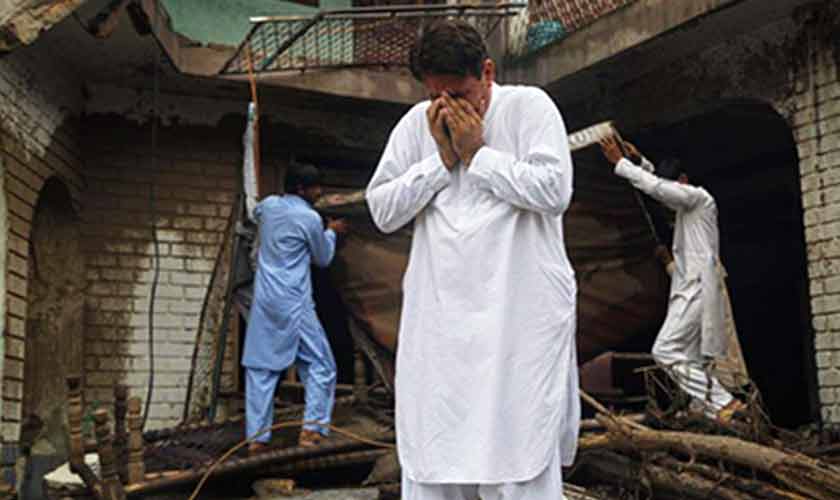
Forty-three-year-old Umar Khan sat slumped against a huge boulder. His home had once stood beneath it. His face remained emotionless, streaked with soil; his clothes were drenched in floodwater. His eyes stared into the huge boulders, looking for a trace of the world he once had. All was lost. He waited for rescue machinery to remove the debris so that he could recover the bodies of his loved ones. “I have lost my whole family,” he said trembling, in an exhausted voice, heavy with agony. “Three kids, wife, my parents, a brother, his wife and their daughters,” he counted his losses, his head buried in his hands.
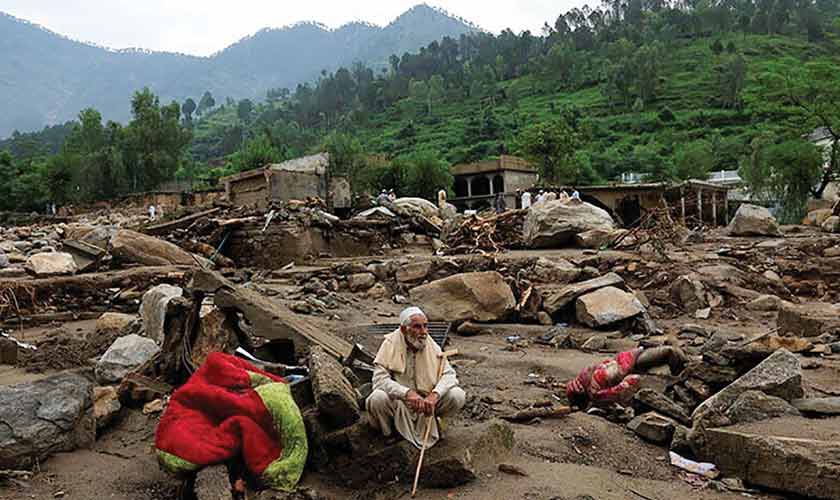
It was the second day of the flash flood. Unleashed by a cloudburst that hurled down a furious torrent of water and boulders, it soon swallowed Bishonai, Malakpur and Qadir Nagar that now lay in silence—flattened, smothered and untraceable.
The Khyber Pakhtunkhwa Provincial Disaster Management Authority data says 358 people have died in rain-related incidents since August 15 across the province. As many as 181 people were injured. The dead include 287 men, 41 women and 30 children. Buner was the worst-hit district in the province, where flash floods tore down villages in the Pir Baba area of the district, leaving 225 dead, including 193 men, 23 women and nine children. Another 120 people sustained injuries. Shangla district reported 36 deaths from flash floods and 22 fatalities were recorded in Mansehra; another 22 in Bajaur and 20 in Swat, where both flash flooding and infrastructure damage claimed lives. A cloudburst sparked a massive flash flood in Bajaur and Swabi districts that left 21 and 17 dead, respectively, according to the PDMA.
Unprecedented in the memory of the oldest living people in the valley, the flood struck with a ferocity no one had ever imagined. Local elders told The News on Sunday that even during the heaviest rains of 2010 and 2022, the mountain streams had never overflowed their banks. This time, they turned into walls of water and stone.
Dr Naveed Anjum, assistant professor at the Department of Geology, University of Peshawar, says that massive deforestation, in utter disregard of consequences, exposed rocks to weathering and erosion. He says that exfoliation and spheroidal weathering produced rounded boulders. “When the cloudburst struck the loose mountain slopes, it triggered flash floods that carried these rock fragments with such velocity that nothing could withstand their impact,” he explains. Referring to the state of bodies recovered, he says, “Just look at the condition of the vehicles crushed under the weight of the boulders.” Dr Anjum warns that erosion from deforestation would worsen over time.
“People ran, but they could not outrun the flood,” recalled Sajid Khan, 46, a survivor. His voice trembling with agony, he kept asking whether he should have tried to save his wife or kept holding on to his children. “I could either save my kids or my wife. I was holding my daughter and son in my arms, while my wife ran behind me. Then, a torrent arrived and swept her away. I watched helplessly.”
Hundreds of people from nearby villages rushed to the devastated area. Those who could have given him solace are now gone forever.
“We have lost not only our families but also all purpose in life. Those for whom we would have gone to any extent are no more,” said Fazl-ur Rahman, a resident of Qadir Nagar, another village now buried beneath the rubble. Rahman and his family had taken shelter on the roof of their house. But the sheer force of water and boulders brought it crashing down, sweeping away his wife, sons, daughter-in-law—sixteen members of his family, all told. They lost not only their loved ones but also their savings, including homes that had taken generations to build, cash and jewellery.
The recovered bodies were often beyond recognition. In many cases, surviving women were asked to identify the bodies by their fingers. Witnessing loved ones in such a state leaves lasting scars on the survivors
“The immediate trauma of losing loved ones was so overwhelming that they forgot how to grieve or even express their emotions. No words can console them,” says disaster management specialist Dr Mushtaq Ahmad Jan. “For them, beneath every boulder lies a loved one waiting to be recovered for a proper burial,” he says.
They have not only lost their families but everything that took generations to build. The state’s lackluster response has further deepened their sense of abandonment, says Dr Jan. “There was no tent or first aid facility; nothing,” he adds, lamenting that the women took shelter in homes of their relatives.
“They are already in deep post-traumatic stress. When you ask them how many family members they have lost, they hug you and start crying,” says Dr Jan, explaining the state of anguish of the survivors.
Studies show that untreated trauma from climate disasters has fuelled rising substance abuse as victims try to escape the pain. After the 2022 floods, the reported mental health challenges included PTSD, fear of recurring disasters, behavioural issues in children, domestic violence, and weather-related anxiety.
These problems are worsened by limited access to mental healthcare, social stigma and low awareness of mental illnesses, as in today’s Buner.
Peshawar-based mental health expert Dr Shehbaz Mohiuddin explains that such events profoundly affect survivors. “In the first week, people experience flashbacks that disrupt their sleep, along with loss of appetite, difficulty expressing themselves and panic attacks,” he tells TNS. “If left untreated, these symptoms can gradually push the affected person into major depression.”
A 2022 report had highlighted the psychological toll of climate change-induced disasters in Pakistan’s flood-affected mountain regions, where communities experienced depression, sleeplessness and unresolved trauma. In Ghizer district alone, 203 suicides were recorded between 2006 and 2017, with floods and their aftermath identified as major triggers. Since then, however, suicide data collection has ceased due to cultural taboos and the stigma surrounding mental health.
There are many children among the survivors who have lost their entire families. These children remain in deep shock and despair. “They are in urgent need of psychological assistance as they are the most vulnerable among the affected,” says Dr Israr Ahmad, assistant professor at the Psychiatric Department of Lady Reading Hospital, Peshawar.
A study, The Mental Health of Children in Flood-Affected Areas in Pakistan Needs Urgent Attention, concluded that natural calamities like floods deeply affect children’s mental health, often causing disturbed sleep, regressive behaviours, depression, hostility, physical complaints and negative thinking. The study revealed that the loss of parental protection during such crises makes children more vulnerable to physical, verbal and sexual abuse. Long-term consequences include heightened risks of PTSD, suicidal thoughts, substance use and child labour.
The study also reveals that homelessness, disrupted education and the trauma of losing loved ones further compound the psychological toll on children during disasters. “Such children develop low confidence, aggressive behaviours and are unpredictable as they trust no one,” says Dr Mohiuddin.
He urges the government and relief organisations to provide maximum mental health support possible with proper planning, focusing on the stigma attached to the subject, especially in semi-conservative rural communities of Khyber Pakhtunkhwa.
The writer is a researcher, communication specialist and a freelance reporter.