

Print Story
X




Rising waters raise climate warning across the country
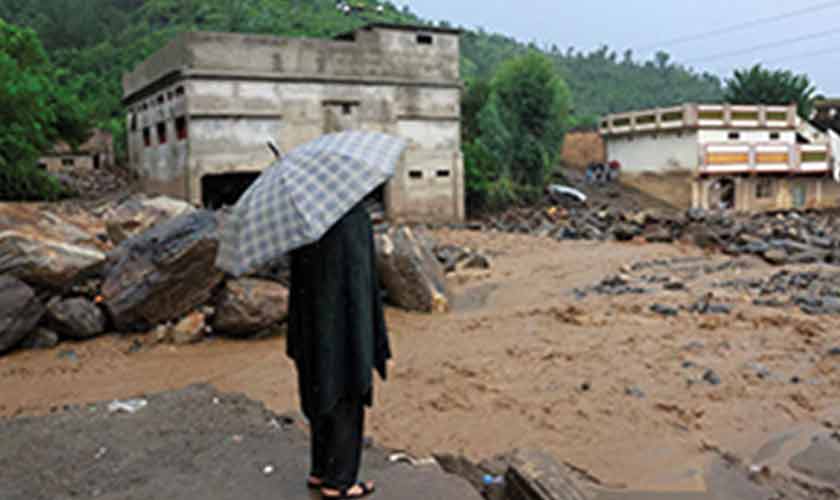
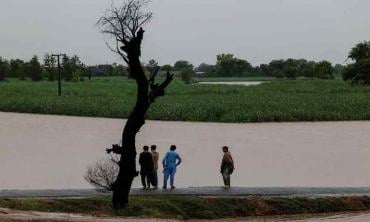
Pakistan is once again facing unprecedented flooding linked to climate change. These floods have left Pakistan grieving. Families have been torn apart, children are missing and homes and livelihoods have been swept away.
In the past one and a half month, Pakistan has experienced multiple spells of torrential monsoon rains and accelerated glacial melts, triggering rampant flooding in Gilgit-Baltistan, Khyber Pakhtunkhwa and the Punjab. In many regions, rainfall has been much higher than normal levels. Some urban centres, such as Lahore and Rawalpindi, have received over 230 mm of rain within 24-48 hours. Rivers, valleys and drainage systems have been overwhelmed. Karachi, too, received devastating rains, which flooded roads, killing at least 7 people in the city on August 19.
A study by World Weather Attribution conducted on the intense monsoon rainfall between June 24 and July 23, found that rains were 10-15 percent heavier than they would have been without human-driven climate change.
The National Disaster Management Authority has confirmed that over 657 people have died, more than 200 people are missing and many have been injured nationwide. A majority of these casualties occurred in Khyber Pakhtunkhwa, particularly in Buner and Swat districts, where flash floods have caused widespread devastation. In Buner district alone, flash floods triggered on August 15, resulted in at least 337 deaths. Many more people are still missing. The situation remains dire, with ongoing rescue operations and forecasts of continued heavy rainfall.
The recent floods are a reminder of the disastrous 2022 floods that affected 33 million people and killed about 1,700. Rising temperatures are increasing glacial melt, intensifying monsoon rains and increasing flood frequency. Deforestation, poor land use planning, absence of consistent LPG and other fuel subsidies and weak infrastructure, have compounded the floodwater crisis.
Federal and provincial governments have been forced to take actions like the Billion Tree Tsunami completed in 2017 in Khyber Pakhtunkhwa and the national Plant for Pakistan campaign (2018-2023), which have targeted plantation of billions of saplings to restore degraded lands, stabilise soil and build ecosystem buffer zones. The Living Indus Initiative, launched in 2021 in collaboration with the UN, mobilises ecosystem restoration and water-ecosystem projects across the Indus Basin. One flagship initiative, Recharge Pakistan, in collaboration with the WWF-Pakistan, launched in September 2024, focuses on water security through cost-effective ecosystem-based adaptation. It will increase water storage and recharge through wetlands, floodplains and hill-torrents management, thus promoting climate-adapted community-based natural resource management and livelihoods; and forge a paradigm shift to scale up this approach. It aims to directly benefit over 680,000 people and indirectly, 7 million, while training staff and communities on green infrastructure use.
In light of the 2022 floods insights, WWF-Pakistan launched its Climate Crisis Charter at COP27 in November 2022, outlining the urgent need for stronger governance, integrated land-use and water management; enhanced disaster preparedness and multi-stakeholder collaboration, emphasising on nationwide climate vulnerability risk assessments; effective flood management infrastructure; and institutional reforms that should lead to climate justice. Under its Water Resource Accountability project, WWF-Pakistan’s key interventions include the construction of check dams, irrigation channels, protective walls, community-based fish farms and using nature-based solutions while creating climate-smart villages that can build climate resilience. Similar programmes are needed at a larger scale in other climate-vulnerable areas of the country.
Despite these programmes, there remain glaring challenges. The massive under-utilisation of climate budget limits readiness. For instance, in Sindh, only Rs 20 billion was spent from an allocation of Rs 48 billion over 16 years. Flood early warning systems and public communication remain weak as flash floods continue to catch people unaware. This happened in the Swat River tragedy in June 2025, where negligence led to deaths. Forest Departments are underfunded and undermanned; and laws are not adapted to the needs of remote mountain communities for effective monitoring or regulation of fuelwood trade, especially illegal commercial logging.
To build climate resilience, a coordinated effort is required to scale up nature-based solutions, including restoration of wetlands and floodplain forests, along with robust contingency plans for natural disasters like floods, GLOF and droughts. There is a need also to integrate ‘sponge-city’ urban designs, such as Yasmeen Lari’s Climate-Smart Eco-Streets in Karachi, to facilitate water absorption and reduce urban runoff. Early warning and emergency systems need to be upgraded. Timely risk communication, especially in remote and glacial regions, and evacuation protocols should be clearly communicated and strictly enforced.
Floods in Pakistan are no longer discrete tragedies; they are part of a growing climate poly-crisis. There is an urgent need for stronger governance and institutional capacity to implement mitigation and adaptation measures; align provincial and national policies with the Paris Agreement to deliver Pakistan’s NDCs. Pakistan can shift from reaction to resilience if sustainable solutions like nature-based infrastructure, ecosystem restoration, better budgeting, community-centred waste and water management reforms and implementation of targeted regional policy interventions, along with stringent land use regulations, jointly led by the government and civil society, are adopted to curb these calamities.
This is not just a natural calamity; it is a climate emergency that demands urgent compassion and responsibility. The relevant authorities need to deliver immediate relief, ensure adequate rehabilitation for the displaced and commit to long-term measures that protect lives from such recurring devastation. The people of Pakistan need visible action, empathy and hope for a safer future.
The writer is a climate change expert and environmentalist. She is currently serving as climate action and sustainability director at WWF-Pakistan.