Print Story
X




Record losses were caused by heavy monsoon in some parts of the capital. Alarmed, citizens are demanding that decision-makers rethink their approach to urban development
| L |
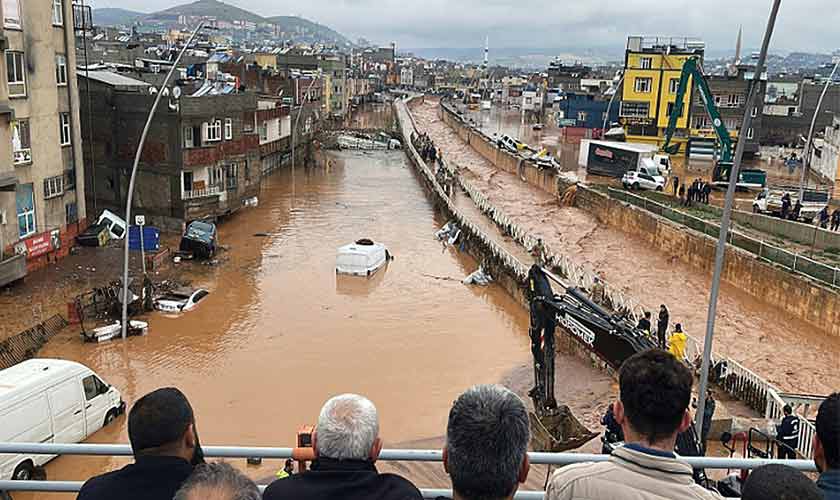
ast week, several houses in new Chathha Bukhtawar, a lower middle-class neighbourhood located near Park Road, were submerged in a mix of rainwater and sewage after a big drain in the area flooded.
As monsoon showers pummelled the capital, a large current of water swept down the Margalla Hills and drained in low-lying areas.
The nullahs overflowed and the surrounding residential areas were flooded.
Many residents complained that their furniture, electronics and other valuables got damaged when their homes were inundated with murky water that they could not pump out for days afterwards.
Special measures were taken by the district administration. In some neighbourhoods, a rescue emergency was declared and women and children were ushered to safety.
The pattern and intensity of this year’s monsoon spell has the citizens worried. It has also rung alarm bells for the administration.
Some citizens feel that the administration needs to do more and rethink its approach to construction, urban planning and development.
“This is a message from nature that you should not play with it,” said Iftikhar Abbasi, a citizen. “We blocked the natural pathways for water with encroachments, construction projects and gated societies. Now, water rushing down from the mountains seems to be reclaiming its course and destroying everything in its path.”
One of the reasons why nullahs overflow is encroachments; especially concrete structures erected in the catchment area.
This happened in Saidpur village where many encroachments were built on a drain meant to convey stream water downhill from Margalla. The drain flooded and swept away all the encroachments after heavy rainfall. Many cars and bikes were also swept away as the water rushed downstream.
“It seems that we are neither reading the signs of nature nor learning from past mistakes,” said Dr Ejaz Ahmad, an environmentalist. “Basically, there is no urban planning here. Waterways and riverbeds have been encroached upon to build houses and plazas.”
“It seems that we are neither reading the signs of nature nor learning from past mistakes,” said Dr Ejaz Ahmad, an environmentalist. “Basically, there is no urban planning here. Waterways and riverbeds have been encroached upon to build houses and plazas.”
He said catchment areas of the streams must not be narrowed or filled with concrete. “With the changes in monsoon patterns, water rushes down with so much pressure that it threatens lives and property of residents.”
This time though, some upscale neighbourhoods were also threatened. A retired army officer was driving by a nullah with his 21-year-old daughter when it overflowed and swept away their car in Defence Housing Authority, Phase V.
The two were ‘missing’ for several days. The wreckage of their car was later discovered in Soan river. The search for the bodies was called off soon afterwards.
“Due to heavy rainwater accumulation on a nearby road, their vehicle stalled. The officer tried to restart the car, but the flow of water was too intense. They were both swept away by the rainwater,” said the police.
Urban flash floods are not a phenomenon many Islamabadis are used to. “Chakri is so close to Islamabad. It had never flooded before. This was the first time,” said Shahid Ali, a resident. “Entire housing societies have been built on river beds and drains. Now, we are facing the consequences of that.”
“These housing societies have reached Chakri, where there are two rivers. Whoever is making these decisions really needs to re-consider them.”
A couple of years ago, in a similar incident, rainwater had flooded E-11 and wrought havoc. The key reason behind that catastrophe was that a drain had been encroached upon narrowing it from 100 to just 20 feet wide.
Dr Ahmad said that there was a need to review the urbanisation model to the extent of river catchments.
“Unfortunately, even after such incidents we do not talk about sustainable urban models,” he said. “If we do not take these incidents seriously such tragedies will happen more frequently,” said the environmentalist.
The author is a staff reporter. He can be reached at vaqargillani@gmail.com