Print Story
X




Addressing water pollution in Gilgit Baltistan through gravel-based water filtration plants
| G |
anish Garelth is a small village in Hunza valley. There are 180 households. Most of its residents practice agriculture. The channel that is the main drinking water source is getting polluted due to the mushrooming of hotels and restaurants nearby and the direct disposal of sewage and municipal waste in some of the tributary streams, leading to water-borne diseases.
Students at Boys Middle School Ganish Garelth, used to experience similar health-related issues. When Nelofar Shaheen assumed charge a year ago, she was surprised to learn that drinking water was scarce and often unsafe.
According to Shaheen, “The water was highly turbid and contaminated. Children used to drink that water, as it was the only source available to them.”
Shaheen also saw videos circulating on social media regarding a damaged sewer line that was polluting the water channel that supplied water to their school. After that, she tried to avoid drinking water from the school supply.
“It was common for students to have water-borne diseases, such as hepatitis and typhoid. Student attendance was getting affected,” said Shaheen.
Ehsan Ullah, the site in-charge at Hunza office of the World Wide Fund for Nature-Pakistan says that the Ganish Garelth Local Support Organisation contacted the WWF with a request for support.
The WWF-P through its Water Resources Accountability in Pakistan programme conducted a feasibility study. Samples taken from the school were found to be heavily polluted. The pollutants included high turbidity, e-coli and an unhealthy pH. The water was found unfit for human consumption.
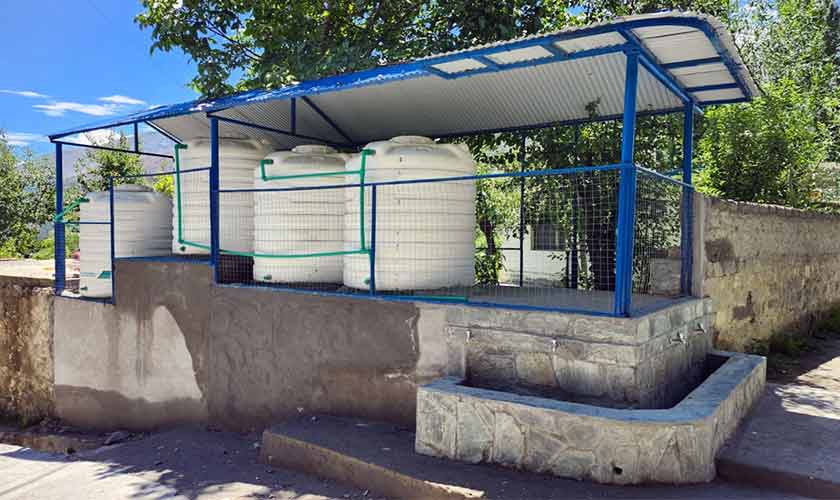
It was decided to install a gravel-based water filtration plant to supply clean drinking water to the school as well as the households.
Installing a gravel-based water filtration unit is a practical and sustainable solution for improving water quality in areas with limited access to clean water, where natural filtration systems are preferred. This type of filtration system utilises the natural properties of gravel to effectively remove suspended solids, sediments and certain impurities from water. A gravel-based filtration unit costs approximately Rs 1.8 million. It does not require electricity or moving parts. This makes it ideal for remote and low-income regions.
The Directorate of Education provided land for plant. The plant began supplying water to the school and the villagers in December last year.
Water samples taken from the school as well as from the village and analysed by the Environmental Protection Agency revealed that the water was meeting the standards set by the EPA.
The responsibility for the maintenance of the plant has been handed over to the local community to ensure sustainability.
“The students are happy as they now get safe drinking water. There has been a significant improvement in student attendance. I am glad to see them coming regularly to school,” Shaheen says.
Shaheen has highlighted a bigger challenge causing a water availability crisis in Hunza. She says, “In Karimabad, near the water channel through which water is supplied to our school, there are a number of hotels and restaurants. The untreated sewage discharged by these hotels is polluting the water channel.”
Ehsan Ullah from the WWF-Pakistan says that the situation is exacerbated by a rise in population. He says that Hunza does not have enough ecological resources to meet the requirements of the local population as well as the influx of tourists.
According to Ehsan Ullah, “Since the village lacked safe drinking water, WWF-Pakistan has provided separate water taps for the community. The school gets water from 8am to 2pm. The community gets water from 10am to 2pm.”
Afrah Jahangir, an eighth-grade student, says that prior to the construction of the filtration plant, the children used to drink polluted water. She says, “The situation was bad. There was little to no water and we used to bring water from home. Since the water supply for the community was no better, we still used to suffer from water-borne diseases.
“I, myself, developed an appendix pain; my sister Faiza Jahangir had kidney stones due to drinking polluted water from the school,” Afrah says.
She says that after December 2024, when the filtration plant became operational, the school children have not been suffering from water-borne diseases. “We keep ourselves hydrated,” Afrah says.
According to Nadra Parveen, a member of the Ganish Garelth LSO, “The villagers had been drinking turbid water for ages. The pollution in water streams was leading to increasing incidence of water-borne diseases.”
Parveen says she suffered from appendix pain due to drinking polluted water. She says the treatment cost her Rs 80,000.
“There are about 160 households in Ganish Garelth. Nearly 80 of those get water from the filtration plant. To meet the water requirements of the entire village, we are requesting the government to install a similar water filtration plants in our village. We also wish other villages in Hunza to get similar plants to be spared the water-borne illnesses,” she says.
Ehsanullah says, “We have installed eight gravel-based water filtration plants in schools across Gilgit Baltistan under the WRAP project. This technique is cost-effective and reliable.”
The gravel-based water filtration plant in Ganish Garelth, Hunza, has been a success story that should be replicated in other villages and towns of Gilgit Baltistan facing the challenge of poor water quality. At the same time, tourism and hospitality should be regulated and recycling of wastewater be made mandatory.
The writer is a PhD student at George Mason University. He is an international award-winning environmental journalist. His X handle: @SyedMAbubakar. He can be reached at s.m.abubakar@hotmail.com.