Print Story
X




While it’s important to be realistic, a little optimism goes a long way
In the midst of chaos, there is also opportunity.
— Sun Tzu, The Art of War
| T |
his past July marked 15 years since my young family and I moved back to Pakistan from the US, and what an exhilarating, tumultuous ride it has been. In 2010, a few weeks before we moved back to Lahore, masked terrorists stormed an Ahmadiyya worship place very close to our home in Model Town and massacred almost a hundred worshippers in cold blood. At that time, not having lived full time in Lahore for close to 16 years and with three young children, I was shaken and questioned my decision to return to Pakistan. Our friends in the US were also very worried. Some even asked me to consult a good psychiatrist. But my wife and I were determined to be closer to home, to family and to our roots and we took the plunge. Today, my grown children are about to start college in the US. They moan and complain about the same things we all complain about: the frequent electric breakdowns, the heat, the mosquitoes in the summer, the traffic etc. But importantly, they are also staunch Pakistanis who, while having a nuanced view of the shortcomings of our still young country, have a strong sense of their Pakistani, Muslim identity. This was what my wife and I wanted to inculcate in them when we moved here and it would not have been possible if they had grown up in the US or, at least, not in the way we had wanted. In addition, both my wife and I have had the opportunity to spend ample time with our elderly parents, family members, old friends and new friends and enjoy the community and fellowship we always missed in our small Arkansas town.
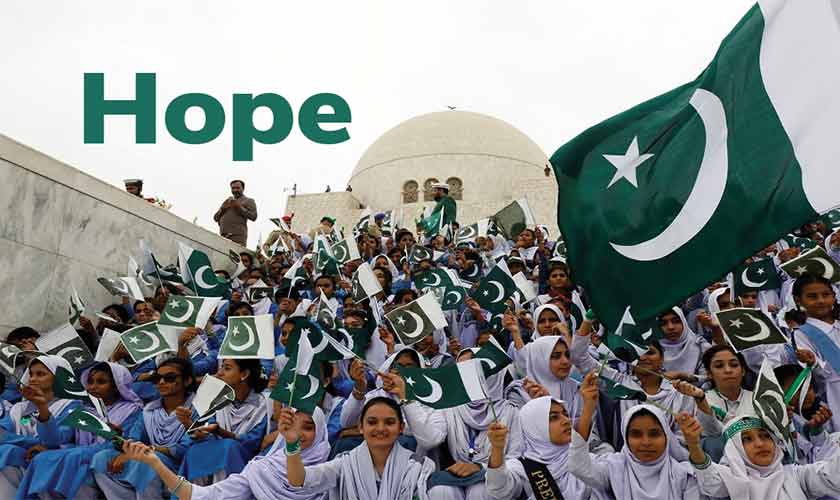
As we celebrate Pakistan’s 78th birthday, it is natural to look back and examine where we are and, more importantly, where we are going. As a psychiatrist, it is my task to help people look at the bright side of things but it is also important to be realistic. So let us look at some hard facts: our national economy remains weak and unable to generate enough jobs or opportunity for our huge, and growing, young population—one of the youngest in the world with 65 percent of our population under the age of 30. These young people are educated in an education system which has been decimated in the last 30 years through unregulated commercialisation with private schools, colleges and universities sprouting like weeds after monsoon rains and delivering education that varies from adequate to truly abysmal. As a result, our young people remain unprepared to cope with a fast-changing world and struggle to find work that can help support them and their families.
The political chaos of the last few years has accelerated the already frantic race to move abroad even as work opportunities abroad continue to change and, in some cases, decline. At the same time, the rise of virtual work and online opportunities means any young person with a computer and an internet connection can begin working and earning even in high school without leaving their village or town.
Our demographic dividend, the millions of young people in Pakistan, can lift this country very high if we can educate them and provide them the skills they need.
The situation is similar in my profession. Medical education and healthcare have been, and continues to be, blindly privatised without regard for healthcare outcomes locally or nationally. Hundreds of private medical colleges both here and abroad (China and Central Asia are favoured destinations for students desperate to get a medical education) churn out thousands of unevenly trained medical graduates, who compete for scarce opportunities within Pakistan and scramble to move to Western countries for better incomes. In my own institution, Pakistan’s oldest and the one where every aspiring medical student wants to be, we regularly hold discussions about how to best provide our growing student population with the medical skills and knowledge needed to succeed in an increasingly competitive environment where artificial intelligence is threatening to fundamentally change the face of medical care forever.
Despite this, we all see a very bright future ahead for Pakistan. Our demographic dividend, the millions of young people in Pakistan, can lift this country very high if we can educate them and provide them the skills they need. We are blessed with some of the greatest natural resources in the world: a large coastline, where Gwadar Port can be a game changer if we can get our act together in Balochistan; some of the most fertile lands in this region, if we stop the rampant spread of housing societies; mineral wealth and possibly oil deposits, if we can quell our internal differences and settle our ethnic and linguistic feuds; stunning mountains and natural scenery, if we can build sustainable tourism with the help of local communities—the list goes on.
Pakistan, the land we all live in, our symbolic mother, will continue to feed, shelter and care for all of us. Those of us who have lived abroad for extended periods (and those who still live there), know what it means to feel the pangs of separation from your homeland, your family and your roots. But caring for and nurturing our motherland for our future generations is also our responsibility. We all need to do our part, from helping those less fortunate than us in whatever way we can, to not throwing garbage in public, to conserving water and natural resources—everything counts. And in whatever work we do, we need to do it honestly, with dedication and a belief that brighter days lie ahead.
The writer is a psychiatrist and faculty member at King Edward Medical University. He is the author of Faiz Ahmed Faiz: A Biography, Sang-e Meel Publications, 2022. His X handle: @Ali_Madeeh.