Print Story
X




With rising terrorism, residents in some districts of Khyber Pakhtunkhwa long to celebrate independence in its truest sense, with peace
| S |
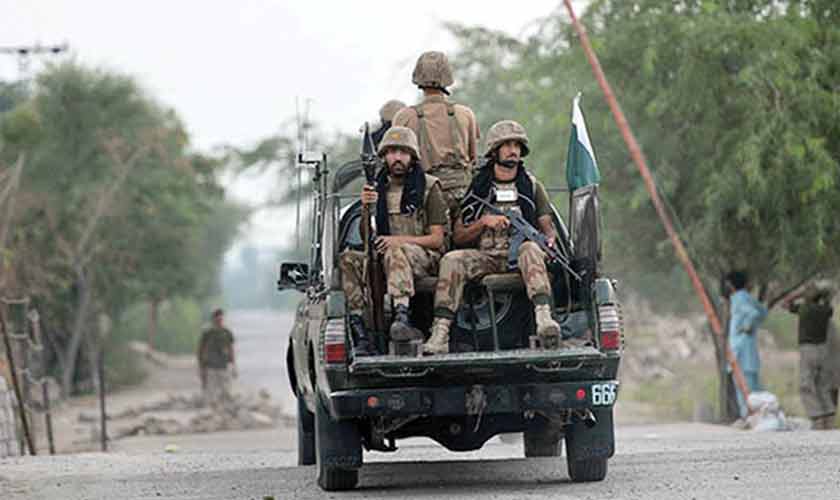
even tribal and four southern districts of Khyber Pakhtunkhwa are currently reeling under a fresh wave of terrorism. Despite the odds, Independence Day celebrations were held in these districts with the hope of a peaceful future.
For months, good news from these districts has been scarce. Terrorist attacks are on the rise and fighting between security forces and militants continues. Civilians and security personnel alike have sacrificed their lives during various operations.
Travel after dark remains unsafe in many parts of the region. In some districts restrictions have been imposed on movement during certain hours; still others are under curfew. Residents no longer feel secure in their areas and road closures have confined many to their localities.
In Bajaur, targeted operations are being carried out against militants in some areas, forcing many to flee their homes. In Kurram, the Tal-Parachinar Road is open only from morning to midday. Mobile internet services have been suspended for ten months. At night, the Indus Highway from Peshawar to Dera Ismail Khan is considered unsafe. Most travellers avoid it altogether.
From Bajaur to South Waziristan and from Karak to Dera Ismail Khan, large stretches are regarded unsafe for travel. To restore peace, jirgas (tribal councils) have been convened at the local level, from the Chief Minister’s House down to village communities. Hundreds of such gatherings have been held, yet sustainable peace remains elusive.
On social media, citizens are questioning why, despite a constitution and formal law enforcement institutions, so much reliance is placed on jirgas whose outcomes, many argue, have failed to deliver tangible results.
Bushra Sikandri, an electrical engineer from Bannu, says Independence Day always makes her think what freedom means to her. “For me, independence goes beyond flags and speeches; it’s about the right to move freely, to feel safe in public spaces and to live in a country where peace isn’t just a temporary phase but a long-term commitment.”
“I dream of a Pakistan where sustainable peace is nurtured through empathy, education and equal opportunities; where women, children and marginalised communities can travel without fear, speak without hesitation and exist without compromise,” says Sikandri.
“Freedom should feel like being able to take a bus at night; walk through a park or cross cities and checkpoints without fear. That’s the kind of independence I long for. I believe it is within reach, if we keep pushing for it.”
The war against terrorism, now in its third decade, has already claimed thousands of lives. People in these conflict-hit districts say they want lasting peace in their hometowns. They want safe passage to other cities. The constitution guarantees the protection of life and property and the right to safe and free movement as fundamental rights; ensuring those is a responsibility of the state.
Dr Ilam Khan from Bajaur has a doctorate in peace and conflict studies. He says independence should mean freedom of mind, liberation from atrocities and equality and inclusion. In the Pak-Afghan borderland, he says, true independence has never been realised. “The region has endured killings, torture, kidnappings, plundering of resources and extrajudicial killings.”
“For instance, in Bajaur, locals strongly opposed military operation, insisting that there were no terrorists there. Still, the state launched an operation that was not narrowly targeted. It displaced entire populations, leaving many dead or injured. Celebrating independence is hard when people continue to suffer instead of enjoying their freedom,” adds Dr Khan.
Jehanzeb Turi, a lawyer from Kurram, says the beauty of the region’s green valleys is overshadowed by memories of the violence it has endured. Travelling from Parachinar to Peshawar rarely comes without uncertainty. “Even going to school, the market or the hospital is often a trip taken with caution and prayers.”
“Independence should mean the freedom to move without fear; to travel without checkpoints and always having to show your identity cards; to live freely without always glancing over your shoulder. Across Pakistan, August 14 is celebrated with flags and national songs but in Kurram, the dream of peace remains elusive,” says Turi.
“Kurram is not just a border district; it is also a bridge between cultures. When its roads are unsafe, the nation’s independence feels incomplete. True freedom demands more than ceremonies; it requires safe spaces, open roads and trust among citizens.”
“This Independence Day, let us remember that the journey to true independence will end only when every valley, bazaar and mountain path is free for all, and Kurram’s peace becomes Pakistan’s pride,” Turi adds.
The writer is a multimedia producer. He tweets @daudpasaney.