Print Story
X




A global network of painters, sculptors and photographers is reshaping the idea of where Pakistani art belongs
| C |
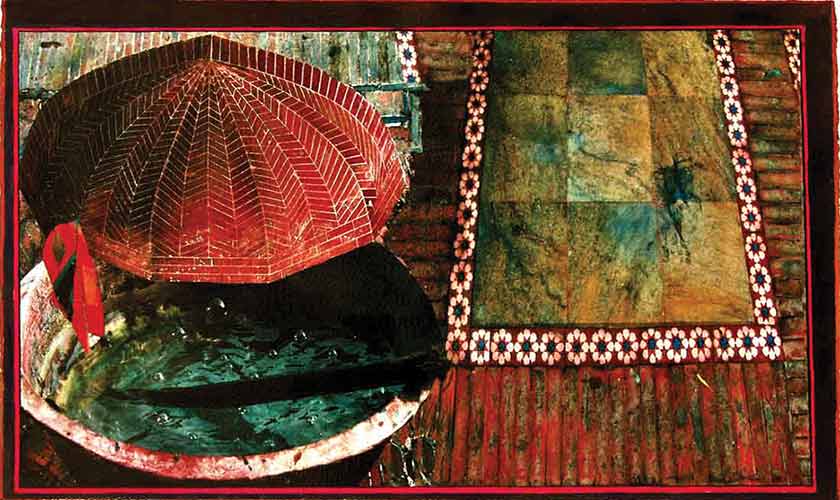
reative individuals – including artists, writers, musicians and performers – are, by and large, an unhappy bunch: disgruntled with their environment, dissatisfied with the currents of their times, disapproving of their contemporaries’ practices and dismissive of their audiences’ responses. In some cases, they abandon a secure job, a stable family and the safety of routine. While away, either by choice or circumstance, they produce unforgettable work – some of which refers to the surroundings they left behind or is best understood in the places and languages of their origin.
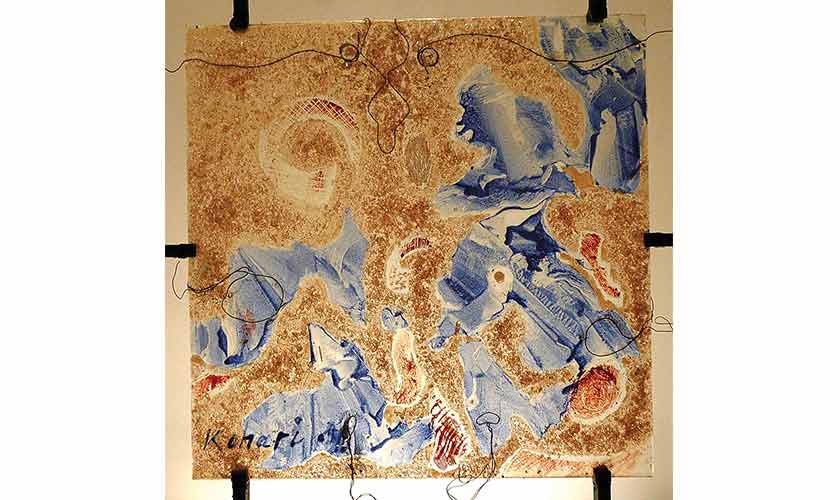
Faiz Ahmed Faiz penned some of his finest verses while in exile in Beirut, much like the literature of Latin American authors living in Paris, Madrid, Barcelona or London. James Joyce’s fiction – written in Paris – remains rooted in his hometown of Dublin. The list is long. When it comes to the visual arts in Pakistan, it expands further. The Islamic Republic is one of the few countries in the world to have exported a substantial number of its visual artists, who now work across continents – in Australia, North America and Europe – while remaining connected to their homeland through exhibitions. More than simply maintaining a presence in the local art scene, their pictorial histories, investigations and concerns remain deeply linked to the land of their upbringing.
Some artists from earlier generations – such as Anwar Jalal Shemza, Rasheed Araeen and Tassaduq Sohail – moved to the UK. They were later joined by Jamil Naqsh in his final years. Raheel Akbar Javed, Lubna Agha, Rashid Ahmed Arshad and Mansoora Hassan settled in the US; Naz Ikramullah, Shireen Kamran and Sylvat Aziz moved to Canada; Masood Kohari lived in France and Kutub Sheikh in Germany. Their choice to live abroad stemmed from various factors, but not from hostile treatment in their homeland. These migrations took place before 9/11. Some of these were even before Gen Zia-ul Haq’s restrictive policies towards artists, including the imposition of ethical codes, moral scrutiny and political censorship.
The displacement of other, mostly younger, artists has been driven by several reasons – primarily two: remaining abroad after studying at a foreign university, or settling with a partner in another country (in some cases with a match made during college years). A few have left because of their ethnicity or religious or sectarian identity. Whatever the reason, all of them – like “clothes in the wash,” to borrow a phrase from Margaret Atwood – have been transformed into something new.
Interestingly, the geography of mainstream Pakistani art is no longer confined to its own territory, but extends far beyond, encompassing artists based across the globe. This includes Australia (Nusra Latif Qureshi, Khadim Ali, Amber Hammad); France (Sabina Gillani); Germany (Bani Abidi); and the UAE (Amna Ilyas, Saba Qizlibash). In the UK, artists such as Huma Mulji, David Alesworth, Faiza Butt, Noor Ali Chagani, Naiza Khan, Nilofar Akmut and Maha Ahmed have made their mark. The Netherlands is home to Ehsan-ul Haq, Iqra Tanveer, Basir Mahmood and Imran Channa.
In the US, the list is extensive: Huma Bhaba, Shahzia Sikander, Salman Toor, Ambreen Butt, Seher Shah, Saira Wasim, Anila Qayyom Agha, Ruby Chishti, Khalil Chishti, Talha Rathore, Humaira Abid, Durre Waseem, Simeen Farhat, Roohi Ahmed, Zaam Arif, Murad Khan Mumtaz, Sarah Ahmed, Hasnat Mehmood, Iftikhar Dadi and Elizabeth Dadi. Canada is home to Faisal Anwar, Tazeen Qayyum, Amin-ur Rehman, Samina Mansuri, Sumaira Tazeen and Wahab Jaffer – the latter dividing his time between two countries.
One might say there is another Pakistan, existing beyond its physical borders in every sense of the term.
Given the instant global connectivity today, the detail of distance is, in many ways, insignificant. At the same time, expatriate artists – to borrow and extend Jean d’Alembert’s 1763 notion of inclusivity – offer “the added flavour of a homeland created by its foreign colouring.” Some living abroad continue to exhibit regularly in venues based in or connected to Pakistan, seeing their true audience as belonging here. Others, less anchored to the homeland, participate in international shows and work with galleries unlinked to Pakistan.
Their imagery is not confined to a visual language one might expect to have originated in Pakistan, yet it cannot be fully understood without the Pakistani context. Whether engaging with feminist identity, marginalised queer spaces, persecuted ethnic and sectarian groups, references to violence, the presence of Arabic text, interrogations of the colonial past, the aesthetics of Mughal miniatures, explorations of Islamic geometry, appropriations of local pop culture, or parallels with literary narratives, their work remains tied – however loosely – to the cultural and political realities of their homeland.
The diversity of this output challenges the idea of physical geography and a limited concept of land or nationhood. If Durre Waseem paints a cityscape in San Francisco and later depicts an urban setting in Lahore, both artworks – despite the change in location – reflect her sensibility, style and self. Similarly, Bani Abidi’s pieces created in Karachi, New Delhi or Berlin share the distinct content, precision and sophistication characteristic of her practice. Nusra Latif Qureshi’s miniatures made in Pakistan, or her digital prints produced in Australia, reveal the same personal vocabulary and concerns.
In this sense, one might say that there is another Pakistan, existing beyond its physical borders. Just as leading artists based in Pakistan regularly participate in prestigious exhibitions at museums, galleries, triennials, biennales and art fairs, the creative figures of this “iCloud Pakistan” also represent the country – its people, politics and cultural legacy – on the global stage. Whether living at home or abroad, most of these artists have moved beyond producing exotic curiosities, attractive commodities or anthropological artifacts, instead creating work that speaks on its own terms.
Our skies, airports and immigration counters operate around the clock, moving people from one point of arrival to another – whether for a short visit or a long stay, to attend an exhibition or establish a studio, to show at a museum or secure a lasting market. As the theme of the 2024 Venice Art Biennale suggests, no matter where they live, people have become “strangers everywhere.”
For migrant artists, some of the challenges they face are decidedly practical: navigating unfamiliar spaces, working with new materials, enduring inhospitable weather and dealing with unknown or unfriendly peers. Storage, transportation and living costs often top the list of obstacles confronting those who create far from home.
Yet the most pressing issue is that of identity. A celebrated painter, recognised sculptor or acclaimed photographer may not receive the same response when relocating to a different environment; even so, their art often remains firmly rooted in their country of origin. This was the case with AJ Shemza, who was little known in the UK during his lifetime. It was only after several posthumous exhibitions in Pakistan and elsewhere – and his inclusion in the seminal Hayward Gallery, London show The Other Story, curated by Rasheed Araeen in 1989 – that he emerged as a major figure in mainstream modernism. A visit to Tate Modern now confirms this status, a fate that may still await many artists dividing their lives between the land of their present and the land of their past.
The writer is a visual artist, an art critic, a curator and a professor at the School of Visual Arts and Design, Beaconhouse National University, Lahore. He can be contacted at quddusmirza@gmail.com.