

Print Story
X




Will this year’s Edinburgh Festival uphold its legacy of truth-telling
| I |
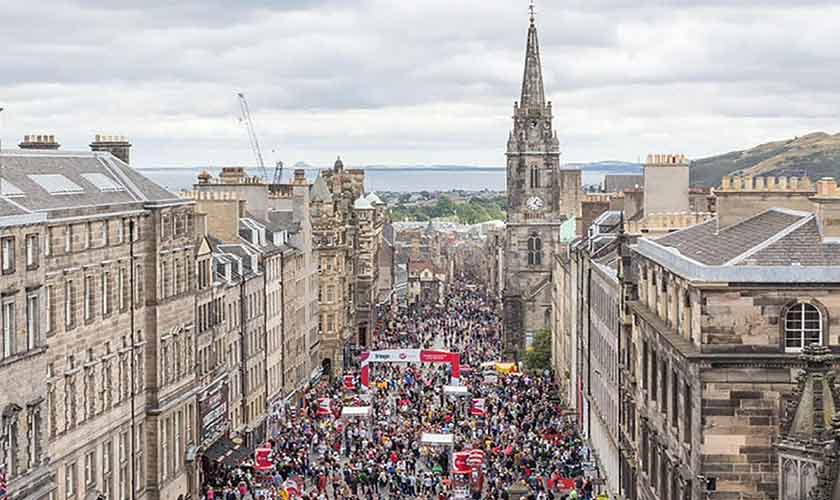
t remains to be seen what the Edinburgh Festival offers this year. It is expected to welcome and extend its platform to avant-garde expressions in the arts from around the world.
As if the main festival were not already experimental enough, a set of performances began to take place on the sidelines. These shows deliberately defied conventional artistic norms. Over time, this parallel movement gained shape and recognition, eventually becoming formalised as the Edinburgh Fringe.
Edinburgh has a reputation for not shying away from urgent or controversial issues. It will be interesting to see whether the topic of Palestine emerges, either through discussion or performances built around it. Known for its global engagement, the festival has historically responded to political and humanitarian crises. Given the scale and gravity of the current conflict, it will not be surprising if it takes centre stage.
Through its performing arts platform, Edinburgh has long challenged accepted values, spanning morality, politics, freedoms, institutional hypocrisy and discrimination related to tradition and religion. Some years ago, however, concerns were raised that the festival was beginning to yield to censorial pressures. Such criticism was seen by many as a violation of the unwritten charter that underpins the spirit of the festival.
Since the recent one-sided conflict began, particularly in Gaza, the number of protests across the Western world has increased, both in scale and intensity. The repercussions of these demonstrations have been severe.
This [conflict] presents a serious challenge for the Edinburgh Festival: to take this moment in history as material for the performing arts, and to have the courage to engage with it. If it fails to do so, its credibility as a platform committed to truth and artistic integrity will be seriously undermined.
There have been clampdowns on institutions; and individuals have been identified and targeted. Media organisations have come under pressure; universities have faced threats; and funds have been curtailed or withdrawn altogether. As a result, legal battles have emerged, with many invoking freedom of the press and academic independence as essential pillars of a democratic society.
This war has revealed not only the brutal use of force against unarmed civilians but also a parallel crackdown on those who have spoken out, at home and abroad. The backlash has been so extreme that it has effectively blown the lid off a pot that has long simmered beneath the surface, a pot filled with the fragile promises of freedom that democracy is meant to uphold.
Individuals and institutions that have made films, reported on the tragic events, composed songs, created visual representations or written literature have been savagely targeted. In some cases, lives have been lost.
The loss of dignity witnessed in scenes where people scramble for food handouts, only to be shot at in the name of counterterrorism or maintaining law and order, is unprecedented, particularly in an era where visual media brings such images to a global audience.
This presents a serious challenge for the Edinburgh Festival: to take this moment in history as material for the performing arts, and to have the courage to engage with it. If it fails to do so, its credibility as a platform committed to truth and artistic integrity will be seriously undermined.
The writer is a Lahore-based culture critic.