

Print Story
X




Zulfikar Ali Bhutto Jr speaks of love, anger and a new politics for Pakistan
| I |
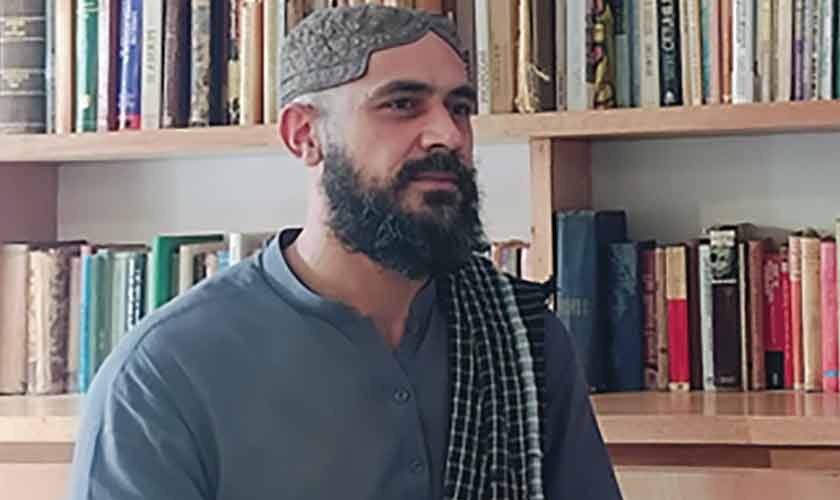
n an exclusive interview with The News on Sunday, Zulfikar Ali Bhutto Jr, the grandson of Pakistani Prime Minister Zulfikar Ali Bhutto, opens up about reclaiming his family’s political legacy; building a progressive movement rooted in compassion and resistance; and his vision for a democratic, inclusive Pakistan. Bhutto Jr also reflects on inherited pain, political betrayal and why he believes young Pakistanis can reshape the future if they dare to love and stay angry.
| H |
e has remained on the margins of national politics - until recently. The announcement that he will formally enter politics and form his own political party signals not just a personal turning point, but potentially a generational reawakening.
“I didn’t choose this legacy, it was handed to me,” he says, his tone both reflective and resolute. “I have spent years away from it, working outside of that shadow. Some people even forgot that I was part of the Bhutto lineage. That gave me clarity.”
What changed meanwhile was not just the national political climate, but also his reckoning. After returning to Pakistan in 2020 to shoulder family responsibilities, Bhutto Jr was confronted by what he describes as a betrayal of everything his famous grandfather had stood for.
“There’s so much being done in the name of Bhutto that is unacceptable. They’ve turned his name into a slogan of corruption. Jiye Bhutto is no longer for the awam, it’s used for elite capture.”
He speaks with dismay about how the Bhutto tombs in Garhi Khuda Bakhsh have been transformed into what he calls “a vulgar fantasy monument.” He describes the destruction of local homes to build roads and security perimeters for Bilawal House. “Zulfikar Ali Bhutto would never have accepted any of this. His politics were about humility, not palaces and protocol.”
He says this contradiction between the people’s Bhutto and the version now on display is what moved him. “I used to oppose dynastic politics. But when Bhutto’s very name s being used to harm the people he loved, how can I sit back and be silent?”
While he draws inspiration from his grandfather’s socialist ideas, he is quick to emphasise that replication is not his goal. “You can’t copy and paste politics from 50 years ago. But you can still build a country that belongs to its people.”
His political vision, he says, is firmly rooted in eco-socialism, a term he embraces wholeheartedly. “People often dismiss environmentalism as elite or academic. But it’s not. It’s about justice. What comes from the land should go back to the people and be sustained for future generations.”
Bhutto Jr links the ecological collapse directly with Pakistan’s economic and political failures. “Our development model is built on top of people, not for people. It’s destroying our environment, displacing our communities and feeding into elite profit structures.”
Among his most urgent priorities is resisting corporate farming, which he sees as a more sinister form of feudalism. “They say they’re freeing farmers from the zamindar-vadera system. But what they’re really doing is pushing them into corporate servitude.”
He points to policy proposals under initiatives like Green Initiative Pakistan that offer thousands of acres to corporations in the pretext of modernisation. “This is land grab. And it’s happening with the blessing of the state.”
He speaks passionately and with granular detail about how small landowners and traditional farming communities are being taxed, displaced and sidelined. “A 45 percent tax on agricultural land? These are starvation tactics. It’s a way to corner farmers into abandoning their ancestral lands.”
He proposes unions as a counterforce. “If we can’t achieve land reforms for religious or legal reasons, then let’s build farmers’ unions. Let’s organise.”
| T |
hough he is yet to formally announce an electoral campaign, Bhutto Jr doesn’t rule it out. For now, his focus is on building ideological and grassroots foundations.
“This isn’t about a seat in the parliament. It’s about creating a movement that returns power to ordinary people farmers, workers and students.”
He speaks softly at times, yet there’s a tremor of urgency in his voice. This isn’t performative outrage; it feels like a long-held grief finally given direction. It’s the grief for a legacy betrayed, but also the hope of one reclaimed.
Zulfikar Ali Bhutto Jr confirms his determination to formally enter electoral politics. Discussing the recent announcement of his intent to form a new political party, he stresses that the initiative is still in its infancy. It is driven by youth engagement and a desire to offer an alternative to dynastic narratives.
“We have a very strong youth base. From that, we hope to generate a much stronger party,” he says. “Yes, we intend to contest elections. I’m very keen and excited to contest from Larkana and Lyari.”
Bhutto Jr also reiterates that while he values the cultural and political heritage of Sindh, he rejects narrow ethno-nationalist ideologies. “I love Sindh for Sindh. I also love Pakistan because it is a very special federation. It has a lot of potential.”
He proposes reframing Pakistan not as a monolithic nation but as a union of multiple nations, “many nations that have joined hands to form a country.” He says that this interpretation aligns more closely with Pakistan’s founding ethos, originally imagined as a pluralistic refuge from inequality and oppression.
“The idea that Pakistan was a promised land not just for Muslims but for all people who had been oppressed by Brahmanical tyranny or caste-based tyranny was very quickly thrown out the window after Jinnah’s death.”
When asked about the future of the Left in Pakistan, Bhutto Jr offers a candid critique. He believes the leftist space has weakened over the years not necessarily due to ideological shortcomings but due to a failure to evolve with changing times and the socio-political context.
“The Left is failing to come to terms with a Modern Left that is emerging globally - one that is more flexible and responsive to the needs of many people, not just a theoretical working class.”
He argues that any serious leftist resurgence in Pakistan must resonate with contemporary issues of youth - dignity and basic civil infrastructure especially in a post-Zia-ul Haq era where political engagement has been systematically dismantled.
Bhutto Jr emphasises that today’s youth may not articulate politics in traditional ideological terms, but they still exhibit clarity about dignity, security and basic human needs. “They know that in other countries, electricity flows without interruption, water comes from taps and children can play around and be safe. They know that this is not the case in Pakistan. That awareness is political.”
Tying this to his political philosophy, he introduces the concept of eco-socialism where environmental justice, labour rights and civil liberties converge under the broader umbrella of personal well-being and happiness, a right he says is embedded in Article 38 of the constitution.
“People’s expectations have grown. It’s not just roti, kapra aur makaan any longer. It’s roti, kapra, makaan, paani, bijli aur gas.”
Bhutto Jr understands why many young people and working-class communities no longer trust traditional politics. He admits that for a long time, he felt the same way.
“I also stopped trusting politics,” he says. “I understand the disappointment. Some people saw me as a hopeful figure because I was working outside politics, outside what they call ‘this dirty business.’”
Now that he has decided to step into politics, he has a different approach. He believes that the only way to win people’s trust is to [physically] meet people, listen to them and walk with them; and not just during election campaigns.
“We did a walking tour of Lyari for five or six hours. We couldn’t cover all of it, but people saw us, shook hands with us and we spoke directly with the youth,” he says. “That’s how trust is built.”
He also sees social media as a powerful way to stay connected with young people. Many youngsters in Pakistan are unemployed and stuck at home, so their phones become their window to the world.
“When we made videos during Bulhan Bachao, people responded. They reached out. Even during the 2022 floods, I went to visit farmers on my own land. I didn’t take any media crew. But farmers took photos and posted them. It looked like a photoshoot even though it wasn’t. That’s how much optics matter now.”
Bhutto Jr points out how expectations from politicians in Pakistan are so low that just visiting flood-affected people, empty-handed, had an impact. “I didn’t even carry food or water. Just being with them, getting dirty and sitting in their homes was enough. And that, honestly, shocked me.”
He says he believes that this is the result of “elite capture” in Pakistan. There is a stark divide between those in power and those struggling on the ground.
“It’s not just landlords and feudal families who are responsible. People living in elite urban neighborhoods are also disconnected from rural Pakistan. That gap is growing.”
Asked how he is different from other politicians, Bhutto Jr points out that he chose not to take shortcuts.
“I could have done what Bilawal did at 19 and taken over the party. I didn’t. My mother and I both decided against it. I didn’t want to be part of the system without earning my place. I worked abroad, made my own income, lived anonymously in the US and didn’t take a single rupee from home.”
“A 45 percent tax on agricultural land? These are starvation tactics. This is a way to corner farmers into abandoning their ancestral lands.”
His approach, he says, is about starting from the ground up not taking leadership by name or family, but by effort and connection.
“I hate handouts. I want to earn everything. That’s why I didn’t jump into politics early. I didn’t want people to think I was just another product of the system.”
He acknowledges that most people are skeptical; especially the youth. Many have trusted political leaders before and been let down.
“Young people tell me: ‘We had hope in this leader, we had hope in that one, and they let us down.’ And I tell them honestly: I’m not here to ask you for blind trust. I will earn it. If I earn your trust, then I earn your vote.”
This is also why, when entering politics, he chose not to lead the Shaheed Bhutto group.
“I didn’t want to take over a small legacy party. I wanted to start something new and bring in new people. I want to politicise the depoliticised youth. Young people have been told that doing NGO work or creative arts is enough to bring a change. But that’s not true.”
For Bhutto Jr, real change comes through politics because politics means policy and only policy can bring about structural change.
“NGOs can help, yes, but they cannot replace what the government is supposed to do. The youth need to stop thinking they must stay apolitical to be good people. That’s a lie. If you want to change the world, you must become political.”
The News on Sunday also talked to some journalists and political analysts about their thoughts on Bhutto Jr’s chances as he prepares to start his own party.
Journalist Zia-ur Rehman, who has reported on politics for many years, noted that Bhutto Jr had been able to attract attention in rural Sindh, particularly during protests against proposed new canals.
“But the bigger political picture is not easy. When the PTI became popular, it was a special case. It took many years and help from the establishment. Also the people were at that time very unhappy with the leading political parties.”
Zia said it takes a long time to build a strong political party. “You need to work with people on the ground, have a clear message for the whole country and the situation needs to support the change. Without all that, it will be hard for him to get a lot of support soon,” he added.
Asked how the new party will be different from other left-wing groups already working in Sindh, Bhutto Jr said that there were a few key differences.
First, he said, they believe in faith, not just Islam; all religions practiced in Pakistan. He said that many people on the Left avoided talking about religion, but he felt that religion should be respected and included. “We need to follow an Asian style of secularism,” he said, “which means respecting all faiths, not removing religion from public life.”
Second, he said, his party is proudly pro-Pakistan and pro-unity. He criticised some other Leftist groups for becoming too focused on narrow ethnic issues. “Many groups speak about local problems, but they don’t truly include the people they claim to represent,” he said. At a farmers’ conference, he said, there were hardly any farmers. He said he believed in bringing power closer to the people, while also keeping the country united.
Third, Bhutto Jr said, his movement was not stuck in the past. “We are not trying to do what Mao did 70 years ago or what my grandfather did 50 years ago,” he said. “We want to take good ideas and evolve them to fit today’s Pakistan.”
Foreign policy, he said, was another area where they would be different. He said the world was now divided into powerful blocs. Pakistan, he said, was not strong enough to stay non-aligned the way it had tried in the past. He It must think carefully about which side to support, especially in view of the changing situation in the Middle East and rise of powers like China.
He criticised the way the United States uses its power, saying its actions often cause destruction. “If we have to choose between the US model and China’s model,” he said, “I would rather go with China; at least they build roads and railways and deliver services.”
Bhutto Jr praised Iran for building its own industries and being independent. “They make their own weapons and their own home appliances,” he said. He said Pakistan, too, should aim for similar self-reliance.
He strongly criticised countries that have accepted diplomatic ties with Israel under the Abraham Accords. “Where is the wall against Zionism now?” he asked. “Only Iran is standing up. Pakistan must also stand with Palestine. We are the only country that was created for Muslims, by Muslims. We must defend the oppressed.”
Talking about the political situation in Sindh, Bhutto Jr said the biggest obstacle for his party may by the Pakistan Peoples Party, which has great influence across the province.
He said this wasn’t new. His father too had faced the PPP challenge when he returned to Pakistan in the 1990s. “Every part of the system was used against him even under his sister’s government,” he said. “They tried to isolate him and scare people, be afraid of being seen with him.”
He said the same thing was happening again. He said the PPP leadership saw him as a threat, even though he hadn’t officially launched his party yet. “They are acting nervous and defensive. This shows that something is missing in their politics,” he said.
Still, he said he did not believe people would reject his message. “People are ready to hear about real issues,” he said. “They are tired of political games. They want someone who speaks for their rights.”
He added that some religious parties were becoming more popular not because of their religious views, but because they were talking about social justice, workers’ rights and fairness in politics. “They are promoting ordinary people in their parties. That’s why people are listening to them,” he said.
Bhutto Jr said he wanted to create a party that focused on justice, rights and the voices of ordinary Pakistanis. “The ground is ready for this kind of politics,” he said. “We just have to stay true to the people.”
Sohail Sangi, veteran journalist and left-wing activist who has been writing on the politics of Sindh for decades, offered a reality check. He pointed out that only around 15 percent of votes in Sindh were cast based on ideology. The rest were influenced by powerful local leaders and feudal structures that continue to hold sway over rural communities.
Sangi said the PPP had maintained dominance in Sindh by skillfully blending populism with cultural storytelling. While some critics accused the party of failing its promises, it still connected emotionally with rural Sindhis through slogans and local leadership that often doubled as power brokers.
When asked how he plans to connect with Pakistan’s politically aware but often disillusioned Generation Z and first-time voters, Zulfikar Ali Bhutto Jr responded with optimism. He said he believed that his unique activism had already struck a chord with many young people.
“Gen Z really likes the dolphin work we do. They seem to enjoy that we’re a bit different,” he said, referring to his environmental and artistic initiatives.
According to Bhutto Jr building trust with young people will take time and consistency. “They’re still getting to know us. They want to see us do more work that helps people and animals,” he added.
Bhutto Jr said that many young people were already joining him in his work. His office, which also houses the BulhanBachao campaign and an archive space, regularly hosts interns, A-level students, university students and recent graduates who are eager to contribute. “These young people want to do something meaningful,” he said. “I believe that supporting them should be part of our political goals.”
He emphasised the importance of government support for the youth. Sharing the story of a young girl from Lyari, Alia Sumro, who won a boxing championship in Thailand, Bhutto Jr pointed out gaps in government support. “She had to get private sponsorship. A girl like her shouldn’t have to struggle like that. Support should come from the state,” he said.
He argued that the government needed to invest in young talent athletes, musicians and creative minds through grants and public programs. “If young people feel they’re valuable to Pakistan, they’ll give back so much more,” he said.
Given his background in arts, it’s no surprise that Bhutto Jr also wants culture and creative activism to be part of his political journey. He grounds this vision in practical terms: “Yes, art and culture matter but it’s about investing in our people.”
He said many talented young people especially musicians, painters and folk artists were ignored because art was often treated as a luxury. “Art is seen as something only rich people can afford to do or enjoy,” he said. “That’s how the market treats it. A blank canvas can sell for thousands of dollars, while a handmade piece full of heart might sell for just 500 rupees. That’s the unfair system we live in. That’s capitalism.”
For Bhutto Jr, supporting the arts means offering financial help especially from the government. “In San Francisco, where I lived, I survived by applying for small city grants. They gave me a salary to make art. Why can’t we have something like that in Pakistan?”
He said young creative people should be able to dream big and that it was the government’s job to help make those dreams come true. “We always talk about investing abroad or in big banks, but what about investing in our own people? People are already paying heavy taxes – 25 percent is a lot. Let’s use it to build opportunities for our youth.”
Bhutto Jr is keen to set the record straight. “Some say my father was a tyrant. I don’t agree. People can criticise his approach, but I don’t think he was oppressive. That needs to be clear.”
Zulfikar Ali Bhutto Jr said the current political situation was very complicated. He said that after the 26th Amendment, the constitution seemed to have lost all value. “We are living in a Pakistan where the social contract between the state and the people has been broken,” he said.
He said major political parties – especially the PPP, the PML- and the PTI – were focusing only on holding on to power instead of solving the problems faced by the people. “There is no real politics, only fighting and the blame-game.”
Still, he said the people of Pakistan had great potential. He cited the recent protests over canals and the unity seen during tensions with India. These moments, he said, showed that Pakistani people can come together and demand real change.
He said he supported press freedom and believed that it was a key part of a healthy democracy. “If someone says something you don’t like, they still have the right to say it. That’s what democracy means.”
On digital rights, he warned that Pakistanis face serious problems like lack of privacy and online harassment.
Bhutto Jr said he supported workers’ rights. He mentioned his support for labour unions and highlighted how most workers were not even paid the legal minimum wage. “Workers are the backbone of this country, but they are often treated unfairly.”
He said it was easy to feel hopeless, but claimed that he remained optimistic. “Pakistani people are strong, proud and full of love. We don’t stay silent for long when our rights are being taken away.”
He wants to be part of what he calls the “re-democratisation” of Pakistan. He said, “I won’t compromise my beliefs, even if it means losing. My father didn’t compromise, and I won’t either.”
However, he also said he believed in progress and not getting stuck in narrow ideological thinking. “We need to move forward while staying true to our values.”
He said he had been traveling across Pakistan and meeting people especially those ignored by traditional politics: workers, farmers, students and lawyers. “We’re still in the early stages, but things are moving forward.”
He said they had already appointed women coordinators in each district and that he spoke about women’s rights in almost every speech. “I often tell young men in the crowd – I promised Fatima we would make space for women. You’re not keeping that promise unless you make that space.”
He also said he strongly supported inclusion of people with disabilities. He mentioned a blind woman who spoke at the UN on behalf of Pakistan after the conflict with India. “Pakistanis with disabilities are intelligent, capable and deserve opportunities.”
Even though only 3,000 transgender voters are registered in Karachi, he said, he believed that the actual number is much higher. He called the community an important part of Pakistani culture and promised political inclusion. He criticised the PPP in Sindh for making big promises to the transgender community but failing to deliver. Maryam Nawaz, the Punjab chief minister, he said had done better, building schools and centres for the community without fanfare.
“If you feel let down, it’s okay to be angry. But use that anger to build something better. Anger is also a kind of love – it shows you care about your country and your people. Stay angry, stay loving. Through this love and anger, we will create a real revolution.”
The writer is an independent environmental journalist based in Karachi