Print Story
X




Swat has launched a mountain ponds initiative to combat climate change
| A |
summer holiday meant to bring joy and relaxation ended in heartbreak for a group of tourists from Sialkot, when a flash flood surged through the picturesque Swat Valley on June 27.
The group of 17 had arrived at the hill station to enjoy its cool weather and verdant landscape, unaware of the danger that lay ahead. While four were rescued by emergency teams, the rest were swept away by the violent currents.
Among the missing was a young man named Abdullah.
For 21 days, his friends, family and local rescue teams scoured the area, hoping for a miracle. That hope ended near Barikot tehsil, where Rescue 1122 personnel finally recovered his body from the riverbed.
“We found the body and immediately shared images on social media for identification,” said Waqar Ahmad, the local station in-charge. “A friend who had stayed behind in Swat recognised the shirt he was wearing. That’s how we found that it was Abdullah.”
For Abdullah’s family, the news brought closure—but not peace.
“This should have been a safe, happy trip,” said a relative. “We never imagined it would end like this.”
Recurring disasters
Swat, known for its natural beauty and cultural richness, has increasingly become a hotspot for climate-related disasters. The region is no stranger to flooding. In 2010, massive floods had destroyed homes, schools and roads. In 2022, disaster struck again—this time with even greater ferocity.
That year, the Swat River’s water volume surged to 246,392 cusecs—one of the highest ever recorded. Thirty-nine people lost their lives and dozens of bridges, hotels and homes were washed away. Nearly 80 kilometers of road infrastructure were destroyed, paralysing transport and tourism, which forms the backbone of the local economy.
Economic fallout
The economic cost was staggering. According to the Agriculture Department, of the 110,579 acres of arable land in Swat, over 15,000 acres was flooded or otherwise rendered useless. Crops worth billions of rupees worth lost.
For farmers like Gul Zaman in Mataltaan, the damage was personal.
“We had only one growing season. The flood destroyed everything,” he said. “Even where some of the crop survived, there was no way to transport the harvest to the market.”
The fisheries sector also suffered massive losses. A total of 237 hatcheries—public and private—were washed away. The government-run trout hatchery in Madyan alone reported damage worth Rs 250 million. Total losses across the sector were estimated at Rs 1.36 billion.
A strategy emerges
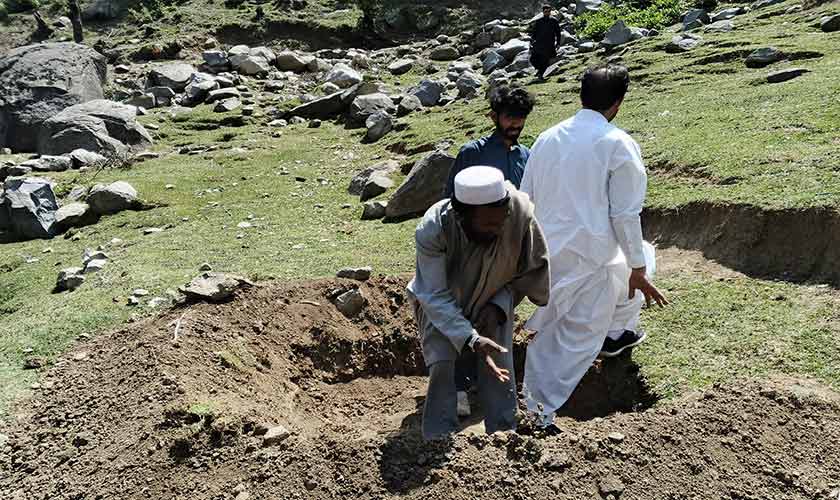
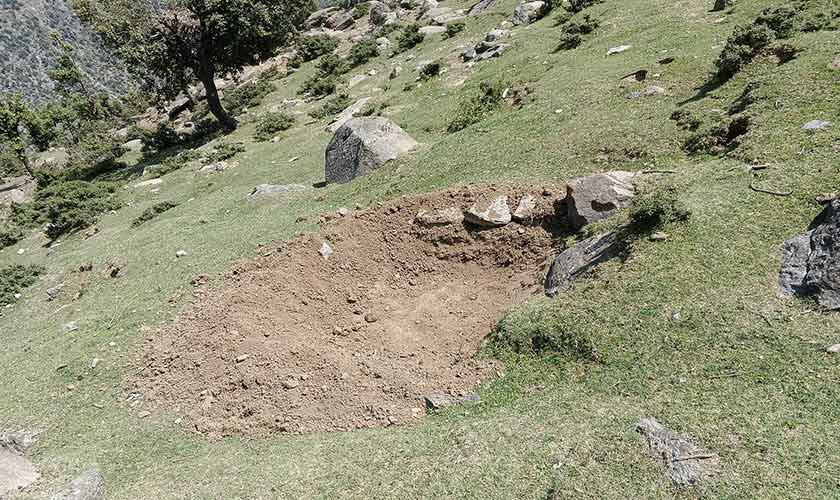
The Swat district administration has rolled out a climate adaptation project aimed at building resilience in the most vulnerable areas. The plan involves constructing small reservoirs, or “retention ponds” in hilly zones such as the Bahrain tehsil.
“These ponds are designed to hold rainwater, recharge groundwater and slow down runoff that causes flash floods,” said Assistant Commissioner Junaid Aftab.
“A typical pond is around 10 feet long, 5 feet wide and 2-3 feet deep, though the size may vary depending on the terrain,” he said. “The idea is to build them wherever we can—on fertile or mixed land, as long as the location supports water retention.”
“It’s a delicate ecosystem,” said an environmental consultant who has worked on climate resilience in northern Pakistan. “Small shifts in temperature or rainfall patterns have big consequences here. We’re already seeing it play out.”
So far, more than a dozen ponds have been completed; the target is 150 in the first phase. The project is being implemented in collaboration with the tehsil municipal administration (TMA), the Irrigation Department and local civil society organisations. If successful, officials say it could be scaled up across the province and beyond.
“These ponds are a small solution to a large problem,” Aftab added. “It’s a start.”
Changing seasons
The project comes amid growing evidence of changing climate patterns in the region. According to Aftab, winters that once lasted six to seven months are now significantly shorter.
“Snowfall has decreased by up to 30 per cent,” he noted. “There is rain during the months when it should snow. The summers are getting longer.”
Officials believe that the water in these ponds could create localised microclimates—by increasing evaporation, which may lead to rainfall, and helping with snowmelt in colder months.
Local voices
Local communities have cautiously welcomed the effort. Shah Muhammad Khan, a lifelong resident of Bahrain, said the initiative is the first serious attempt he has seen to address environmental degradation in decades.
“We’ve seen our mountains change,” he said. “The floods in 2010 and 2022 devastated entire villages. The forests that used to act as natural barriers are vanishing.”
Khan blames not just climate change but also unchecked deforestation and rapid, unplanned construction.
“Forests are being cleared for timber or to build houses. When you remove trees, you remove protection. That’s why floods are worse now.”
He believes the retention ponds could make a difference—but only if supported by stricter environmental enforcement.
“We can’t plant a few trees and dig some ponds, then keep cutting forests on the other side,” he said. “We need a full strategy.”
A delicate balance
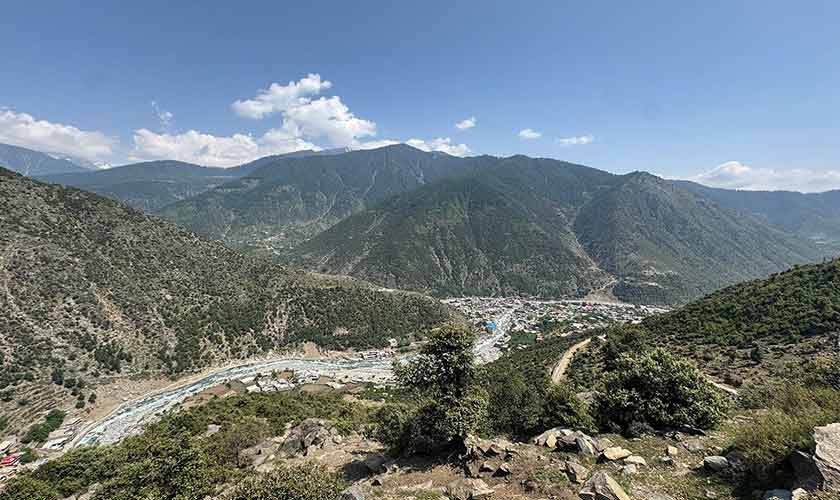
Experts say Swat, once referred to as the Switzerland of Pakistan, is one of country’s most climate-sensitive regions.
“It’s a delicate ecosystem,” said an environmental consultant who has worked on climate resilience in northern Pakistan. “Small shifts in temperature or rainfall patterns have big consequences here. We’re seeing it play out already.”
As Swat grapples with these challenges, Abdullah’s passing has become more than a personal loss. It’s a tragic reminder of how unpredictable and dangerous the environment has become for both locals and tourists.
For those who live in these valleys, adapting to this new reality is no longer optional—it’s a matter of survival
Waqar Ahmad Swati is a freelance journalist from Swat district. He is a PhD scholar in media and mass communication. He reports on environment, human rights, education and elections. He can be reached at Waqar.swaty93@gmail.com