

Print Story
X




With overwhelming public support, several European countries have been forced to take steps to recognise Palestinian statehood
| A |
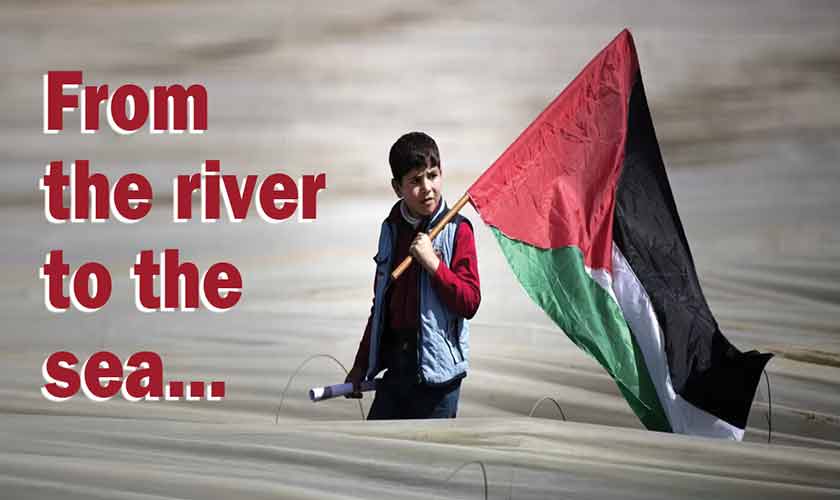
cross the United States, United Kingdom, Scandinavian countries, Spain and much of the Global South, particularly South Africa, public sentiment has shifted decisively toward anti-war and anti-Zionist positions. In the US, mass protests on campuses and in major cities have called for an end to military aid to Israel and have demanded accountability for, what many now recognise as, war crimes. Activists, students and faith-based communities are joining hands to expose the silence and complicity of their political and commercial classes as well as governments.
In the UK, for example, public demonstrations and political pressure have intensified in recent months. A growing number of voices from within the Labour Party, Liberal Democrats and civic organisations are challenging the government’s unwavering support for Israel. Spain has witnessed massive protests in cities such as Madrid, where cabinet members have marched in support of Palestinian rights. In Scandinavian countries, such as Norway and Sweden, the civil society and political groups are demanding that their governments end all military cooperation with Israel and move toward formal recognition of Palestine.
In the Global South, the disconnect between governments and people is becoming stark. While many governments remain diplomatically cautious, public opinion is overwhelmingly supportive of Palestine. South Africa, in particular, has been vocal, drawing comparisons between Israel’s policies in Gaza and the apartheid era. Across the Muslim world, from Indonesia to Turkey to Pakistan, populations have mobilised against the war, even as most governments offer tepid, calculated responses driven by geopolitical considerations rather than popular will.
Since October 7, with respect to popular sentiments, several European countries have taken meaningful steps toward recognising the State of Palestine. Norway, Ireland, Spain and Slovenia formally recognised Palestine in the first half of 2024. Their decisions were not isolated acts but part of a larger, long-overdue shift. Globally, 147 of the 193 UN member states already recognise Palestine as a sovereign and independent state, though theoretically. This growing list includes countries across Latin America, Asia and Africa.
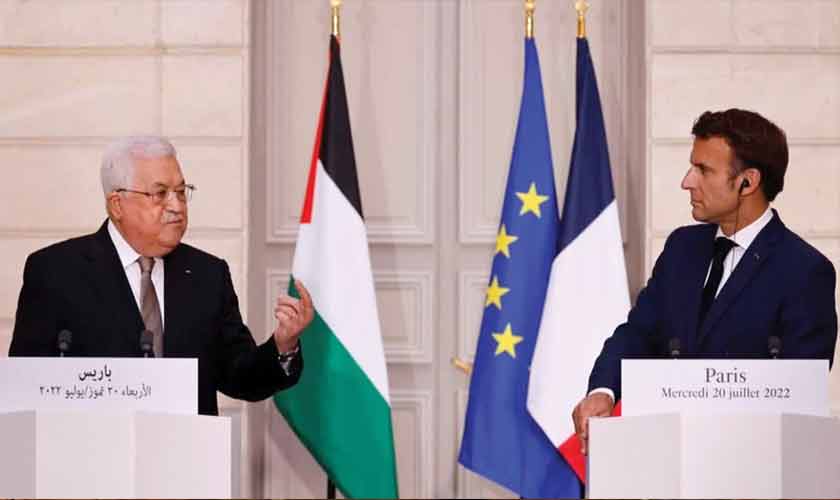
More recently, France and the UK have expressed intent to follow suit. Both have indicated that if Israel does not take concrete steps toward ending its aggression and facilitating humanitarian relief, they may formally recognise Palestine at the upcoming UN General Assembly in September this year. Such declarations mark a significant diplomatic shift among two of Europe’s most influential powers.
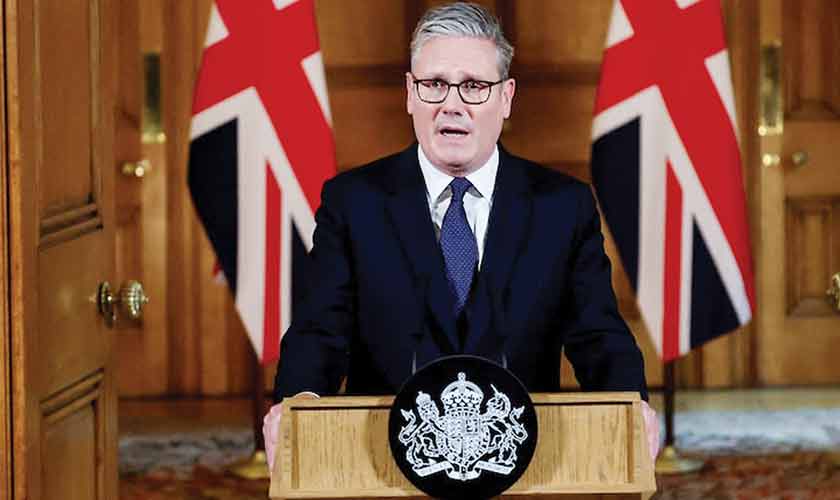
In the United Kingdom, the Labour’s landslide electoral victory brought Keir Starmer to power. Initially reluctant to shift course, Starmer now finds himself under internal and external pressure to revise Britain’s Middle East policy. The Labour Party seems divided. While its leadership remains close to Washington and aligned with the Trump administration’s hardline pro-Israel stance, a growing segment of the party—especially those aligned with former leader Jeremy Corbyn—are demanding justice for Palestinians. The emergence of a new socialist party formed by Corbyn-era figures threatens to siphon away pro-Palestine constituencies in future elections. In this context, Starmer has promised to recognise Palestinian statehood at the UN. Yet, this is as much a tactical political move as a moral stance. Without strategic signals from Washington, it is unlikely that the UK will act unilaterally. The UK’s long-standing strategic partnership with the United States acts as a brake on any major foreign policy departure.
France, led by Emmanuel Macron, is navigating a similarly complex political landscape. Macron’s centrist alliance has been politically weakened, and he now relies on coalition support to remain in office. The far-Left, which enjoys strong support among anti-war and pro-justice segments of the population—especially, the youth—has gained momentum over the years. Macron barely survived the recent parliamentary elections and recognises the need to recalibrate his policy positions. His announcement to recognise Palestine is not only a diplomatic gesture but also a strategic signal to Washington. Macron seeks to assert European autonomy at a time when the Trump-led US is urging NATO members to increase military spending and is waging economic skirmishes with the EU through protectionist trade policies. Thus, the growing friction between European capitals and Washington has created room for more autonomous decision making.
Compared to the UK, France appears more likely to honour its commitment to recognising Palestinian statehood. Macron’s calculus reflects both internal political survival and an ambition to redefine Europe’s role in global affairs. While recognition alone will not end the conflict, it will send a powerful message that Europe can no longer remain complicit through silence.
Last but not the least, the recognition of Palestine by France and the UK, if realised, will constitute an acknowledgment that Palestinians have the right to exist on their own land. It would signal a shift in global consciousness—an affirmation that international law, morality and justice still have meaning in world affairs. If two of the G7’s most influential members take this step, it could set a precedent. No G7 country has so far recognised the State of Palestine. If that changes, pressure will mount on Washington to reconsider its one-sided approach.
Formal recognition would also reinvigorate efforts to find a sustainable solution to the Israel-Palestine conflict—one rooted in mutual recognition, equal rights and dignity. This could finally compel meaningful negotiations that involve all stakeholders, including the Palestinian people. At this historical juncture, recognising Palestine is not just about diplomacy—it is about justice, humanity and the assertion of a shared global conscience.
The writer has a PhD in political science from Heidelberg University and post-doc experience at University of California, Berkeley. He is a DAAD, FDDI and Fulbright fellow and an associate professor at Lahore School of Economics. He can be reached at ejaz.bhatty@gmail.com.