Print Story
X




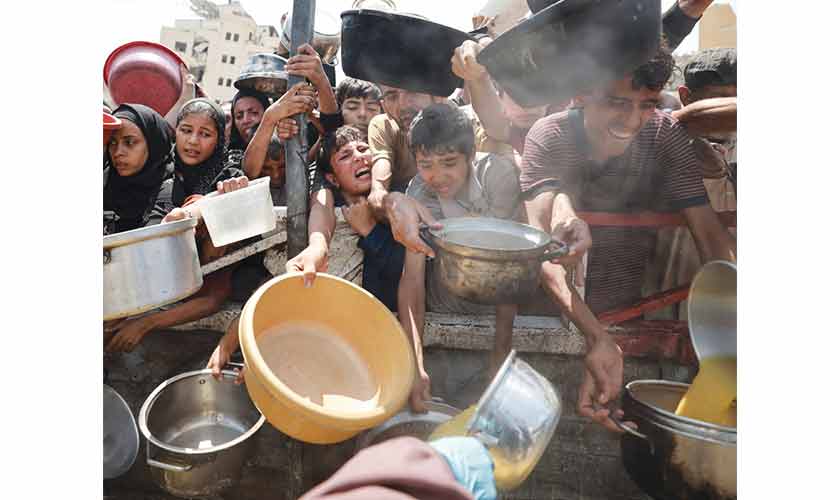
Images of desperate starving children facing dire humanitarian crises and famine in Gaza have finally prompted a global outcry. To what effect?
| T |
he world seemingly woke up to the reality of Gaza some 20 months ago. Reprehensible as the attack by Hamas on civilians that triggered the current conflict was, one has to recognise the desperate situation the population faced. The Gaza Strip, a small coastal enclave of approximately 365 square kilometers, is home to over 2.2 million Palestinians, making it one of the most densely populated areas in the world. Since 2007, Gaza has been under a blockade imposed by Israel and Egypt, severely restricting the movement of people and goods. The humanitarian situation in Gaza has deteriorated over the years due to prolonged conflict, economic collapse and inadequate access to essential services such as healthcare, clean water and electricity. Events of October 7, 2023, triggered a massive military retaliation by the Israeli Defence Forces that continues to date. With the collapse of negotiations in March this year, Israel completely blocked the entry of humanitarian assistance, food, medicine and water leading to one of the worst man-made humanitarian disasters in recent memory.
Over 70 percent of the built structures in Gaza have been flattened by incessant bombardment and ground assault; most energy and water and sewage infrastructure destroyed. Almost 60,000 people have been killed to date, with one of the highest proportions of child deaths recorded in any urban siege or conflict (estimated to exceed 17, 000 to date). All but one hospital have been destroyed and over 765,000 people displaced since the end of the ceasefire on March 18. Most of Gaza’s population now lives in abysmal circumstances among ruins and temporary shelters, squeezed within less than 12 percent of the total area of the strip with major restrictions on movement. The disruption of basic services, safe water and access to medications has played havoc with the population already teetering at the brink of a public health disaster. The so-called Gaza Humanitarian Fund ostensibly set to aid and food turned out to be a death-trap with over a thousand people killed while seeking food.
This extraordinarily disproportionate use of force by the IDF and complete blockade of humanitarian assistance has been abetted, if not downright encouraged, by Western powers who only seem to be awakening to the catastrophe now. Protests from neighbouring Islamic countries have been muted and uncoordinated. Despite a high-profile visit by President Trump to the Middle East in May this year, a Gaza solution or ceasefire did not feature in any negotiations or communiques, a glaring omission and missed opportunity with major consequences.
The full health and nutrition consequences of the Gaza siege and bombardment on civilians will only be known once the rubble is cleared but conservative estimates indicate that the death count will be significantly higher. The consequences and longer-term effects on survivors are much greater in terms of injuries, suffering and mental health and long-term effects on health and development outcomes of survivors, especially children. The deliberate destruction and breakdown of health services and facilities in Gaza has impacted newborn and child survival and led to an exponential increase in childhood illnesses such as diarrhoea, dysentery and acute respiratory infections. Some of the most damaging and long-term consequences stem from prolonged undernutrition and starvation, through a policy of food blockade.
The dire humanitarian situation in Gaza has finally prompted a global outcry as image upon image of desperate starving children (and adults) have put paid to the lies and denial by the Israeli government and Western mainstream media, especially in North America. The Washington Post obtained information from me and others on the effects of starvation and undernutrition on the health and brain development of children in Gaza over a year ago. Despite all the scientific evidence, it chose to publish the results only last week. Even today, the reporting from the BBC and mainstream US news channels is poles apart, suggesting deliberate suppression of information.
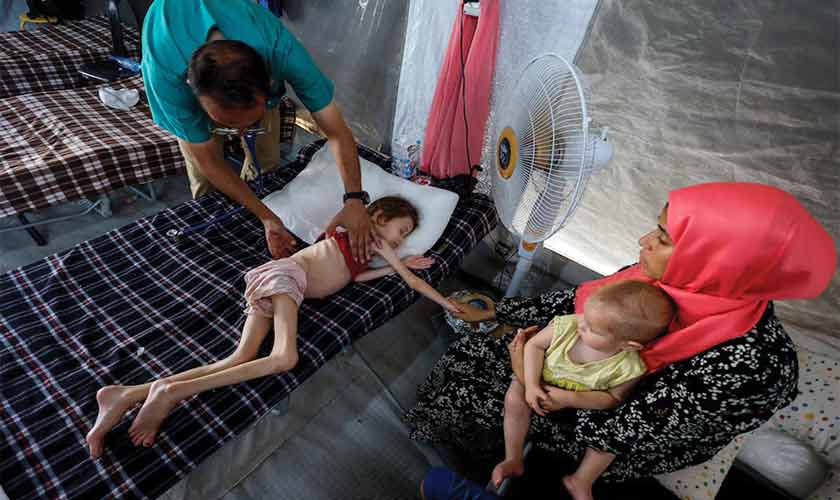
The crisis is now extreme. According to the most recent figures from the Integrated Food Security Phase Classification report from July 29, Gaza fulfils two of the three requirements for famine declaration (namely, that at least 1 in 3 children are acutely malnourished; 1 in 5 people suffer from extreme food shortages; and 2 in every 10,000 people die from starvation or malnutrition and disease), although this level of reporting is impossible in conflict settings without surveys. In Gaza, some 39 percent of the population reports not eating for days. The rates of severe acute malnutrition have quadrupled over the last two months and exceed 15 percent in most areas.
The consequences of this mass starvation on vulnerable women and children will be massive and are well documented in literature. The blockade of food to the Dutch population in the winter of 1944-45, at the tail end of the WWII, was also known as the “Hunger Winter.” Its consequences continue to be tracked. Babies born to malnourished babies of that period have been shown to bear scars of higher burden of illnesses, mental health issues and several folds higher risk of non-communicable diseases. The malnourished women and children that we see on our screens will not only need food and healthcare but also long-term follow up for consequences of mass starvation. The mental health consequences of witnessing and living through carnage and starvation on these children, young or older, will also need addressing proactively.
History will judge the global community harshly for failing Gaza and its people and permitting this mass violation of humanitarian principles. Spending millions on food drops now and the trickle of food assistance from land routes is incongruous. Much of this could have been avoided. The use of mass starvation of besieged populations (especially, women and children) as a weapon of war is strictly prohibited under international law; yet, Gaza is not the only recent example where this has happened. Similar atrocities were witnessed in the Syrian conflict, and by millions of women and children in Sudan.
Leaders of the Organisation of the Islamic Cooperation, representing 48 Muslim majority countries, should press for immediate ceasefire in Gaza and hold an emergency session. Apart from calls for an independent Palestinian State, discussions should focus on measures to ban the use of food blockages and mass starvation as weapons of war; collective enforcement measures in case of non-compliance; and allocation of resources to help the miserable, helpless people of Gaza once this conflict is over.
The writer is the founding director of the Institute for Global Health and Development, the Aga Khan University South-Central Asia, East Africa and United Kingdom. He can be reached at zulfiqar.bhutta@aku.edu.