

Print Story
X




Mismanagement at Torkham border crossing is pushing traders towards alternative routes via Iran
| L |
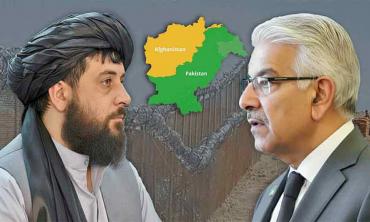
ast week, Pakistan and Afghanistan signed an agreement to reduce tariffs on eight agricultural items for one year. Under the agreement, tariffs on four Afghan agricultural exports to Pakistan (grapes, pomegranates, apples and tomatoes) and four Pakistani exports to Afghanistan (mangoes, kinnows, bananas and potatoes) will be reduced to 27 percent. This arrangement is expected to pave the way for a broader preferential trade agreement.
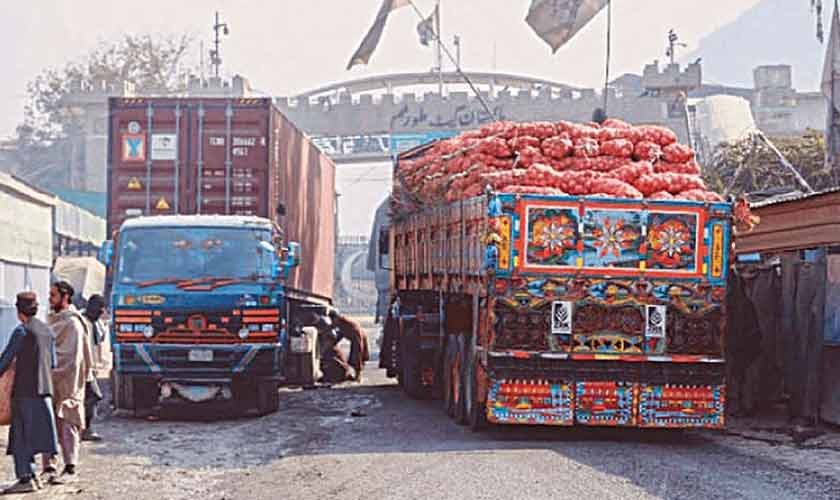
Trade between the two countries faces a major bottle-neck: the Torkham border crossing which has increasingly become a symbol of dysfunction, frustration and economic stagnation. What was for generations a corridor of cultural and social unity has now become a site of administrative chaos, where long-standing cross-border relationships are slowly disintegrating under the weight of mismanagement.
Despite historical links binding the two nations, immigration counter at Torkham resembles an overcrowded cattle yard rather than an international transit point. The travelers complain of humiliation, excessive delays and poor infrastructure.
Until 2016, cross-border movement between Pakistan and Afghanistan was relatively unhindered. This was particularly so for the tribes living on both sides of the border. Even after the 9/11 attacks, Afghan nationals could enter Pakistan on showing their national identity cards. It was then believed that both countries would continue the relaxed border regime, rooted in cultural ties and shared geography. That perception changed when Pakistan started enforcing stricter immigration controls, culminating in a formal visa and passport policy in 2016.
The present-day immigration facility at Torkham is different altogether. Most witnesses describe the scene as chaotic. Dusty open spaces, narrow corridors crowded with passengers, long queues under the scorching sun and little ventilation indoors. Travelers, including the elderly, children, women and the sick, are frequently seen collapsing while waiting for their documents to be processed.
“It’s a nightmare,” says Ghulam Khan, a trader from Khyber district. “You feel like you’re being punished for trying to cross the border.”
Passengers, transporters and porters who frequently cross the Torkham border are used to registering protest over harassment by security personnel. The officials, it is complained, demand to inspect wallets, question items like old shoes and detain travelers without justification.
“A security official pulled out a pair of worn slippers from my bag and claimed that they weren’t mine,” says Baryalai Hasrst, an Afghan national. “They thought I was smuggling old sandals.”
Women and children bear the brunt of poor arrangements. With no separate queues or sanitation facilities for them, they must navigate the same space as cargo carriers and labourers.
“There is no dignity left in the process,” says Guldana Bibi, a resident of Jalalabad. “I saw an old woman cry because no one was listening to her at the zero-point.”
Torkham is not just a border crossing for the people. It is also a crucial artery for trade between Pakistan, Afghanistan and the Central Asian Republics. However, frequent delays, lack of coordination among vrious agencies and sudden closures have rendered it unreliable.
“Each day of closure costs the business community millions of dollars,” says Mujeeb Khan Shinwari, president of the All Torkham Custom Clearing Association. “Trucks can get stuck for days. As perishable goods rot, the business confidence erodes.”
Mujeeb says in March 2025, a 10-day closure of the border following a skirmish between security forces on both sides left more than 5,000 trucks stranded. The business losses were estimated losses at billions of rupees.
“We talk about enhancing trade with Central Asia but can’t manage basic logistics at Torkham,” sats Yousaf Afridi, president of the Khyber Chamber of Commerce. “We need better infrastructure, transparency and professionalism, not mere announcements.”
Afghan traders too echo the frustration. Delays at Torkham have pushed many toward alternative routes via Iran and Central Asia.
“Pakistan is losing relevance as a trade route,” says Khan Jan Alokozai, vice president of the Afghanistan Chamber of Commerce and Industry. “No one wants to wait for days to get clearance. We’ve started sending our shipments through Chabahar.”
In 2019, the Pakistani government announced that the Torkham crossing would be operational 24/7 to boost trade and facilitate movement. In 2022, a modern cargo terminal was inaugurated.
Regular travelers and traders says these developments remain largely symbolic.
“The cargo terminal is an improvement mostly paper,” says Zia-ul Haq Sarhadi, a frequent commentator on Pak-Afghan commerce. “The scanners don’t work; the queues are unmanaged; and the various gencies operate in silos. It’s a mess,” he says.
There is little coordination among Customs, Frontier Corps, Federal Investigation Agency and the National Logistics Cell officials.
“It’s a system designed for exploitation, not facilitation,” says Qari Nazeem Gul, a customs clearing agent at the border. “You never know what the next officer will ask for or why you’re being held back.”
The state of the Torkham border crossing is more than just a local issue. It is also shaping how Afghans view Pakistan.
“Every bad experience becomes a story that fuels resentment,” says Hassan Khan Stanakzai, an Afghan businessman from Jalalabad. “It damages the goodwill that took decades to build.”
“You can’t be the gateway to Central Asia when your own gate is broken,” says Ayesha Zaman, a regional affairs analyst. “If we are serious about regional trade, we need to start with Torkham.”
“The number of biometric scanners should be increased and they should be better maintained,” Zia-ul Haq Sarhadi says.
Sarhadi also stresses the need for of well-ventilated waiting halls having drinking water and toilets.
He also says that border officials should get training in cultural sensitivity. “Respect for local traditions can help ease tensions and build trust,” he says.
Sarhadi says the number of agencies involved in routine checks should be reduced. He says in the absence of these reforms Pakistan risks not economic losses and damage to its relations with Afghanistan.
“What’s happening at Torkham is more than incompetence. It’s self-sabotage,” says Sarhadi. “The state must act, not tomorrow, but today.”
The Torkham border crossing is at a virtual crossroads between facilitating future prosperity and being remembered as the border where the opportunity was lost. While Islamabad continues to emphasise the importance of trade diplomacy and people-to-people contact, the state of affairs at Torkham undermines its goals.
The writer is a freelance journalist and a social activist